
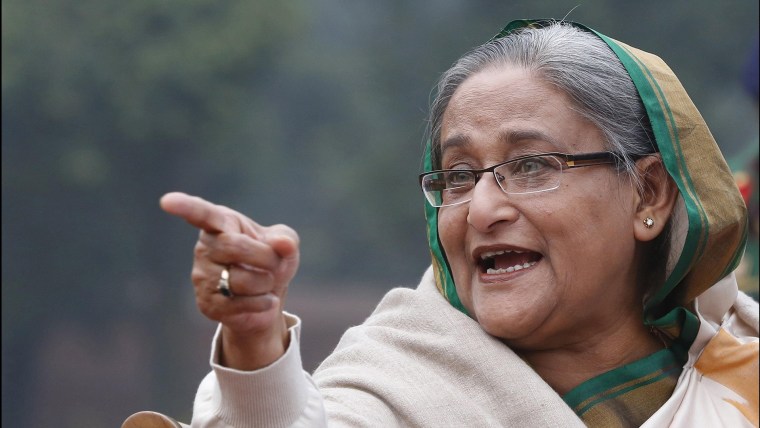
Ousted former Bangladeshi Prime Minister Sheikh Hasina announced plans to return from exile in India this December, despite facing a death sentence in Bangladesh. The sentence relates to a bloody crackdown on protesters in 2024. In an audio address at an event in New Delhi, marking the second anniversary of the uprising that led to her government’s fall, Hasina expressed her commitment to return voluntarily, despite her conviction in absentia for crimes against humanity.
Bangladesh’s government reacted strongly to Hasina’s address. Officials expressed outrage at her media engagement in New Delhi, accusing her of maligning the state and people of Bangladesh. The Ministry of Foreign Affairs stated that the event was harmful to Bangladesh-India relations and criticized its timing on the anniversary of the July Revolution. It added that Hasina’s actions on Indian soil disrespected Bangladesh’s sovereignty and the memory of revolution martyrs.
Hasina fled to India in 2024 after student-led protests toppled her administration. She has been in exile there since. In 2025, a Bangladeshi court sentenced her to death for commanding a crackdown during the uprising, in which the United Nations reported nearly 1,400 deaths. Hasina denies the charges. Though Bangladesh has sought her extradition, India has not complied. Hasina stated, “Fear cannot decide my duty to the people,” acknowledging potential imprisonment or death upon her return.
During her address, Hasina called for the Awami League party ban to be lifted and for the release of political prisoners. Meanwhile, Bangladesh Prime Minister Tarique Rahman opened a memorial museum dedicated to the 2024 uprising. The July Mass Uprising Memorial Museum, located in Hasina’s former official residence in Dhaka, showcases exhibits on the uprising and alleged political repression during Hasina’s 15-year tenure.
Rahman, the son of ex-Prime Minister Khaleda Zia and Hasina’s political adversary, rose to power with a significant electoral victory in February. This election was managed by an interim administration led by Nobel Peace Prize laureate Muhammad Yunus, which barred Hasina’s Awami League from participating.