
On Monday, twenty-five states initiated a lawsuit against the Trump administration, contesting its latest tariff measures. These measures are seen as an attempt to replace import taxes that were nullified by the Supreme Court in February.
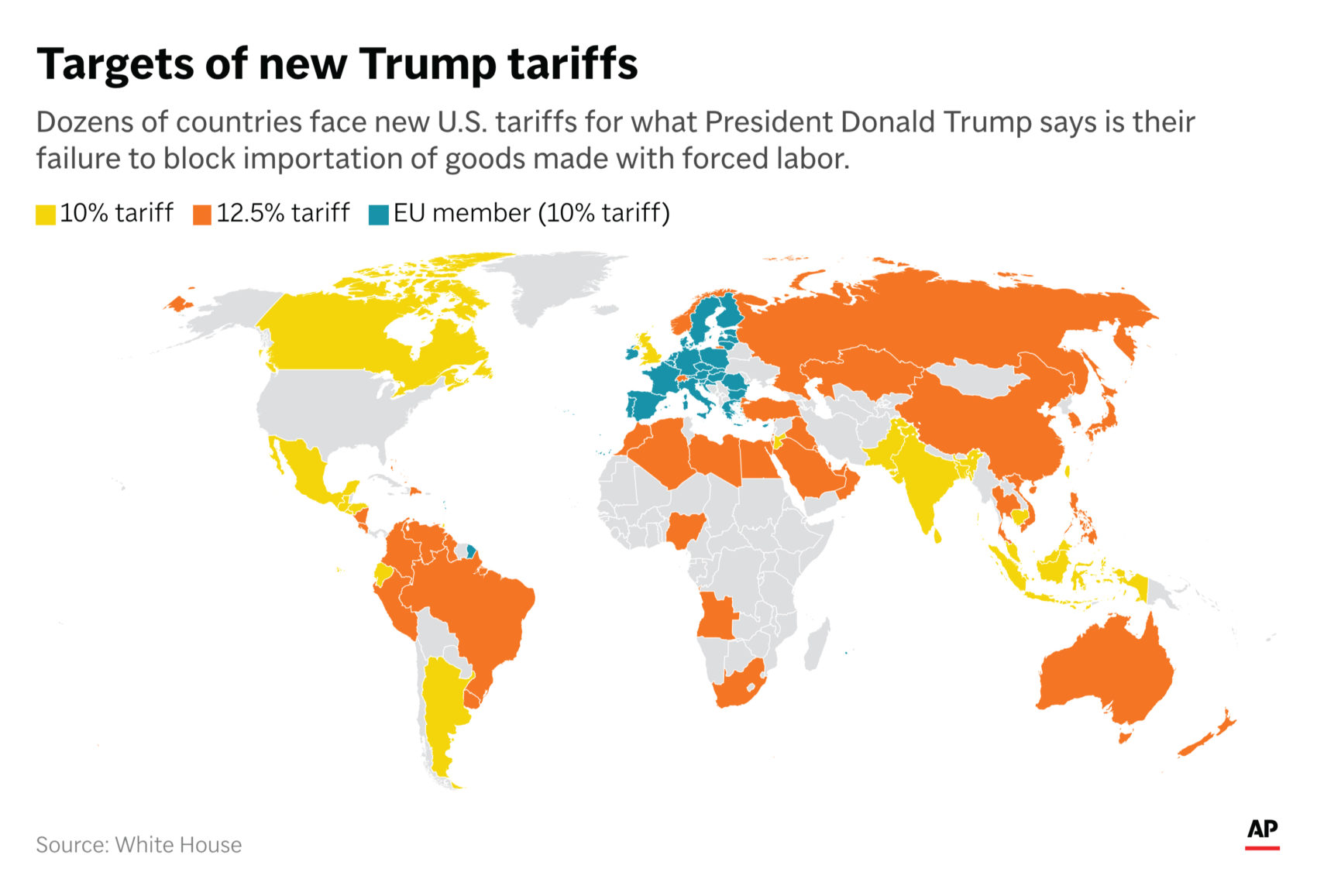
In July, the U.S. imposed significant tariffs on 59 countries and the European Union. The administration claimed these tariffs aimed to curb imports produced by forced labor. This move coincided with the expiration of temporary tariffs that President Donald Trump had relied on following a Supreme Court setback.
Legal and Economic Implications
New York Attorney General Letitia James commented, ‘After losing at the Supreme Court, the administration is once again trying to illegally raise taxes on families and businesses with a new round of tariffs.’
President Trump has long maintained that high tariffs could reinvigorate American manufacturing. Last year, he shifted from traditional U.S. trade policies that leaned towards fewer tariffs and free trade. Under the 1977 International Emergency Economic Powers Act (IEEPA), Trump applied significant tariffs, citing the trade deficit as a national crisis. Yet, the Supreme Court found that IEEPA did not support such actions.
The ruling required the administration to issue refunds to importers who had paid these tariffs. To recover lost revenue, Trump enacted temporary 10% global tariffs, which lapsed on July 24.
Section 301 and Durable Tariffs
The administration is now implementing more lasting tariffs under Section 301 of the Trade Act of 1974. This allows the president to levy import taxes against nations with unfair trade practices. Trump had previously used Section 301 to impose substantial tariffs on China, which endured legal scrutiny.
Currently, the administration imposes tariffs via Section 301 due to forced labor concerns. These tariffs, ranging between 10% and 12.5%, affect countries responsible for 99% of U.S. imports.
The United States is using its lawful authority to obtain the elimination of unreasonable acts, policies, and practices that burden U.S. commerce,White House spokesman Kush Desai stated.
Desai emphasized that failure by other countries to enforce a ban on goods produced with forced labor is unreasonable and hinders U.S. commerce. Section 301 tariffs, proven legally resilient since Trump’s first term, continue to be used to address these issues.