
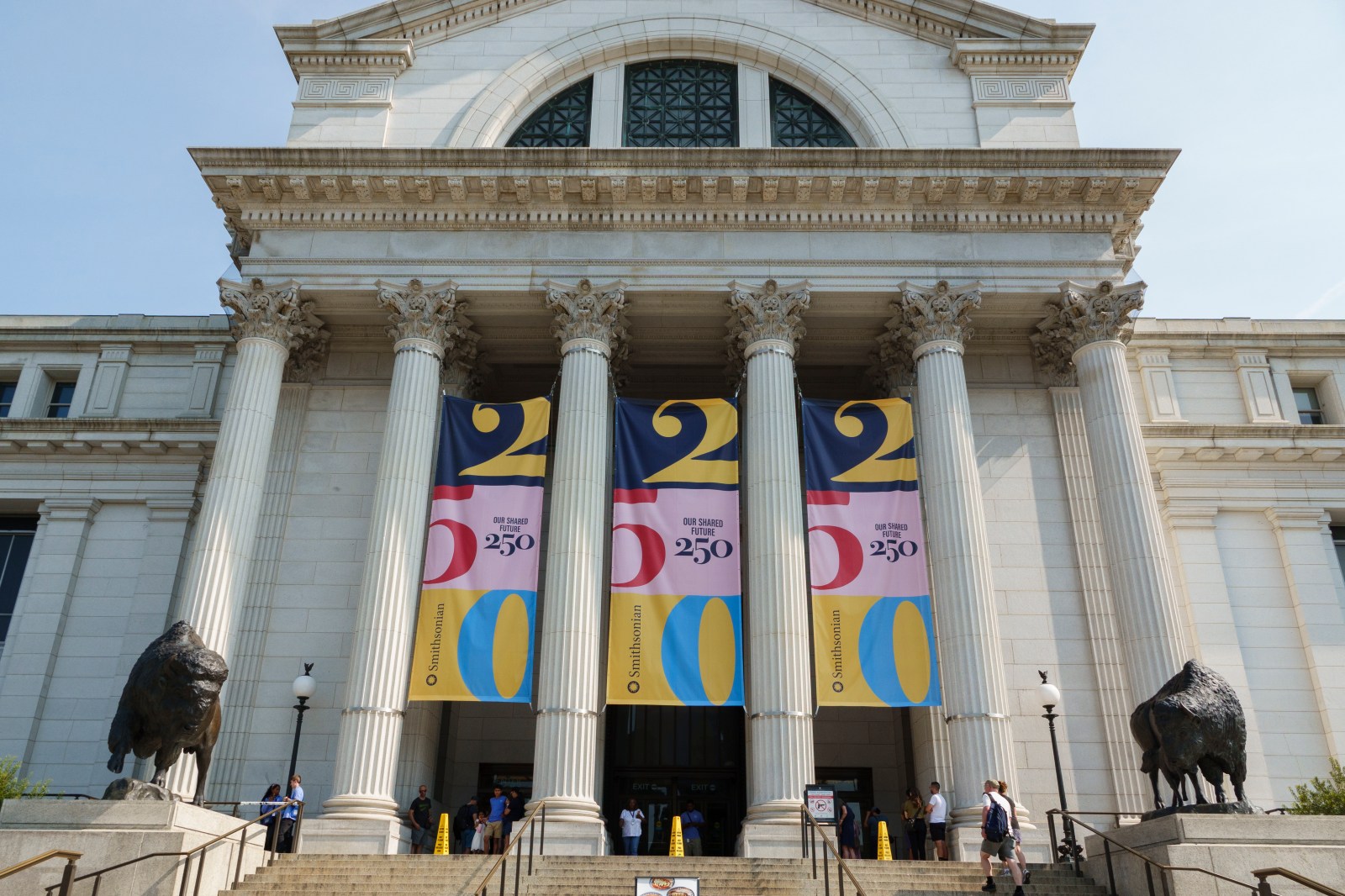
The Smithsonian Institution stands as the world’s largest complex of museums, education, and research facilities. It welcomes visitors from every corner of the globe without charging a fee. Over the years, it has become one of Washington’s most beloved attractions. This reputation has made it a prominent institution in the capital.
Although the United States may not have the ancient lineage some civilizations do, its history remains noteworthy. For many Americans, including myself, the Smithsonian represents a place where history comes alive. As a child, I eagerly entered the National Museum of American History, excited to witness the artifacts and stories of our nation. This experience was something I ensured to share with my children, fostering their understanding of our nation’s lessons and achievements. The Smithsonian has long been a beacon of hope and freedom.
As America’s 250th anniversary approaches, one might wonder how the museum plans to commemorate this milestone. Questions arise as to what artifacts they will showcase and how they will narrate the founding and growth of America. Instead of uplifting narratives, visitors now encounter a revisionist portrayal of history. A new narrative presents the foundation of American history as ‘unsettling.’ This became evident during a recent visit and a House Oversight hearing.
The current leadership of the Smithsonian suggests that American history is more worthy of condemnation than celebration. A report from the White House Domestic Policy Council reveals how the institution has deviated from its traditional role. Disclosure during a House Oversight hearing underscores this shift. Director Anthea Hartig argued in a 2024 presentation for moving beyond an ‘America First’ mindset. She suggested redefining ‘America’ to encompass all of the Americas, not merely a portion of North America.
The role of the Smithsonian is to educate about America’s history, not to erase its distinctions. The Center for Restorative History within the museum operates on the premise of ‘addressing harm’ that Hartig claims the Smithsonian has caused. The center’s website acknowledges using restorative justice to redress exclusions in the national narrative. Concurrently, museum staff study ‘white supremacy culture,’ depicting foundational societal concepts as elements of ‘white culture.’
When a national museum views the foundation of society as subjects for political critique, it stops serving as an educational resource.
A demonstration of this ideology is apparent in the ‘Girlhood (it’s complicated)’ exhibit. Rather than honoring American women who played pivotal roles in history, the exhibit includes a biological male. This undermines the concept of womanhood and promotes gun control and illegal immigration. The Smithsonian holds a vast collection of women’s history artifacts. The ‘First Ladies’ exhibit, for example, remains highly popular. Despite this, the National Museum of American History prioritizes exhibits that promote symbols of illegal immigration at the expense of celebrating motherhood.
This transformation results from a stringent bureaucratic directive. Every exhibit at the NMAH must now address various themes. These include race and identity, gender and sexuality, environmental change, immigration, economic inequality, technology, nationalism, and globalism. This framework appears more aligned with a partisan agenda than historical education.
The Smithsonian should inspire visitors to engage with history, especially younger generations. Engaging with both achievements and challenges is vital for meaningful historical learning. We cannot expect children to value their heritage while nurturing resentment at the same time. The Smithsonian receives generous public funding. Working there is an esteemed privilege, not a platform for advancing political agendas. The Smithsonian’s purpose should remain honoring American history, not pushing an ‘American apology.’ Curators have no authority to revisit the past merely to suit contemporary narratives. Altering historical truth disrespects its integrity.
Representative Michael Cloud serves Texas’s 27th Congressional District. The opinions expressed here are solely the author’s.