
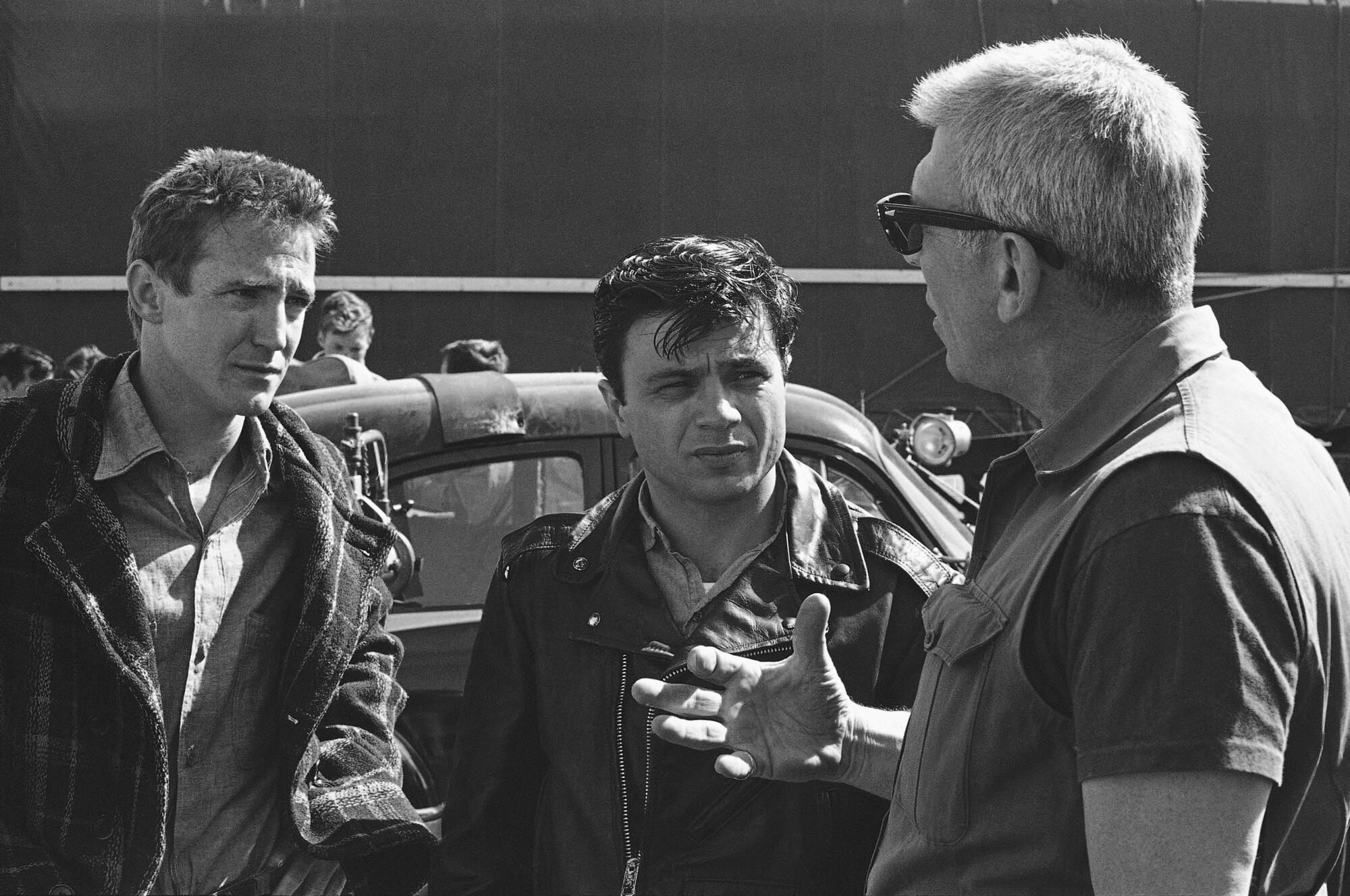
On the night of Bonny Lee Bakley’s murder, actor Robert Blake dined with her at Vitello’s Italian Restaurant in Studio City. The establishment was known for its faded photos of celebrities, prompting diners to recall past stars. By May 2001, Blake, at 67, became an ambiguous figure to many. During the 1970s, he was a familiar face on television. He made appearances on ‘Hollywood Squares’ and ‘The Tonight Show.’ However, his most memorable role was Detective Tony Baretta in the TV series ‘Baretta,’ which earned him an Emmy in 1975.
Despite the acclaim, Blake later expressed disdain for the role, considering it a waste of his talent. He was known for his role as Perry Smith in the 1967 film adaptation of ‘In Cold Blood.’ Blake portrayed Smith, who was involved in the murder of a Kansas farm family. His performance was marked by a chilling realism. Blake related deeply to the character, writing in his memoir that he felt a strong connection with Smith.
Throughout his life, Blake struggled with self-destructive tendencies. He was known for a volcanic persona, often speaking his mind and showing glimpses of his troubled past. Born as Mickey Gubitosi in New Jersey, Blake grew up on movie sets, appearing in ‘Our Gang’ shorts at the age of five. He often spoke in the tough mannerisms of his on-screen characters, attempting to keep people at bay.
In 1998, Blake met Bonny Lee Bakley at a jazz club in Burbank. Recently divorced, he described himself as a ‘loner.’ Bakley, younger by 23 years, had a history as a small-time scam artist. She was known for seducing celebrities and had a criminal record. Despite their tumultuous relationship, they had an infant daughter, Rosie, and married in a small ceremony. Blake frequently expressed regret about their marriage.
On the fateful night, Blake parked his car a block away from the restaurant. After their meal, he claimed to have left his .38 Special handgun in the restaurant. When he returned, he found Bakley with a fatal head wound in the car. A local resident, Sean Stanek, witnessed Blake’s frantic state and attempted to assist Bakley. Witnesses found Blake’s behavior during the incident to be peculiar, noting he sat on the curb while others attended to her.
Investigators discovered that Blake’s handgun was not the murder weapon. Instead, a Walther P38 9-millimeter pistol was found in a nearby trash bin. Despite gunpowder residue on Blake, he attributed it to target practice.
The investigation took a turn when Gary McLarty, a stuntman, claimed Blake tried to hire him for a hit on Bakley. McLarty detailed a meeting where Blake proposed killing Bakley in her sleep for $10,000. Another stuntman, Ronald Hambleton, corroborated similar claims, but both refused to participate. Detectives believed Blake eventually killed Bakley himself after failing to find someone else to do it.
In the media, Blake’s legal team painted Bakley as a controversial figure, complicating perceptions of the case. Despite 11 months of investigation and extensive interviews, no one could conclusively link Blake to the murder weapon.
During the trial, Blake faced claims of asking stuntmen to commit the murder. However, the defense portrayed these witnesses as unreliable. In 2005, Blake was acquitted of criminal charges but faced a civil trial shortly after. The civil jury found Blake responsible for Bakley’s death, awarding her children $30 million, later reduced to $15 million.
Robert Blake passed away from heart disease in 2023, leaving a complex legacy. Eric Dubin, representing Bakley’s children, believed Blake’s actions were driven by a desire to protect his daughter from Bakley’s influence. The case remains a significant chapter in both legal and entertainment history.