
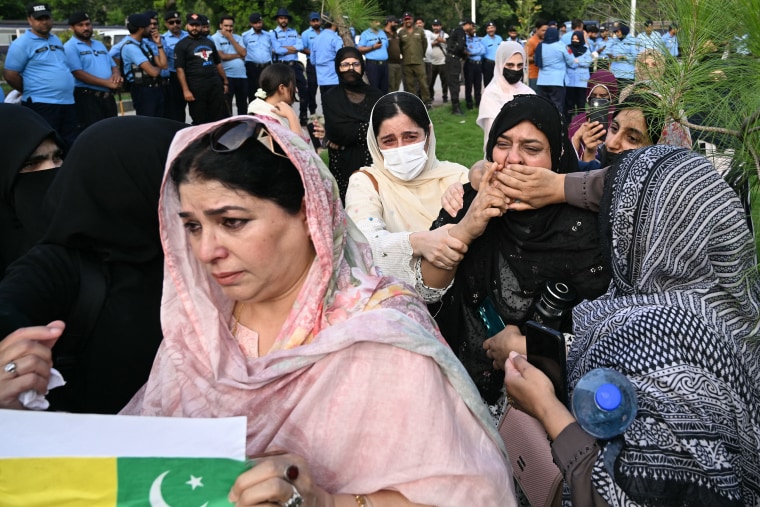
Protests during the regional elections in Pakistan-administered Kashmir have resulted in violence. Leaders of a banned Kashmiri group reported on Wednesday that more than 30 people were killed in clashes with security forces around a single town before the second election round. The accuracy of this figure could not be independently verified by Reuters, as disruptions in banking, roads, and internet services hindered information flow.
In the first round of elections, Pakistan’s ruling party, the PML-N, secured nine out of the 13 seats contested in the districts of Mirpur, Kotli, and Bhimber. The elections were initially scheduled for one round on July 27, but authorities divided them into three separate votes, citing security concerns. The upcoming rounds are set for August 2 and August 10.
The Pakistan Tehreek-e-Insaf (PTI), which emerged victorious in the 2021 elections, boycotted the current election over fraud allegations. Meanwhile, the region’s main protest group, the Joint Awami Action Committee (JAAC), faced a ban in June, which incited deadly protests the following month.
Officials reported that a security officer was killed and five others injured in Monday’s clashes. Meanwhile, an unnamed official noted at least three protester fatalities in Mirpur this week. Pakistani officials defend their crackdown, alleging the presence of armed militants supported by India among the Kashmiri protesters. Such accusations have been dismissed by India in the past.
“The entire election was a fraud,” commented Fazal Mahmood Baig from Muzaffarabad, the regional capital. At a protest in Islamabad, Sardar Mazhar expressed a desire for peaceful resolution.
Background of the Conflict:
Tensions in the Pakistan-administered region of Kashmir have historical roots spanning decades but have recently intensified. Advocates for greater autonomy have accused the national government in Islamabad of meddling in political affairs and neglecting economic needs. Economic grievances have periodically sparked protests, such as the 2022 demonstrations against high electricity prices in a region known for supplying cheap hydroelectric power to other parts of Pakistan.
The JAAC emerged in 2023, channeling regional anger and advocating for electoral reforms. The group has called for changes in the allocation of the 12 seats reserved for constituencies representing refugees from Indian-administered Kashmir within local legislative assemblies. These seats are often occupied by individuals residing outside the region, with JAAC accusing Islamabad of manipulating local politics through these positions. However, Pakistani government officials have denied these accusations.