
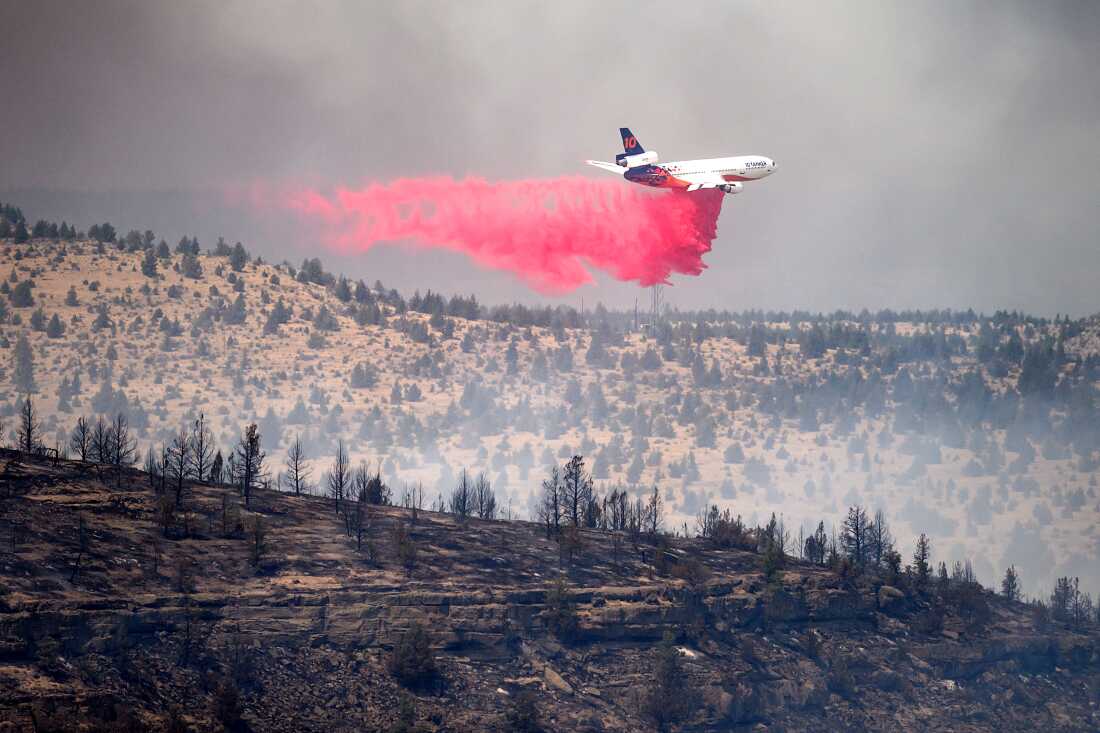
In Ontario, Oregon, over a million acres of land are ablaze across central and eastern parts of the state. The state is on track for another intense wildfire season. Currently, 34 major fires are raging primarily on public rangelands from near Bend to the Idaho state line. Dense smoke covers the area, and air quality advisories are issued in Boise, Idaho, impacting its 700,000 residents.
Oregon officials urge vigilance, as it is early in the fire season. Most fires are at lower altitudes, yet higher-altitude forests are also at risk following a winter with the lowest snowpack on record. Larry O’Neill, Oregon’s state climatologist, warns of unfavorable weather conditions that may not improve soon.
Lightning storms with minimal rain and strong winds have ignited these fast-moving fires. Thousands have evacuated from small towns across the region. Ranchers are working hard to move livestock to safety. While remote, these fires impact people’s livelihoods significantly.
We’re holding our breath right now that the weather conditions will moderate though that’s not looking likely.
The smoke near the Coleman Creek Fire is acrid, threatening towns like Harper. Resident Mary Thompson expressed frustration with media portrayal of rural fires, emphasizing their profound effect on local livelihoods. Ranchers rely heavily on federal public lands for grazing, and the fires pose significant challenges.
Local ranchers, part of rural fire brigades, are collaborating with state and federal crews to combat the fires. Roads like U.S. Highway 20 face closures with little notice. Residents like Terry and Kara Barnes, returning from a nearby reservoir, share frustrations about the unpredictable situation and highway closures.
Dense smoke from Oregon wildfires extends to Boise, Idaho, sparking air quality advisories. Kara Barnes criticizes the current fire response, emphasizing the need for timely action when fires ignite.
The broader Western fires coincide with significant funding and staffing cuts at federal lands agencies. Around 10,000 Forest Service and Bureau of Land Management jobs were eliminated, impacting wildfire prevention. Human-caused climate change exacerbates conditions, causing hotter, drier weather.
Oregon’s state climatologist, Larry O’Neill, explains the increased atmospheric dryness across Oregon and Europe, hastened by warmer temperatures. With no immediate relief in sight, smoke advisories and evacuation alerts will likely persist.
In Huntington, Oregon, threatened by the Tartar Fire, Catherine Randall and her neighbors were evacuated by school bus. Randall remains hopeful, cherishing evenings when smoke paints the moon red. This smoke partially blocks sunlight, providing relief from heat in the afternoons.