
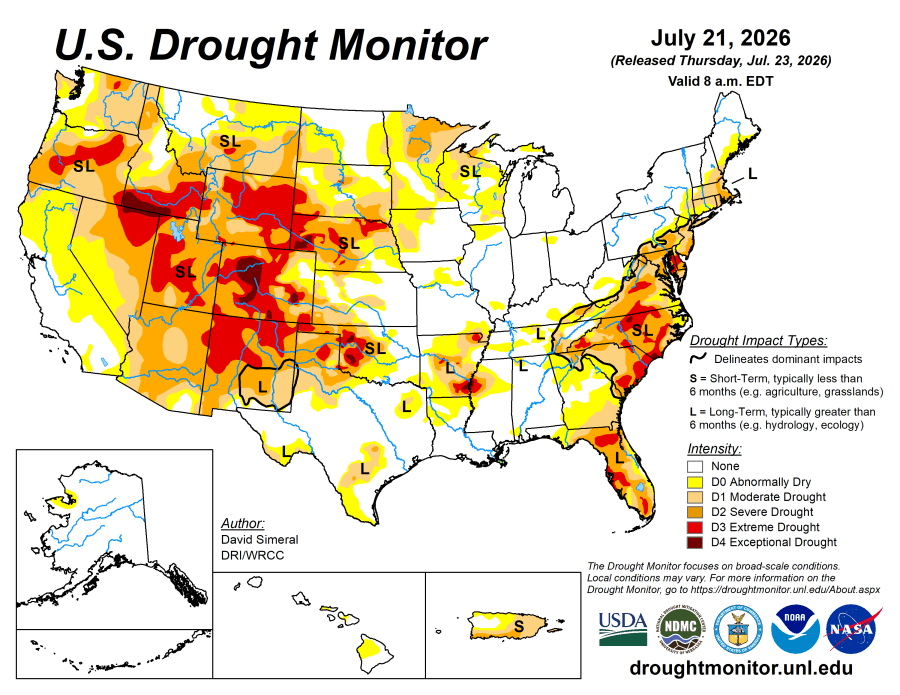
Drought in the western United States is intensifying. As of mid-July, states such as Oregon, Idaho, Nevada, Wyoming, Utah, Colorado, New Mexico, Nebraska, Oklahoma, and parts of the Texas Panhandle face areas of ‘extreme’ and ‘exceptional’ drought. Experts warn the situation might deteriorate further as the dry season is not yet over.
AccuWeather forecasters have expressed concern about long-term conditions in these regions. The expected formation of a super-strong El Niño could create lasting impacts on the Plains states. According to long-range expert Paul Pastelok, the combination of existing severe drought with future weather patterns could lead to what AccuWeather founder Joel Myers describes as a potential ‘mini Dust Bowl’. Myers also highlights the economic impact, predicting stress on soybean crops and a decrease in yields, which could trigger food price inflation.
El Niño’s Impact
El Niño affects regional weather patterns, potentially bringing different rainfall levels depending on the location. Dillon Amaya, an assistant professor at North Carolina State University, notes that El Niño usually results in a wetter American Southwest, while the Pacific Northwest tends to dry out. For the Plains states, El Niño’s effects on rainfall are less predictable.
The Southern Plains – particularly Texas, Oklahoma, and Kansas – have struggled with drought conditions for years. Joel Lisonbee, from the National Integrated Drought Information System, stresses that even significant rainstorms might not compensate for the region’s prolonged water deficit. Replenishing reservoirs, streams, and aquifers would require more than one wet season.
Historically, El Niño events have varied in their impact. Notable exceptions include the 1957-1959 El Niño, which alleviated severe drought through heavy rainfall, resulting in flooding. However, this year’s El Niño is projected to be substantial. According to the Climate Prediction, the chances of it becoming ‘very strong’ are 81%, with a 97% probability of lasting until spring 2027.