
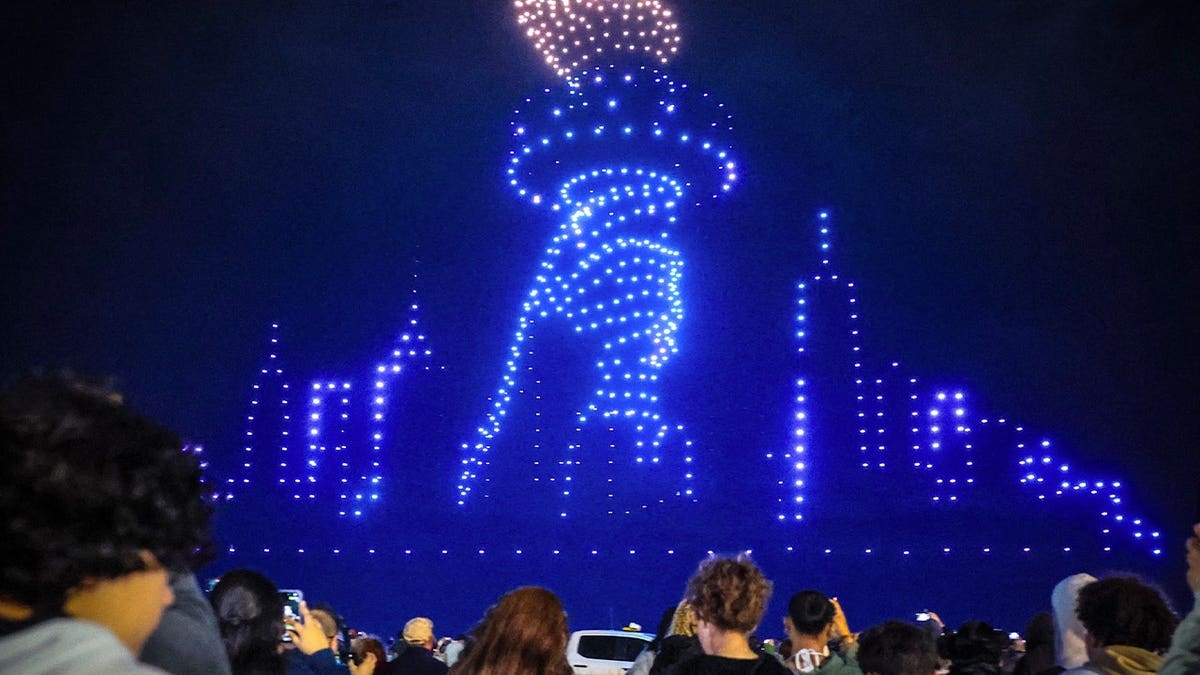
Drone shows are increasingly replacing fireworks at concerts, sporting events, and Fourth of July celebrations. This shift is due to perceptions of drones being safer and more environmentally friendly. However, as more drones fill the skies, security experts caution that the airspace around large public events is becoming crowded. This makes detecting potential threats harder.
Cordell Bennigson, CEO of U.S. Operations at R2 Wireless and a retired Marine Corps officer, shared insights on the growing prevalence of drone shows. He noted that this trend illustrates the accessibility of drone technology, which poses new challenges for event security and public safety.
Bennigson said, “A drone show itself isn’t a security risk, but it’s an indication of how accessible drones are.”
The radio frequency (RF) spectrum, used by devices from cellphones to drones, becomes busy during these shows. The presence of multiple wireless signals can complicate efforts to identify unauthorized drones. Bennigson explained that detecting these drones amid the cluttered electromagnetic spectrum is crucial for defense.
While reducing wireless transmissions could seem like a solution, Bennigson argues it is unrealistic. He suggests focusing on improving detection capabilities. Drawing a parallel, he compared this to how night vision goggles helped see in the dark rather than eliminating darkness.
Artificial intelligence (AI) is increasingly important in this context. AI swiftly analyzes large volumes of wireless data, identifying patterns and new anomalies. Bennigson stressed AI’s capability to sort through vast amounts of information effectively, enhancing detection efforts.
The challenge extends beyond events. As drones become more common, governments must reconsider airspace monitoring around stadiums and critical infrastructure. Bennigson emphasized the importance of staying ahead with detection and defense technologies.
Drone traffic growth poses challenges that require regulatory adjustments. Bennigson mentioned the Federal Aviation Administration (FAA) currently has effective systems for legally operating drones. But these systems fall short when facing bad actors who bypass regulations.
Radar is one method to identify non-transmitting drones. Yet, Bennigson noted limitations, such as potential signal disruptions in urban environments and difficulties in detecting low-flying drones. Therefore, relying solely on radar is insufficient.
Addressing these issues requires comprehensive strategies involving multiple tools and approaches to maintain secure airspace.