
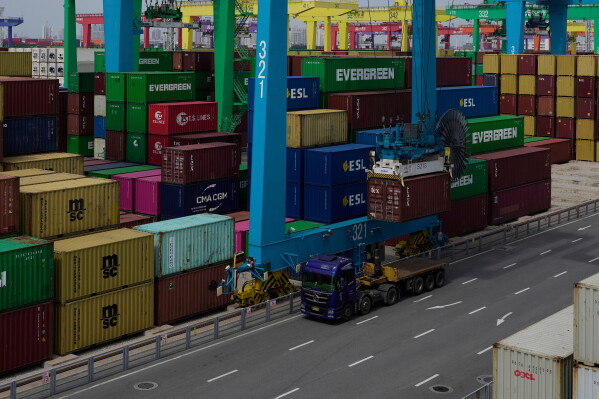
The United States, under President Donald Trump, has imposed new tariffs on numerous trade partners. The tariffs range from 10% to 12.5% and target imports from 60 nations. These countries account for 99% of the foreign products entering the U.S. The decision follows accusations against these nations for inadequate enforcement of bans on goods produced through forced labor.
The U.S. has enforced its own ban on such imports for nearly a century. Trade Representative Jamieson Greer emphasized the need for U.S. trading partners to follow suit. The tariffs coincide with the expiration of temporary global tariffs of 10%, which President Trump implemented after the Supreme Court overruled his broader tariff policy earlier in the year.
Trump plans to use the longer-lasting tariffs authorized under Section 301 of the Trade Act of 1974. This allows the President to impose tariffs on countries found to practice unfair, unreasonable, or discriminatory trade practices. Section 301 was previously used to impose significant tariffs on China during Trump’s first term, surviving judicial challenges.
The U.S. Trade Representative’s office is investigating if 16 nations, which account for 70% of U.S. imports, are overproducing. This alleged overproduction reduces prices, disadvantaging American businesses globally. However, the investigation remains incomplete.
Initially, global tariffs of 10% were imposed under Section 122 of the 1974 Trade Act, in response to the Supreme Court’s rejection of tariffs under the International Emergency Economic Powers Act (IEEPA). These could last only 150 days, ending on Friday.
The government first proposed forced labor tariffs last month. Since this announcement, some countries have enhanced enforcement against forced labor, becoming eligible for lower levies, as described by a senior government official on the condition of anonymity. For instance, India’s tariffs were initially set at 12.5% but were reduced to 10%.
Exceptions include products such as oil, gas, and fertilizers. Goods qualifying for tariff-free status under the USMCA, negotiated by Trump in his first term, are also exempt.
Critics immediately responded. Congressman Richard Neal, a leading Democrat on the House Ways and Means Committee, criticized the justification. Neal argued that using forced labor bans as a facade for questionable tariff policies diminishes the seriousness of the issue.
Brazil, facing a 12.5% tariff, condemned the measures as arbitrary. Brazil plans to apply reciprocal tariffs against the U.S. and will lodge a complaint with the World Trade Organization. Brazil accused the U.S. of exploiting a serious human rights issue to accuse 59 countries and the EU of unfair practices.
Chile, facing a similar tariff, cited its strong labor institutions and commitment to combatting forced labor. Tariffs can raise prices for American consumers, adding pressure to the cost of living. Implementing these tariffs before midterm elections presents a risk.
Human rights analysts urge caution, although acknowledging potential impacts on forced labor issues. Martina Vandenberg, founder of The Human Trafficking Legal Center, supported import bans as a vital tool despite skepticism about tariffs. She advocated for gradual implementation to allow countries to build effective prohibitions.
Canadian minister Dominic LeBlanc noted the measure as expected and reiterated Canada’s shared goal of eliminating forced labor from supply chains.
Kenya Davis, a partner at Boies Schiller Flexner, indicated the U.S. has taken significant legislative action through the Uyghur Forced Labor Prevention Act enacted in 2021. This focuses on Xinjiang-produced goods.
Isabelle Glimcher from NYU Stern Center for Human Rights cautioned tariffs do not address domestic production linked to forced labor. However, she noted positive changes in countries like India due to these tariff threats, with new policies reflecting international concerns. Future EU regulations will further influence this landscape.