
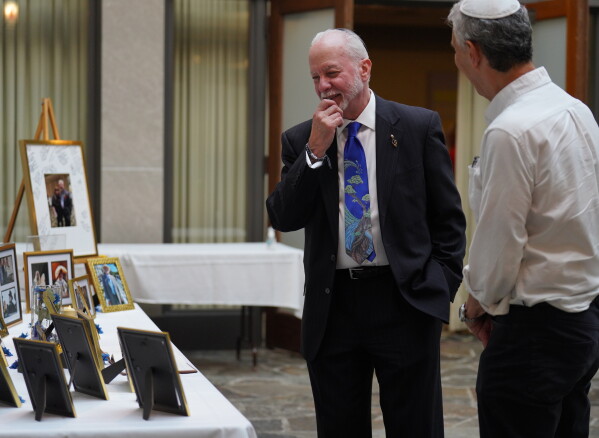
Rabbi Jeffrey Myers, who survived the deadliest antisemitic attack in U.S. history, is retiring as the spiritual leader of the Tree of Life Congregation in Pittsburgh. Myers presided over funerals for his slain congregants and turned to the Book of Psalms during his own struggle to pray, finding solace in the words: “My help comes from God, maker of the heavens and the Earth.” These words renewed his faith and answered his inner search.
Reflecting on a Tragic Day
Myers, 70, began his role as spiritual leader of Tree of Life just over a year before the tragic event on October 27, 2018. A gunman entered the synagogue on that Sabbath morning, killing 11 worshippers from the three congregations that shared the building. Since then, the southwest Pennsylvania congregation has focused on healing and endured a delayed trial that ended with the gunman’s death sentence.
New Beginnings
Concluding his mission with the congregation, which has faced challenges such as the pandemic and groundbreaking for a new building, Myers decided it was time for new leadership. He plans to return to New Jersey to be closer to his family and engage in personal pursuits like reading and writing. Myers hopes to heal his own emotional wounds after prioritizing those of his congregation.
“The needs of the many outweigh the needs of the few,” Myers said, quoting Spock from Star Trek as he balanced between scripture and pop culture in his farewell.
During his parting address, he thanked the officers who risked their lives to save him, clergy, and his community. Myers honored each victim by name, ending his speech by inviting the congregation to sing Carole King’s “You’ve Got a Friend.”
Myers’ Extraordinary Journey
Raised near Newark, New Jersey, Myers developed his strong tenor voice singing in his synagogue choir from a young age. Initially on a path to study medicine, he shifted toward his passions for Judaism and music, eventually pursuing a career as a cantor and later studying for ordination as a rabbi.
Upon arriving at the Tree of Life, a Conservative congregation, Myers had no way of knowing the tragedy they would face. On that fateful October morning, after urging worshippers to flee or hide, Myers took shelter and prayed. His faith in God and remembrance of the historical persecution of his people guided him through those moments.
Leading Through Adversity
Myers’ leadership during the days that followed was driven by faith, despite personal grief and the challenges of conducting multiple funerals. The congregation continued their services elsewhere since their building became a crime scene. Myers emphasized the importance of Jewish observances as defiance against the attacker’s intentions.
Overcoming further adversities like the COVID-19 pandemic, Myers found solace in personal milestones, such as his daughter’s wedding, offering fulfillment of another Psalm’s promise: “God turned my mourning into rejoicing.”
Shared Journeys with Other Survivors
After the attack, Tree of Life fostered connections with Mother Emanuel AME Church in Charleston, South Carolina, which suffered a tragic shooting in 2015. Members exchanged visits, and Myers developed a bond with Rev. Eric Manning, pastor of Emanuel, understanding the importance of speaking out against rising antisemitism and “H,” as Manning refers to hatred.
The damaged Tree of Life building is mostly demolished, with plans for a new structure including a sanctuary, event space, and a memorial to the victims. Scheduled for completion in 2028, the project embodies hope for the future.
Robin Friedman, current president of the congregation, describes Myers as “the right guy at the right time.” Myers’ departure signifies change, but with new families and fresh ideas joining the congregation, hopes are high. “We intend not to let the shooter win and not to fade away into history,” echoes survivor Audrey Glickman.
With shared grief, enduring community bonds, and courageous leadership, the story of Tree of Life and Myers reflects resilience and hope.