
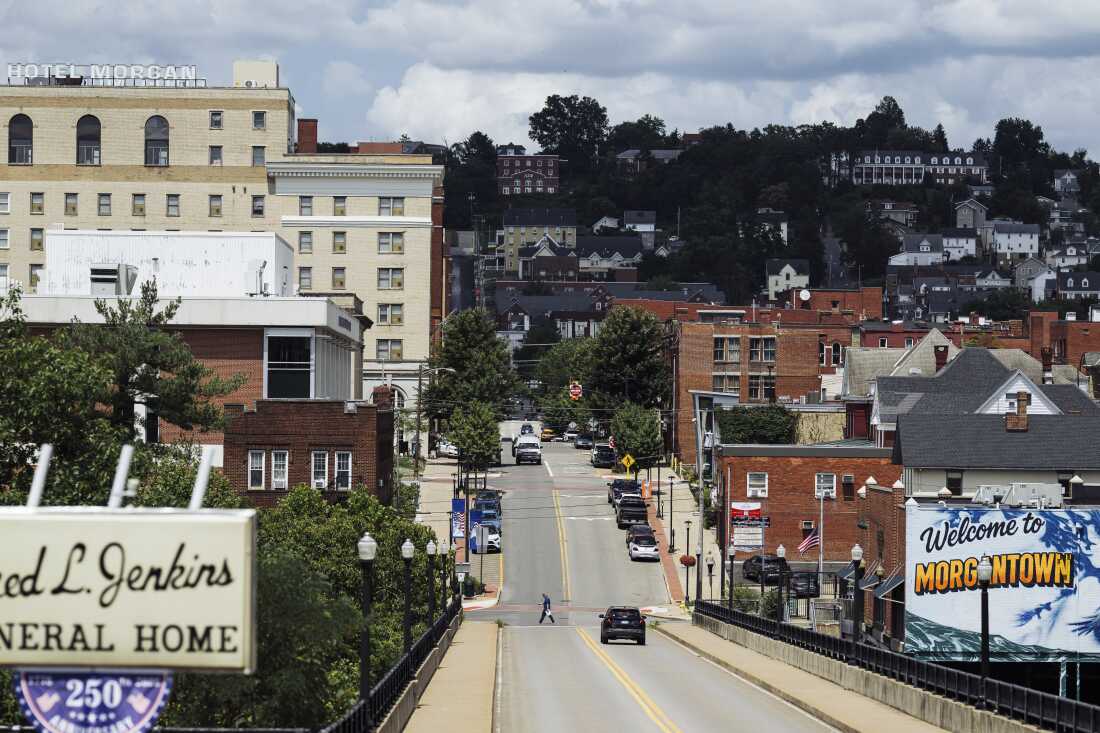
West Virginia offers programs that provide financial incentives to workers willing to relocate to areas with lower living costs. This initiative, among others, aims to boost local economies and retain talent.
A Life-Altering Diagnosis and a New Beginning
When Ashley Eklin faced a multiple sclerosis diagnosis in 2022, her perspective on life shifted profoundly. Living in Chicago, she decided it was time to pursue her dreams, including a geographical change. Her colleague suggested exploring Ascend West Virginia, a program that offered cash and incentives for relocating to the Mountain State. Eklin embraced the idea and, after an extensive application process, was accepted. Without visiting, she purchased a home and relocated to Inwood, West Virginia, three years ago with her two pets. Her fiancé joined her four months ago.
Eklin remarks on how perfect the move was for her, as she developed kayaking skills and delved into photography, including astrophotography, away from city light pollution.
Addressing West Virginia’s Economic Challenges
The pandemic prompted many Americans to switch to remote work, leading them to seek new surroundings. Relocation initiatives such as Ascend West Virginia emerged to incentivize workers to move where they could experience a lower cost of living, while helping to rejuvenate local economies.
West Virginia has battled economic challenges for decades, with its population decreasing by over 4% in the past ten years and maintaining high poverty rates. However, it provides a more affordable cost of living than nearby Washington, D.C., along with offering unique features such as rugged mountains, whitewater rivers, and vast forests.
Ascend West Virginia was launched in 2021, aligning with the 50th anniversary of John Denver’s song “Take Me Home, Country Roads.” Danny Twilley from West Virginia University, crucial in creating the program, highlights the state’s outdoor recreation reputation as motivation to replicate successful models.
Financial Support and More
West Virginia’s program grants $12,000 to successful applicants, paid over two years, with no strict income requirements. This strategy capitalizes on marketing to attract those unfamiliar with living in the state. Even though the program isn’t taxpayer funded, its budget is underwritten by the Wing 2 Wing Foundation started by Brad D. Smith, former Intuit CEO, and his wife.
Spinoff initiatives aim to retain talent within the state, such as First Ascent for college graduates, Teachers Ascend for educators, and Ascend Heroes for veterans.
For Abby Snyder and Colin Scott, digital nomads with varied work backgrounds, the financial incentive was useful. However, they decided more out of a desire to plant roots back in the U.S. to engage with democracy, environmentalism, and art. West Virginia’s welcoming community drew them to Lewisburg, where they pursued local arts and community engagement.
Scott and Snyder’s transition illustrates the broader appeal of establishing community connections that some digital nomads miss.
A Successful Transition and Community Building
Ashley Eklin and others like her demonstrate high retention rates and economic benefits from relocation initiatives such as Ascend West Virginia. Notably, 96% of Ascend’s participants stay beyond the mandatory two-year period. Participants also gain access to coworking spaces, outdoor recreation, and gear, which attracted individuals like Chipper Thurber from Pennsylvania.
Thurber appreciated the incentive, helping his family transition to Fairmont, West Virginia, due to his outdoor interests. For Kimberly and Andrew Ayers, the program facilitated their return to West Virginia, supporting their passion for trail running. They utilize coworking spaces, balancing home life with professional demands.
The Economic Impact
Initially welcoming 1,000 remote workers, Ascend West Virginia plans to expand to accommodate more participants. With an influx of applications, participants contribute significantly to the state’s economy. A study estimated $580 million in economic impact, evolving to $750 million through housing, local purchases, and taxes.
Inspired by Tulsa’s remote program, Ascend mirrors success through strategic relocation incentives. Tulsa’s initiative entices remote workers with $10,000 offers but emphasizes broader appeal to settle in areas like West Virginia.
These programs face challenges like hybrid work schedules affecting residents like Eklin, who now commutes semi-weekly to Washington, D.C. Despite longer commutes, participants continue living in their newly chosen communities.