
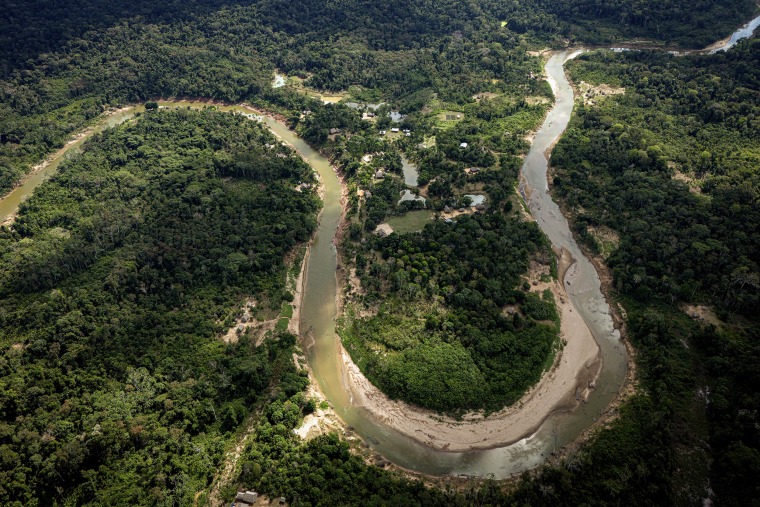
The Ashaninka Indigenous people successfully reclaimed their territory at the border of Brazil and Peru three decades ago. They have maintained governance, cultivated crops, and preserved the forest. However, their way of life is now under serious threat. Increasing encroachments by gangs and drug traffickers are infringing on Ashaninka land, utilizing Amazonian rivers and surrounding areas as drug smuggling routes.
Mounting Threats
Ashaninka leaders report frequent violent incidents, the latest occurring this month. They have appealed for protection, requesting meetings with Brazilian officials. Security forces have been temporarily deployed, but the threats persist. Indigenous groups believe the short-term presence of security forces fails to address the ongoing problem effectively.
“There is an institutional and intercultural blind spot in the public security services provided to Indigenous peoples,” stated Maj. Jonatas Soares, a police officer stationed in Tabatinga, Brazil.
Expanding Criminal Routes
The encroachment into Ashaninka territory is part of a broader change along the Amazon border. The Solimoes River route has become a major path for transporting cocaine from Peru, Colombia, and Bolivia to Brazilian ports, eventually reaching European markets. Indigenous lands, with dense forest cover, provide attractive hiding spots for smugglers. These territories, recognized by the state, lack consistent and tailored security measures.
Despite numerous requests for assistance, Indigenous communities feel neglected. The Brazilian government has not met their expectations in providing necessary protection. Indigenous youths are increasingly vulnerable to criminal groups due to economic deprivation, cultural isolation, and insufficient oversight.
Strength in Tradition
The Ashaninka’s commitment to preserving their traditions has been a crucial factor in resisting trafficking networks. They previously rejected drug traffickers’ proposals to establish a clandestine airstrip in their territory. Francisco Piyãko, coordinator of the Organization of Indigenous Peoples of the Jurua River, emphasized their historical opposition to illegal activities.
Recently, tension escalated when armed intruders invaded Kampa Indigenous territory to seek out its leaders. Attempts to secure their land included filing formal complaints with the Acre state authorities and the Brazilian Army, which led to the deployment of security forces.
“It’s one thing for outsiders to steal resources, like timber or wildlife. This time, they aimed to kill our leaders in their quest,” Piyãko explained.
Call for Government Action
The community remains resolute despite these recent challenges. Piyãko insists that countering armed groups should not fall upon Indigenous people alone. Responsibility should lie with both the Brazilian and Peruvian governments. Earlier this year, Brazilian Supreme Court Justice Flávio Dino urged the federal government to intensify its actions against these criminal organizations, acknowledging their growing threat to Indigenous populations.