
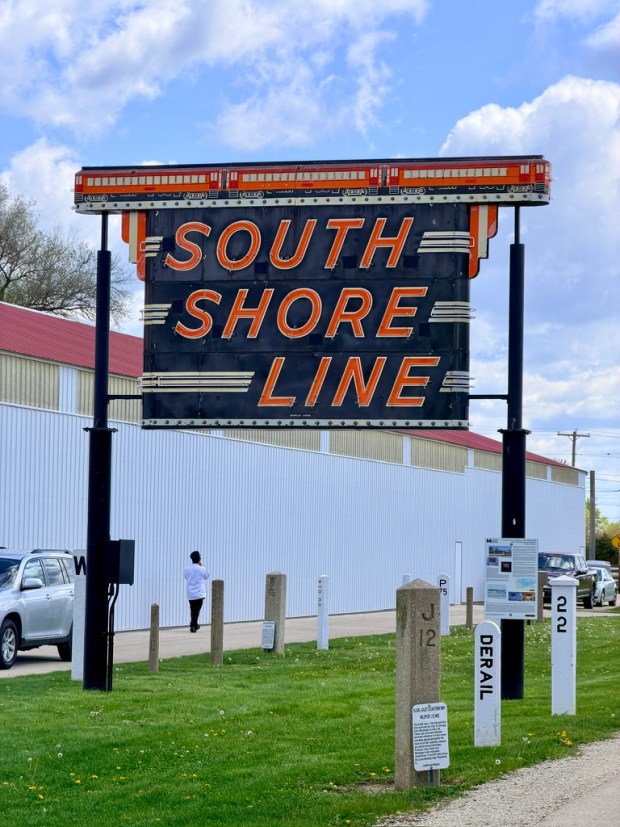
Railroad Days Event Honors Electrification Milestone
The Pullman Railroad Days event this weekend celebrates a crucial historical decision impacting the South Shore Line. Held at Pullman National Historical Park in Chicago, it honors the 100th anniversary of the Illinois Central trains’ electrification. Initially electrified last Tuesday, these trains were a significant advance in rail technology.
The historic South Shore Line, now known for its silver trains with orange stripes built by Nippon Sharyo, was revitalized by the Northern Indiana Commuter Transportation District in 1977. Previously, riders experienced journeys in older orange cars, introduced following the Illinois Central electrification.
Historical Insights from Key Figures
‘I’ll be either here, there or everywhere,’ said Norman Carlson, president and managing editor of the Shore Line Interurban Historical Society, describing his participation at the event.
Originally, South Shore trains operated on 660 volts of AC power before switching to 1,500 volts of DC power, post-electrification. Carlson interviewed Samuel Insull Jr. in 1978, gaining insight into his father’s impact on Northwest Indiana’s railway system. Insull planned to bolster electricity demand, eventually acquiring several railroads.
Insull’s acquisition transformed the South Shore Line, permitting a direct route to downtown Chicago via the Illinois Central, now Metra Electric, tracks. This decision was particularly lucrative, providing access to coal supply routes and a planned power plant in Michigan City.
Adapting to Modern Challenges
The Illinois Central’s electrification stemmed from a need to reduce smoke emissions; in 1909, Chicago City Council mandated electrification by 1930 for passenger services. This ordinance led to a significant transformation at the time.
Riders benefited considerably from the new direct route to downtown starting August 29, 1926. The upgrade led to a surge in ridership, especially as passengers could stay seated till downtown Chicago.
The Impact of Historical Electrification
According to Nicole Barker, South Shore Line’s chief experience and engagement officer, the switch to electrified cars increased ridership significantly. By 1927, the line expanded with parlor and dining car services, although these services became casualties of the Great Depression.
Unlike the current COVID-19 era, the depression saw a drastic decrease in ridership, with fluctuating fares as railroads struggled to retain passengers. Historical accounts show that the railroads adapted by extending their cars, enhancing troop transport during WWII.
The impact was long-lasting, with individuals like Robert Harris preserving historical rail cars. Harris’s film work on Chicago’s rail transformation sparked his interest in acquiring the iconic orange cars.
Recent Developments and Future Prospects
The South Shore Line, now modernized with Nippon Sharyo cars displayed at Pullman National Historical Park, commemorates these advancements. Although Nippon Sharyo has ceased production of these models, the cars remain operational under an end-life rebuild program.
As rail technology progresses, Metra has begun exploring battery-powered locomotives. Northern Indiana Commuter Transportation District is actively expanding its services, discussing a new 20-year strategic plan to enhance routes in Northwest Indiana.
Efforts to modernize systems continue, with initiatives to improve reliability and extend service. The railroad’s historical legacy serves as a foundation for future advancements, shaping the journey forward for the South Shore Line.