
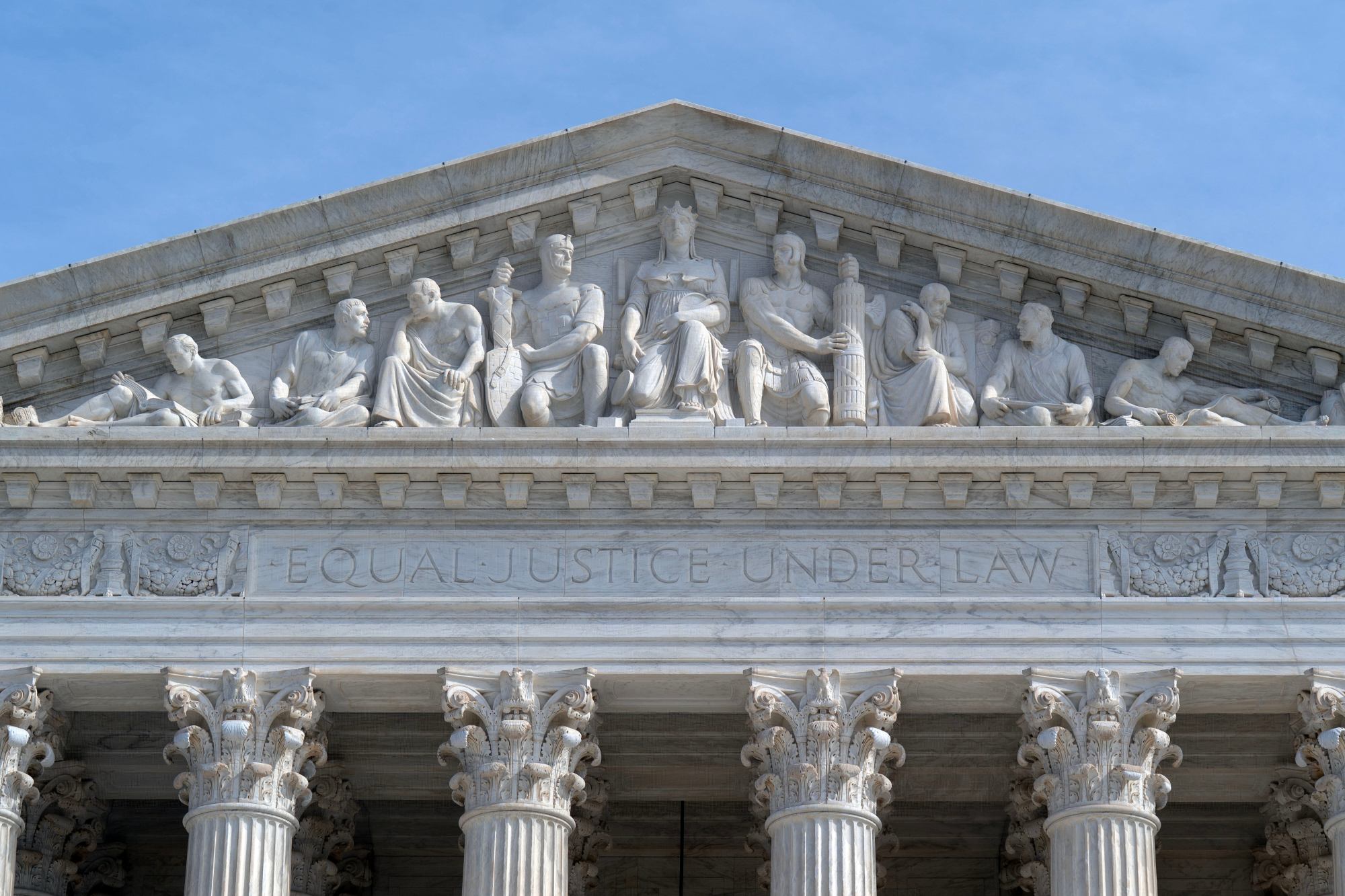
The U.S. Supreme Court, located in Washington, remains a political court. The recent term, ending October 2025, reinforces this perception. The court, with a conservative majority, delivered significant verdicts impacting various political aspects.
In discussions surrounding the term, conservative law professor William Baude acknowledged the Trump administration’s overreach but noted that the court demonstrated independence. The court, comprising six members appointed by Trump, ruled against him on issues concerning birthright citizenship, tariffs, and voting by mail. Baude emphasized the difficulty in recalling instances when such a court opposed the president’s interests so prominently.
Legal commentator Elie Honig argued that some of this term’s decisions, split 6-3 or 7-2, resulted from diverse judicial methodologies rather than politics. Cases involving the National Guard and Mifepristone were against Trump, albeit temporarily. However, Honig bypassed crucial rulings on asylum, Temporary Protected Status, and more, which pleased the administration.
Liberal law professor Stephen Vladeck compared the court’s conservative shifts to unexpected interventions amid crises, describing the term as bleak. He highlighted that in related rulings, Democratic appointees consistently aligned on 19 out of 20 occasions. Despite some Republican appointees occasionally crossing over, the term saw more partisan alignments compared to previous sessions.
Chief Justice Roberts played a pivotal role, forming coalitions to prevent Trump’s most excessive power grabs. This included attempts to misuse tariff statutes, redefine citizenship, and dismiss Federal Reserve Governor Lisa Cook. Yet, these votes remained narrow, showcasing the court’s tense environment.
The landmark case, Trump v. Barbara, reaffirmed the inclusion of birthright citizenship. Despite expectations for a unanimous or near-unanimous decision, the ruling favored Trump by a small margin. Roberts underscored the 14th Amendment’s historical context, ensuring citizenship for individuals born in the U.S.
Justice Samuel Alito challenged the ruling, deeming it erroneous. Roberts criticized the dissenting theories as ungrounded, referencing Alito’s arguments as nonsensical.
Significant cases like Slaughter and Cook further underscored the court’s conservative agenda. The Slaughter decision, reversing longstanding precedent, facilitated the president’s ability to discharge agency heads, notably excluding the Federal Reserve. Historical congressional intentions and diligent legal analyses were sacrificed for conservative objectives.
Trump’s influence over various federal departments became evident, impacting areas like justice and military promotions. These incidents highlighted the shift towards executive dominance.
In Louisiana v. Callais, the court weakened Section 2 of the Voting Rights Act. This decision followed an order supporting Alabama’s district mapping, previously deemed racially discriminatory by a lower court. Consequently, African American disenfranchisement persisted in the South.
The court notably favored Republicans and Trump when opportunities arose, curbing his excesses only out of necessity. Overall, the term significantly enhanced presidential powers, prompting concerns akin to historical absolute monarchies, as dissented by Justice Sonia Sotomayor.