
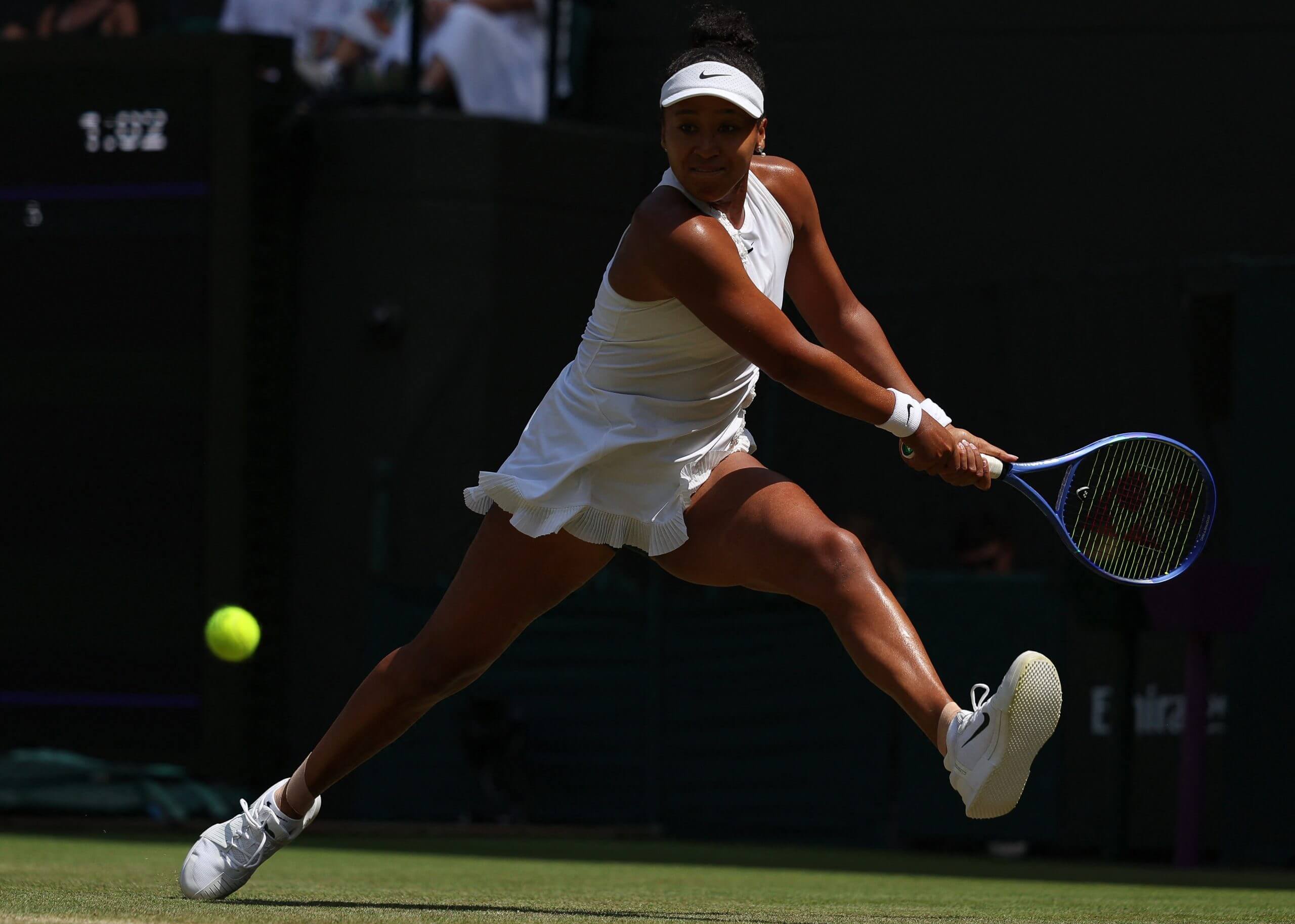
The All England Club, London — Naomi Osaka, known for her unique blend of tennis prowess and fashion flair, is making strides on grass courts, an environment she once found challenging. Osaka, a 28-year-old and four-time Grand Slam champion, has advanced to the second week of Wimbledon for the first time. She has done so impressively, winning her initial matches without losing a set.
Osaka’s transformation on grass courts is noteworthy. Previously, she struggled to adapt to the surface and doubted her success on it. However, this year’s performance paints a different picture. After defeating Daria Kasatkina 6-1, 6-3 in a mere 65 minutes, Kasatkina commented, “It’s kind of a hard thing to fathom given the way she played.”
Osaka seems to be finding her way on grass and her results are proof of that progress,” added Kasatkina, acknowledging Osaka’s newfound comfort on a surface that previously eluded her.
Alongside her on-court accomplishments, Osaka has made headlines for her fashion statements. Her appearances at this year’s majors have been marked by creative ensembles reflecting her culture and personal expression. At Wimbledon, she has worn a white outfit inspired by Japanese ceremonial dress, designed with Hana Yagi. Previous grandslams also saw her in striking outfits that aligned with the themes of each tournament location.
Osaka’s approach may seem unconventional to some athletes focused solely on their sport. Yet, for Osaka, fashion provides an outlet for self-expression, adding a dimension she finds more comfortable than tennis. She openly expressed in a news conference her preference for discussing her attire over her tennis.
“Tennis has become a vehicle for my self-expression,” she said, emphasizing that her clothing reflects her identity more comfortably than her sport sometimes can.
Osaka’s journey in tennis has not been straightforward. Growing up, she barely played on grass, focusing instead on stabilizing her powerful shots on hard courts, her preferred surface. Clay courts posed a similar challenge due to the slower game requiring different tactics.
Despite these challenges, recent developments in Osaka’s career have shown a shift. After a hiatus in 2022, when she welcomed her daughter Shai, Osaka returned to a more competitive landscape. Players hit harder and accessed angles previously infeasible when staying near the middle of the court.
Collaboration with new coaches led Osaka to adapt. Former ballerina Simone Elliott helped Osaka enhance her movement and balance on the court. This evolution was crucial as Osaka learned to hit open-stance backhands, a key shot for modern tennis players.
Her progress wasn’t instant, as Osaka recalled feeling revitalized only last summer after initial post-birth struggles. After an insightful loss to Emma Raducanu at the D.C. Open, Osaka’s form improved, leading her to reach finals and semifinals in major tournaments.
This season, Osaka frequently encounters top-tier players, like Aryna Sabalenka and Iga Świątek, who have set a new standard in tennis with their aggressive styles. Osaka continues to learn from these encounters as she integrates new techniques, especially on grass.
As Osaka faces Sabalenka again in her first fourth-round appearance at Wimbledon, her enhanced understanding of grass court dynamics could make all the difference. Guided by her coach Tomasz Wiktorowski, she has embraced a more nuanced approach to grass court play, focusing on ball bounce and forward movement.
Reflecting on her past perception of grass, Osaka shared, “It’s more free-flowing.” This insight marks a new chapter in her career as she finds comfort and expression both on and off the court.