
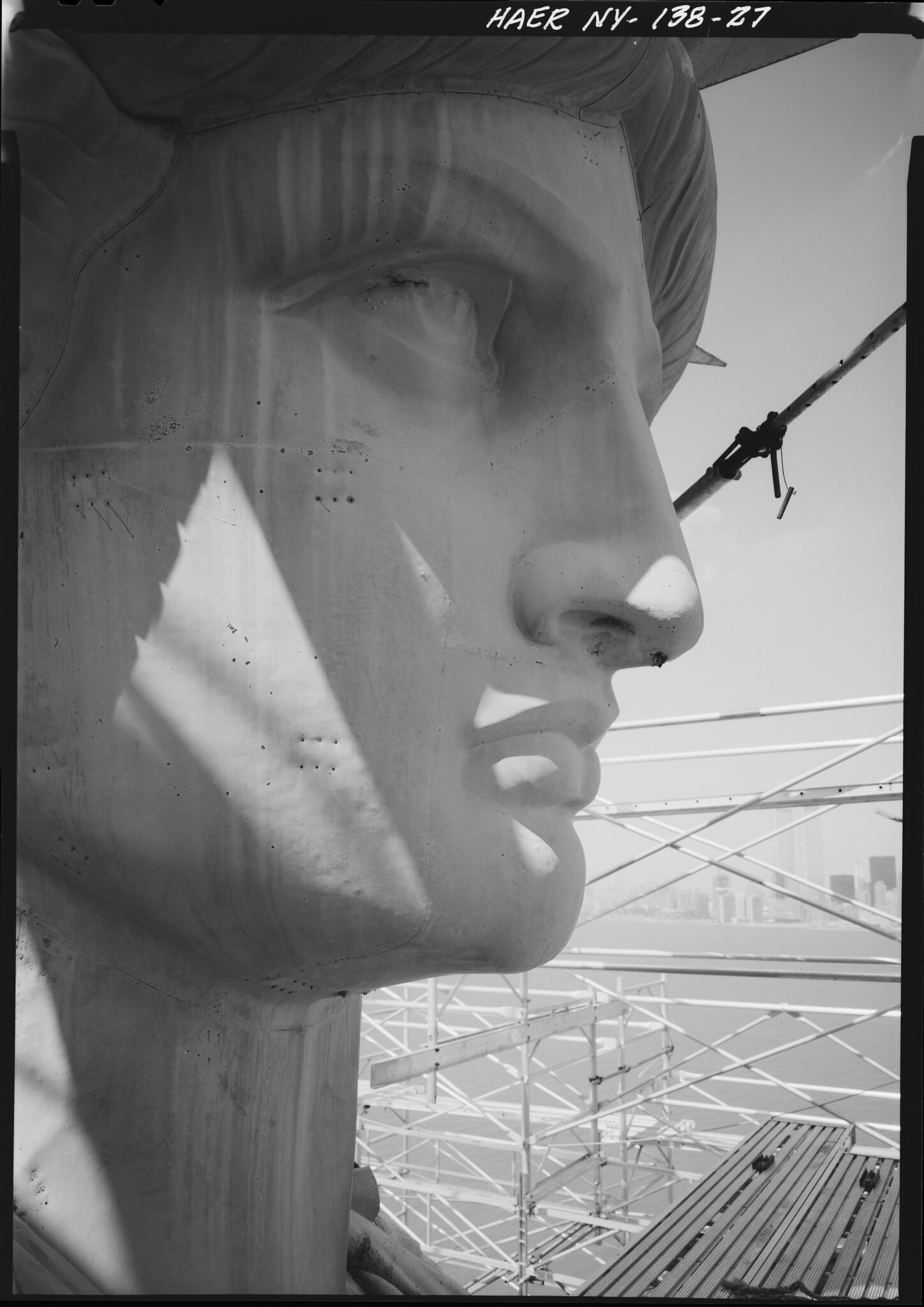
The Statue of Liberty, an emblematic figure towering in New York Harbor, is enveloped in scaffolding, underlining her need for periodic restoration. Originally assembled in Paris and transported to America, this French creation has become an inextinguishable symbol of freedom, resonating with the ethos of her adopted country.
The statue’s journey from concept to realization denotes the fusion of art and engineering. Designed by the Alsatian artist Frédéric-Auguste Bartholdi, Liberty was born out of public subscription, intended as a gift from French liberals to celebrate American independence.
Liberty’s creation coincided with a period marked by monumental art and extensive industrialization. Bartholdi, influenced by his travels in Egypt, envisaged grand sculptures reminiscent of the colossal works seen there. His aspirations to create such monumental art were shaped by his experiences and the political shifts of his time.
Technological innovation played a vital role in Liberty’s construction. Initially intended only as a lighthouse for the Suez Canal, she was repurposed to symbolize liberty, becoming a more universal representation in New York.
Engineering challenges were immense. Bartholdi partnered with Gustave Eiffel to solve them. The statue stands on an iron framework, allowing her to withstand elements and be disassembled in France, then reassembled across the Atlantic—an ambitious logistical endeavor.
During the 19th century, Bartholdi’s vision faced revisions. Techniques like repoussé were harnessed, involving hammering copper over wooden molds, which allowed for precise yet lightweight construction. As the pieces were assembled, they were riveted together, forming Liberty’s exterior, much like an Erector Set, defining the shift from traditional to modern art forms.
Upon her arrival in the United States, Liberty underwent final assembly with the same innovative spirit. Her unveiling in 1886 marked an event of profound significance, aligning with both French and American ideals of liberty.
For Bartholdi and Eiffel, Liberty represented the pinnacle of collaborative engineering. As an amalgamation of art, history, and technology, she stands as a testament to the strength of cross-continental collaboration, embodying both American ideals and French artistry.
From her construction to the symbolic interpretations she spurred, the Statue of Liberty continues to represent a complex interweaving of ideas and materials. She invites reflection on freedom’s essence, standing as a hollow yet poignantly filled structure, continually watched by those who arrive seeking peace.