
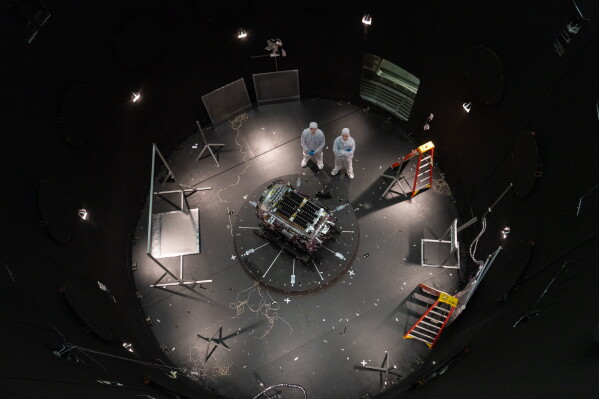
A spacecraft launched on a mission to rescue a rapidly descending NASA telescope. The Northrop Grumman vehicle, deployed by Katalyst Space Technologies, took off from the Marshall Islands. It aims to capture and stabilize the Swift Observatory, which faces a potential fall to Earth.
The spacecraft departed aboard the Pegasus rocket, which was released from a modified aircraft. Katalyst Space Technologies expects the mission to reach the telescope and correct its orbit within a month.
The Swift Observatory, operational since 2004, has been forced out of its regular orbit path by intensified solar storms. NASA invested $30 million in Katalyst to elevate the observatory, allowing it to continue observing major cosmic events. These include gamma-ray bursts and star explosions.
If successful, Swift could return to its observation schedule by September. Currently, its activities are paused to conserve its orbit. Another target for a similar rescue could be the Hubble Space Telescope. The Hubble is also experiencing orbital decay due to solar activity.
Swift, weighing 1.6 tons, circles 360 kilometers above Earth. Katalyst intends for it to rise an additional 240 kilometers. To achieve this, the spaceship’s boosters will operate incrementally, ensuring gentle adjustments to the telescope’s path.
The urgency of the mission stems from Swift’s low altitude. NASA required swift action as failing to act could result in the telescope’s uncontrolled descent into the atmosphere by October.
Launch delays arose from bad weather and technical issues. Despite these, Katalyst’s CEO, Ghonhee Lee, highlighted the mission’s significance. “High risk and high reward,” he stated. The greatest risk would have been inaction, leading Swift to an atmospheric burn-up. “Our team has worked hard to avoid that outcome,” Lee emphasized.
This content relates to a partnership funded by the Howard Hughes Medical Institute’s Department of Scientific Education and the Robert Wood Johnson Foundation. The Associated Press bears full responsibility for the content.