
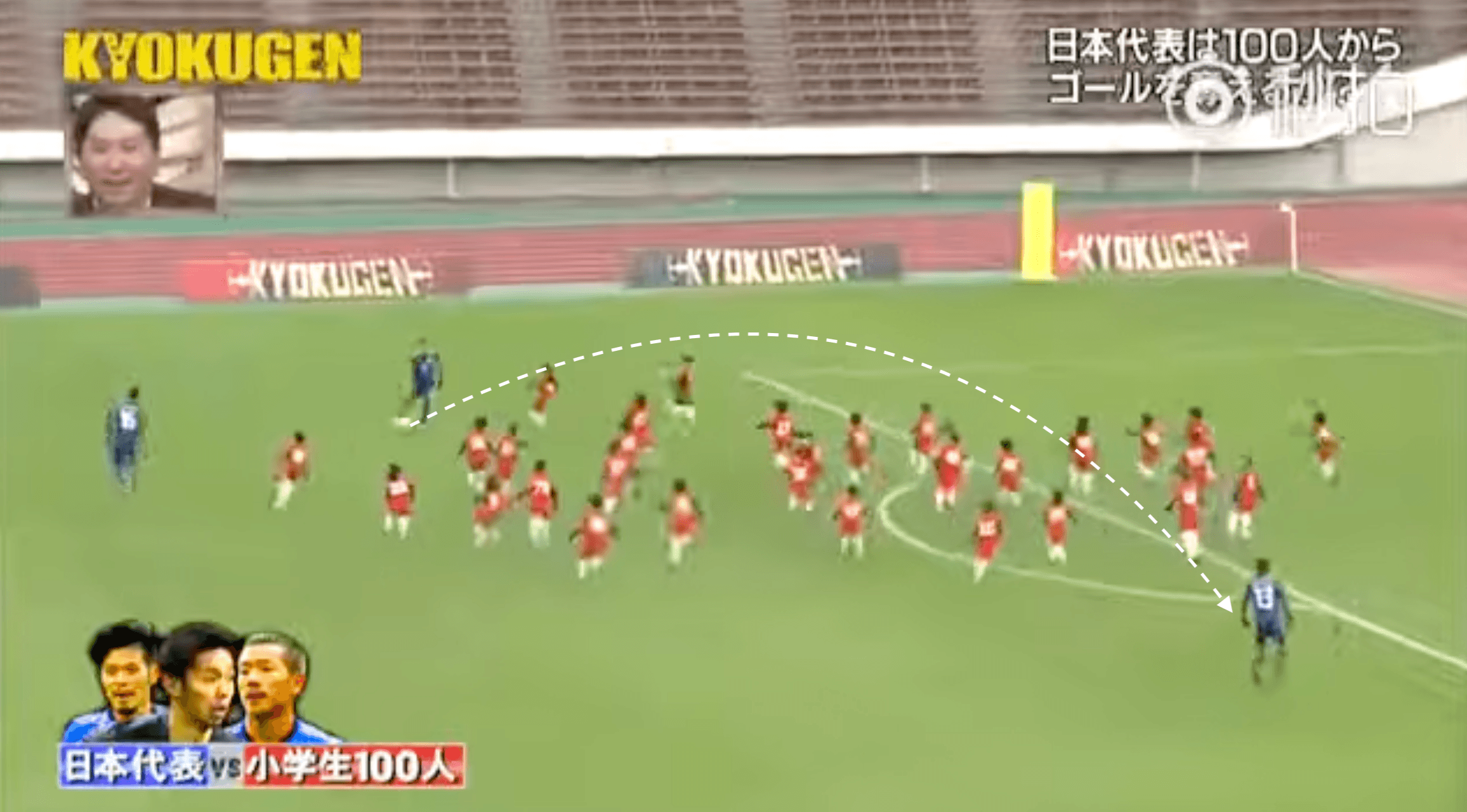
Social media often showcases memorable clips, and one famous footage is from several years ago, featuring three Japan internationals—Hotaru Yamaguchi, Hiroshi Kiyotake, and Yosuke Ideguchi—playing against 100 schoolchildren on a full-sized football pitch. It appears farcical, yet fascinating. Observing how the internationals pass the ball despite overwhelming numbers is mesmerizing. Their strategy leverages the kids’ tendency to follow the ball, allowing for play switches to unmarked flanks.
These youngsters demonstrate positional naivety. This situates much of Japan’s approach in modern football. Their current side often displays similar play styles against 10 fully-grown outfield players. Japan employs a 3-4-3 system forming a front five in possession, challenging opponents by finding spare players who run into the box unmarked. This tactic is effective whether facing hundreds of young opponents or top-tier teams.
Japan’s wing-backs have unique characteristics. Unlike typical wing-backs like Daniel Munoz or Denzel Dumfries, they are not solely late runners. Ritsu Doan plays the right side but is left-footed, and Keito Nakamura on the left is right-footed. They possess the versatility to cut inside and shoot or check inside to switch play with angled passes.
An example during a match against Sweden shows Japan’s style. Central midfielder Daichi Kamada moved to the left, cut back onto his right foot, crossing deep to Yukinari Sugawara, playing instead of Ritsu Doan. The play allows Japan to utilize multiple switches, keeping opponents on their toes.
The forthcoming encounter with Brazil highlights Japan’s promising approach. Brazil grapples with clear weaknesses at full-back. Right-back Danilo, nearing 35, and left-back Douglas Santos, not a top performer, present vulnerabilities. Brazil’s central defense is robust, but Japan’s switches aim to bypass them.
How Brazil will tactically manage Japan’s style remains uncertain. Teams often add an extra player to their back line against Japan. The Netherlands employed Frenkie de Jong in such a role, freeing full-backs against Japan’s wide switches. Will Brazil’s Casemiro or Rayan assume similar responsibilities?
This match transcends the tournament’s importance, impacting the World Cup’s global narrative. While football is seen as worldwide, it remains dominated by Western Europe and South America. Japan symbolizes an emerging force, marked by infrastructure, tactical and technical prowess admired by coaches. They have yet to win a World Cup knockout game.
Facing Brazil, a historic World Cup titan, presents an opportunity. Japan’s tactics might be optimal for making history by overcoming Brazil and shifting global football dynamics.