
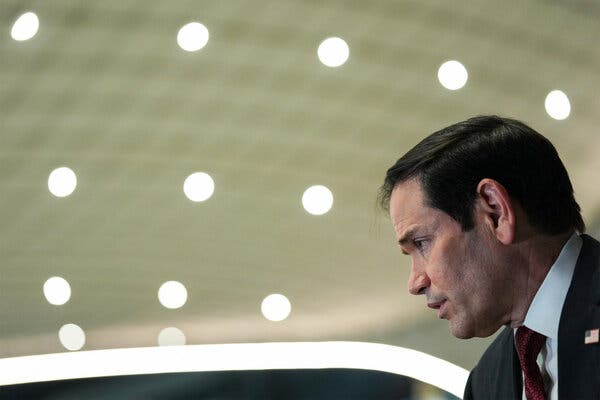
Secretary of State Marco Rubio has firmly dismissed Iran’s proposal to charge ships for passage through the Strait of Hormuz, citing international law that prohibits such tolls on global waterways. Rubio made these remarks during his visit to Abu Dhabi, marking the start of his three-capital tour in the Gulf region.
The Strait of Hormuz is a critical maritime passage for global commerce, and Rubio emphasized that no nation is permitted to impose fees on international waterways. He stated, “No country is allowed to charge tolls or fees on an international waterway. That’s existing international law.” This declaration comes amid ongoing peace talks between the United States and Iran, which concluded their initial round in Switzerland.
Recently, the U.S. and Iran signed a memorandum of understanding acknowledging Iran’s influence over the strait, highlighting that Iran and Oman would collaborate on its management. The agreement currently prevents any country from charging fees for 60 days but lacks further stipulations thereafter. Iran, however, has expressed its intention to charge for passage, describing these charges as fees for services instead of tolls. Analysts view this as a semantic distinction.
President Trump had previously stated via social media that tolls on strait traffic would only be acceptable if imposed by the United States. Marco Rubio did not specifically engage with Trump’s statements during his remarks.