
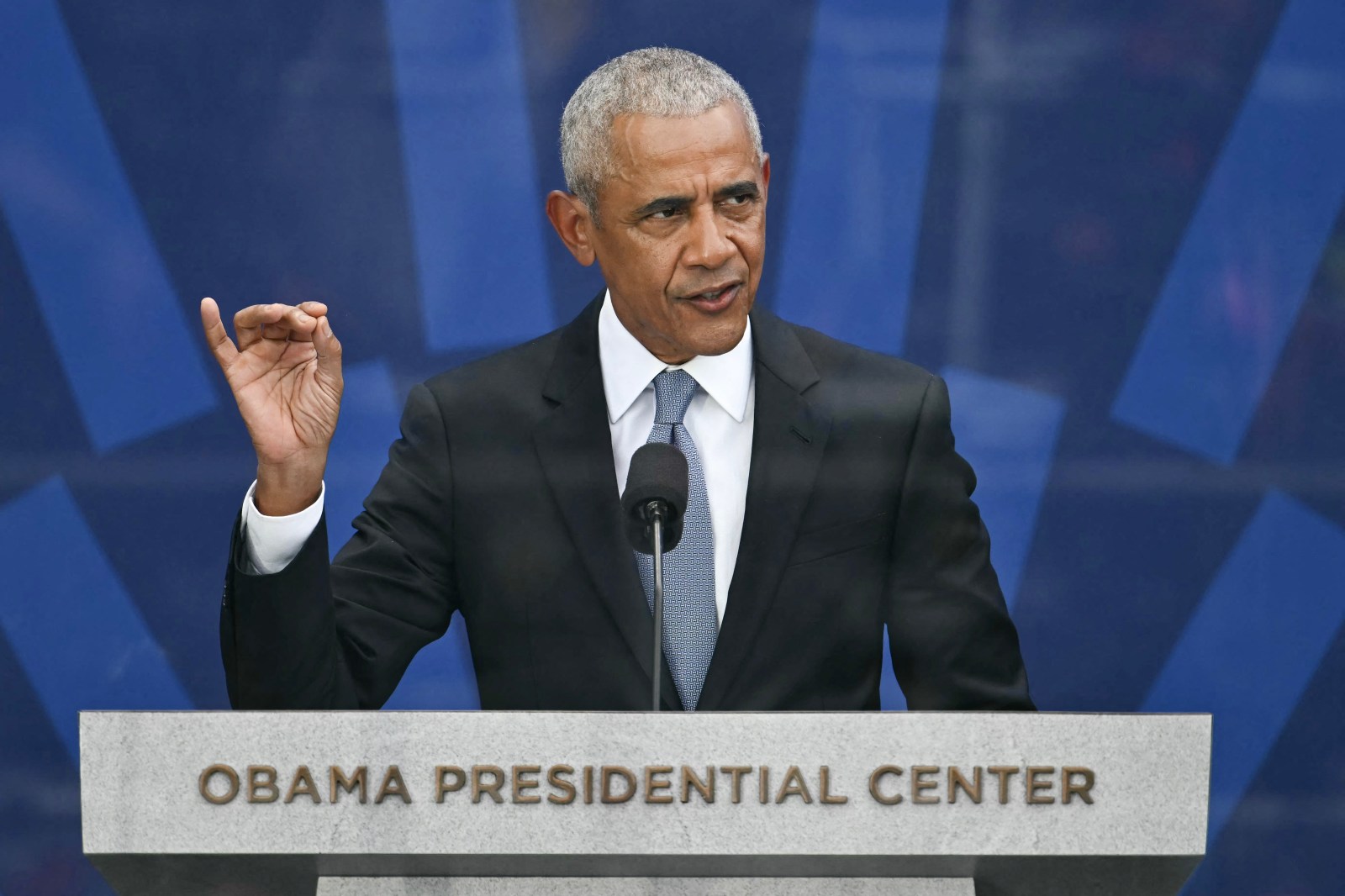
Former President Barack Obama expressed his approval of President Donald Trump’s success in negotiating a ceasefire with Iran, while also expressing concerns about the United States potentially being weakened despite prolonged military engagement. In an interview with NBC’s Today, Obama acknowledged the cessation of hostilities but questioned whether the military conflict’s outcomes justified its costs. His remarks come as the Trump administration aims to build upon the newly established ceasefire framework and engage in broader talks with Tehran.
Ceasefire Marks a Shift
“I am very happy to see a ceasefire,” Obama mentioned. “I’m hopeful that it holds.” This statement is one of Obama’s most direct assessments of the conflict’s progression since tensions between the United States, Israel, and Iran intensified earlier this year. His comments highlight the ongoing debate about the war’s necessity and its outcomes, which are seen in light of the diplomatic strategies pursued during his own administration.
War’s Worth Questioned
While praising the ceasefire, Obama expressed skepticism about the conflict’s real benefits for the United States. “We’ve now fought a war, spent billions and billions of dollars, putting significant strain on our military,” he noted in the Today interview. He added that the situation may seem similar or worse than before the conflict escalated.
These comments coincide with ongoing discussions among policymakers, military experts, and foreign policy analysts about whether any party can claim a decisive victory. A long-standing debate also persists regarding the 2015 Iran nuclear agreement, the Joint Comprehensive Plan of Action (JCPOA), which was developed during Obama’s tenure and from which Trump later withdrew in 2018.
Trump Claims Success
President Trump, on the other hand, is highlighting the war’s outcomes as a major triumph. On Friday, he used Truth Social to argue that Iran now lacks significant military capabilities, countering claims that Iran is better off post-conflict.
Debate Among Military Experts
The question of who emerged stronger from the war is highly contested. Some experts assert that Iran faced considerable military setbacks, including losses to its armed forces and diminished strength among its regional proxies.
“It is difficult to make the case that this war achieved any significant positive result for the United States,” said James Stavridis, a retired U.S. Navy admiral and former supreme allied commander of NATO, in a Newsweek interview.
Others argue that Iran’s leadership managed to withstand the military campaign, maintain its power, and eventually join negotiations again, projecting a level of political endurance despite losses. Mark Cancian from the Center for Strategic and International Studies suggests that the U.S. might be in a preferable position, pointing out the extensive strikes conducted against Iran, although the full impact remains unclear due to information suppression by Iran.
Nuclear Deal Revisited
Obama’s comments also bring attention back to the 2015 JCPOA, a key foreign policy feat under his administration. The agreement imposed limits on Iran’s nuclear program in return for sanctions relief and facilitated intensive international oversight. Supporters claimed the deal effectively curbed Iran’s nuclear activities until Trump’s withdrawal led Iran to scale back its commitments, increasing uranium enrichment.
In the Today interview, Obama highlighted that many of the current negotiation issues were tackled in the original agreement and expressed doubt about the likelihood of obtaining substantially different terms.
Republican Views on Iran Policy
Obama is not the sole voice questioning the conflict’s outcomes, with Republican figures divided over Trump’s Iran strategy. Critiques have arisen within the GOP, with some accusing the emerging agreement of being a strategic error. Senator Bill Cassidy labeled the framework a “tremendous foreign policy blunder,” expressing skepticism about effectively restraining Iran’s nuclear goals.
Conversely, other Republicans back Trump’s approach. Senator Lindsey Graham, in a social media post, fully endorsed Trump’s view that Iran’s ability to support terrorism and pose threats has been “massively degraded.” Graham encouraged continued diplomatic efforts to address Iran’s nuclear goals.
Looking Ahead
The current ceasefire has paused direct hostilities, but key issues about Iran’s nuclear program, sanctions relief, and the durability of any agreement remain unresolved. Regional tensions persist, as underscored by recent Israeli military actions in Lebanon, raising doubts about the long-term prospects for peace.
For now, both Obama and Trump seem to share one priority: avoiding a return to open conflict.