
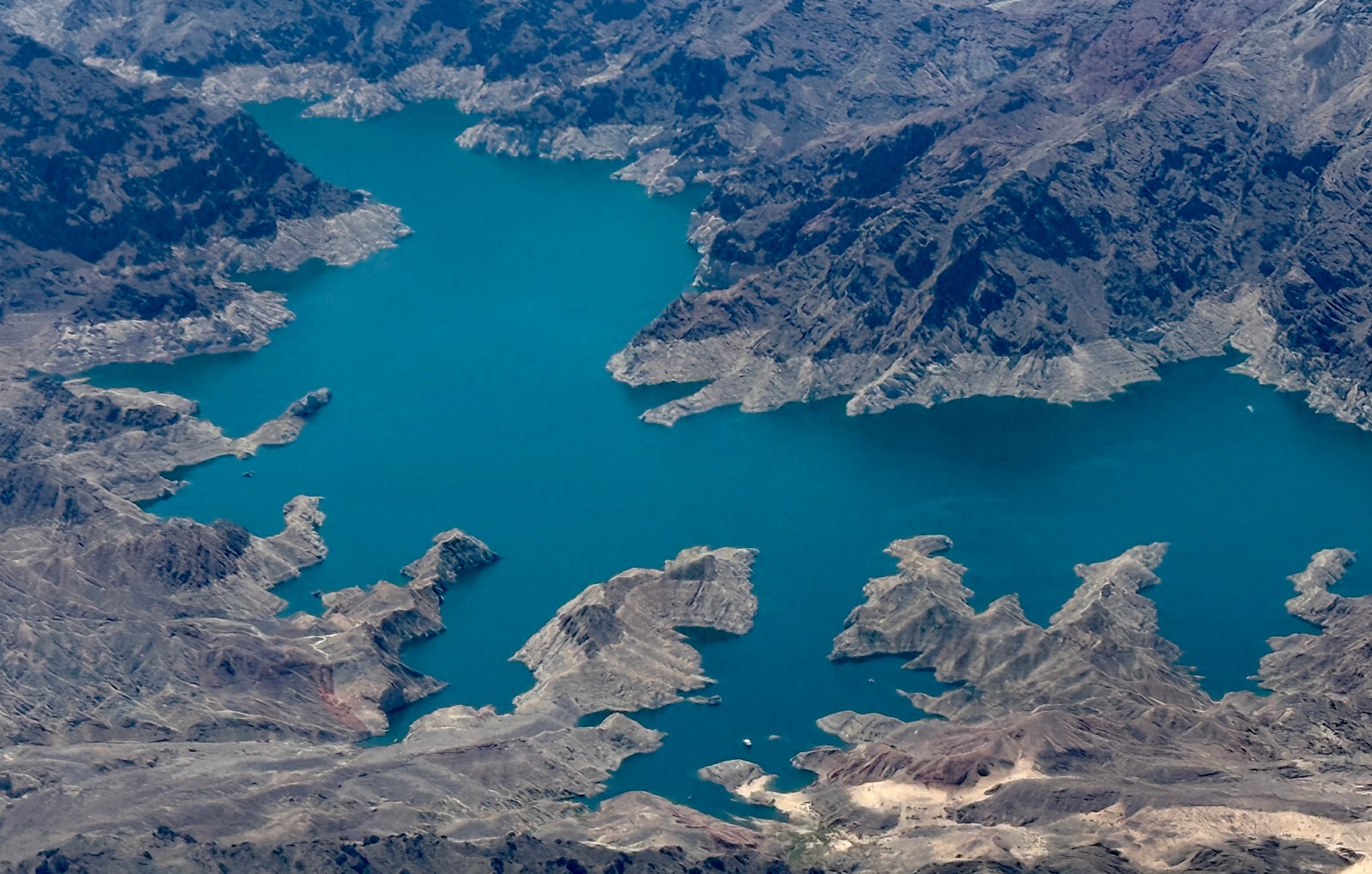
Federal projections from the U.S. Bureau of Reclamation (USBR) highlight the accelerated decline of Lake Mead, the largest reservoir in the United States. The latest study forecasts the water level to potentially reach 1,015.77 feet above sea level by July 2027. This marks a sharper drop than the previous month’s forecast, which predicted the level at 1,020.76 feet by July next year.
Lake Mead, a critical part of the Colorado River network, serves approximately 40 million residents across the Western U.S. and supports over 5 million acres of agricultural land. Despite its importance, the network faces persistent drought conditions, raising significant concerns regarding water and electricity supply.
Recent projections highlight the ongoing vulnerability of the Colorado River system and emphasize the urgent need to develop new guidelines and establish updated procedures,
a USBR spokesperson explained, addressing the need for immediate action in light of the new data.
Currently, Lake Mead holds only 29 percent of its capacity, with 7,454,257 acre-feet of water stored. This is 47 percent of the typical level for this time of year according to USBR data.
What the Projections Indicate
The USBR’s 24-month study provides both hydrological descriptions and future operations for the Colorado River system reservoirs over the next two years. The study suggests that Lake Mead could drop further to 1,011.74 feet by the end of May 2028. However, these figures are projections and may change based on actual hydrologic conditions, operations, and forecasts.
Projections also draw attention to ongoing concerns regarding power generation. Adverse forecasts for the Colorado River system include the potential impact on Lake Powell, which could face critical water levels affecting hydropower capacity. According to the USBR, current operational guidelines are soon to expire, underscoring the need for updated operational strategies.
This outcome is not a reflection of recent drought response actions, but rather a clear reminder that the Colorado River remains vulnerable and that updated operational tools are essential for long-term stability,
noted the USBR in a statement, particularly regarding Lake Powell’s situation.
Additionally, scientists warn of a possible system crash of the Colorado River system due to imbalances between water supply and demand.
Which States Rely on the River?
The states dependent on the Colorado River include Colorado, New Mexico, Utah, and Wyoming in the Upper Basin, alongside Arizona, California, and Nevada in the Lower Basin. These areas have been trying to negotiate updated water-sharing agreements as the current operating guidelines are set to expire. Consensus among these states remains elusive.
Satellite imagery over a period of 25 years has further illustrated the decline. Lake Mead appears significantly smaller in images from 2024 when compared to 1999, underscoring the stark changes observed over time. This change was captured by Landsat 7, a collaboration between the United States Geological Survey and NASA.