
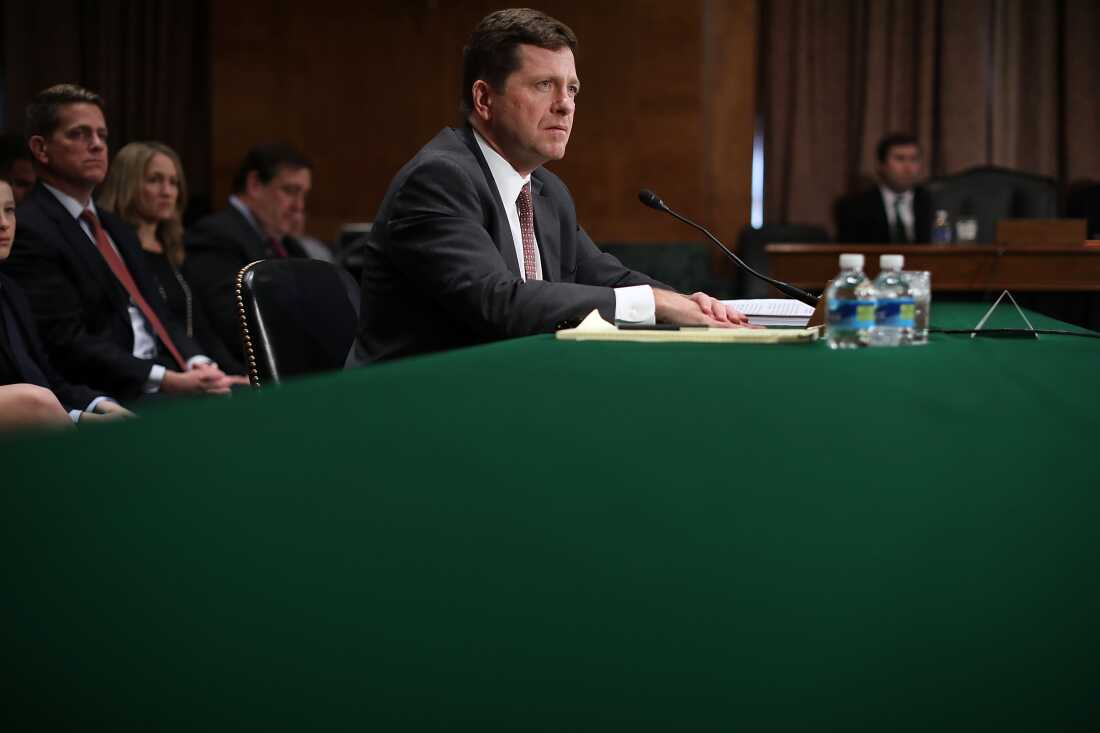
Clayton is set to appear before the Senate Intelligence Committee for a confirmation hearing to become Director of National Intelligence. Previously, Clayton testified before the Senate Banking Committee during his confirmation hearing as chairman of the Securities and Exchange Commission in 2017. Trump has delayed Clayton’s nomination to exert pressure on the Senate to advance another nominee and approve a voting bill.
Trump’s unexpected move was announced through a social media post on Truth Social at 4 a.m. eastern, shortly before Clayton’s scheduled hearing. Trump attributed the delay to a past agreement with Democrats, which avoided his previous nominee, Bill Pulte, who lacks intelligence experience and faced criticism for being a political defense for Trump.
In his statement, Trump connected the reauthorization of the surveillance tool, FISA Section 702, to a voting restrictions package that previously failed in the Senate. “Regarding the approval of our Great Patriot, Jay Clayton, we are cancelling the Senate Hearing RE: DNI today, and will not be going forward until Jamie McDonald is approved to be U.S. Attorney. In the meantime, Bill Pulte will remain as the Acting Director of National Intelligence,” Trump stated.
Who is Jay Clayton?
Clayton currently heads the U.S. Attorney’s Office for the Southern District of New York, managing high-profile cases such as the indictment of former Venezuelan President Nicolás Maduro. He was also confirmed by the Senate as the SEC chairman during Trump’s first term. The director of national intelligence oversees 18 agencies and informs the president on national security matters, including the President’s Daily Brief.
Senators sought to expedite Clayton’s confirmation, aiming for him to start by June 19. This would precede Bill Pulte’s temporary role as acting director.
Controversy over Bill Pulte
Pulte, serving as the Federal Housing Finance Agency director, has no intelligence experience and has criticized Trump’s opponents. His sub-cabinet role was used to pressure then-Federal Reserve chair Jerome Powell to resign. Moreover, Pulte accused Trump’s perceived opponents of mortgage fraud, which they deny. Concerns arose from Democrats and some Republicans about Pulte’s potential misuse of the national security position.
The uproar led to the expiration of a spy law critical to U.S. intelligence gathering. Trump suggested Pulte could declassify 2020 election documents and reduce agency size. Rapid movement was intended for Clayton’s nomination before Trump’s sudden intervention. Senators aimed to minimize Pulte’s role.
Clayton’s hearing was promptly set post-nomination. If confirmed, he would replace Tulsi Gabbard, who resigned citing her husband’s health issues. Gabbard, controversial during her tenure, was confirmed previously despite lacking intelligence experience and making remarks supporting certain foreign autocratic leaders.
During her role, Gabbard attended a contentious FBI raid on a Georgia election office, linked to Trump’s unfounded election fraud claims.