
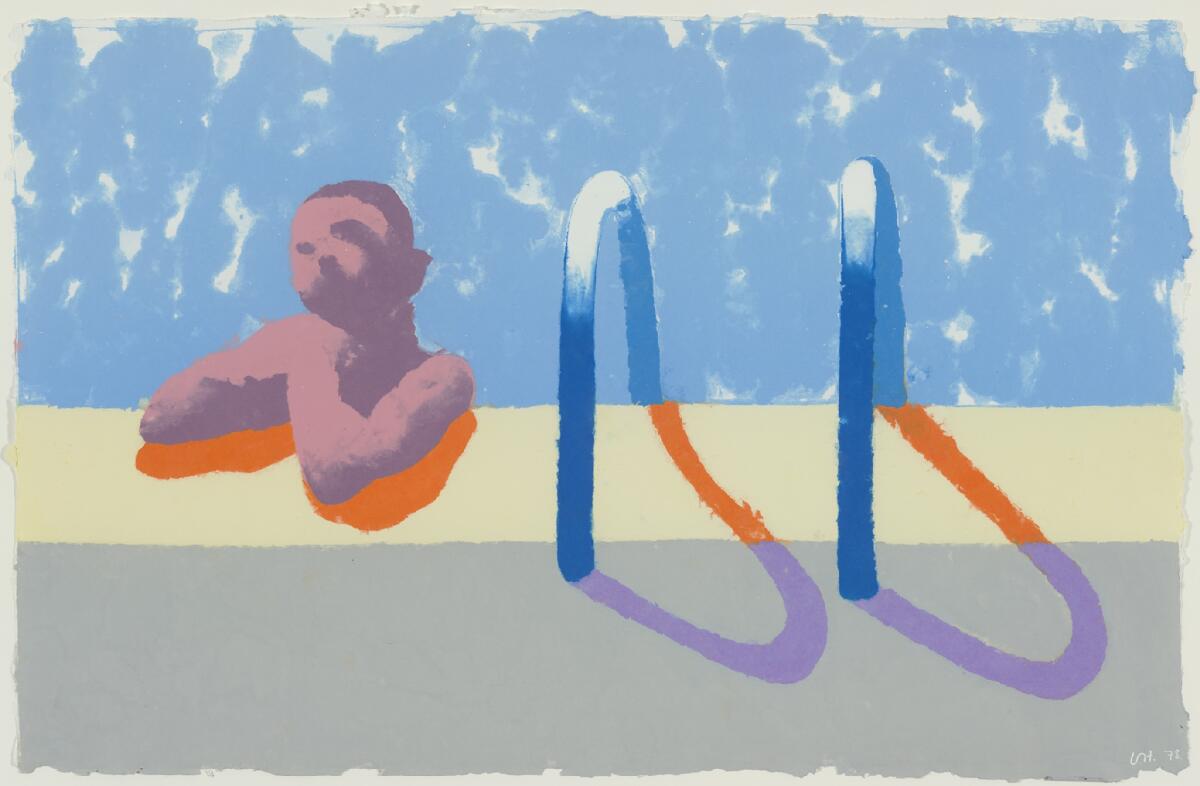
David Hockney, the renowned British artist, passed away at the age of 88. Known for his vibrant and imaginative works, Hockney arrived in Los Angeles in 1964, embracing the city’s sunny landscapes. His art celebrated swimming pools, palm trees, and city life. He engaged in various creative expressions, including photo collages, iPad drawings, and Yorkshire landscapes.
Hockney’s creativity and presence were constant in the art community. He emerged from London’s Royal College of Art, leading the Pop Art movement. His unique perspective and style kept him in the public eye for decades. The David Hockney Foundation possesses more than 8,000 works, featuring sketchbooks, self-portraits, opera designs, and personal portraits.
Hockney’s affection for Hollywood influenced his art. His trademark peroxide blonde hair reflected the cultural influence he absorbed from Clairol TV ads during his student years. Interests ranging from Elvis Presley to astronomy highlighted his uniqueness. Robert Hughes, an art critic, once called him “the Cole Porter of modern art.”
As an openly gay artist, Hockney’s love affair with Peter Schlesinger inspired his 1972 painting “Portrait of an Artist (Pool with Two Figures).” This work fetched a record $90 million at a 2018 auction. His art showed deep understanding and homage to masters like Picasso, Monet, and Van Gogh. Opera often accompanied his studio time as he designed sets for major opera houses in cities such as Los Angeles, Chicago, and London.
His exhibitions drew large audiences, notably at the Los Angeles County Museum of Art from 1988. A significant retrospective in 2017 at the Met reflected his stature, with admiring words from Andrea K. Scott, a writer from the New Yorker. Hockney received the Order of Merit from Queen Elizabeth II in 2012.
Born in Bradford, Yorkshire in 1937, Hockney was the fourth child in a working-class family. His artistic journey began at an early age, leading to the Royal College of Art, where he graduated in 1962 with a Gold Medal. A dedicated worker, he pushed himself, as seen in his biographer’s account of the sign “get up and work immediately” in his first flat.
In the ’80s, Hockney created multi-image photographic collages featuring friends and landmarks. Experimentation with technology characterized his career, utilizing cameras, fax machines, and photocopiers. Fascinated by techniques from the past, he studied portraits by Jean Auguste Dominique Ingres, adopting optical methods for his own creations.
Hockney’s death was confirmed by authoritative sources like the Associated Press and New York Times, marking the end of a celebrated journey in art and culture.