
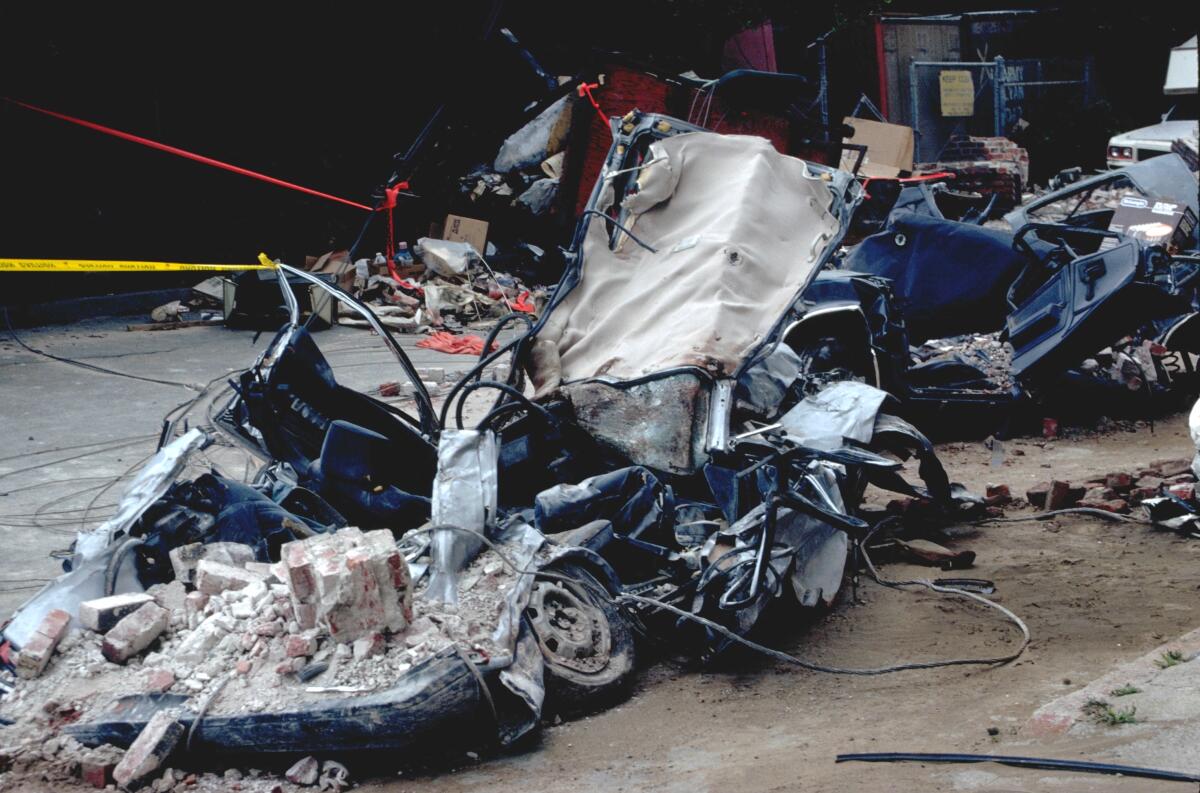
Late at night, a powerful earthquake shook Southern California, affecting millions of residents. This quake, with a magnitude of 6.0 near North Palm Springs, caused significant damage, including breaking the California Aqueduct and flooding a desert lake bed. Although not as memorable as Northridge or Loma Prieta, this July 8, 1986, earthquake began a series of seismic events that troubled the region for nearly a decade. It marked an era that younger generations have not experienced.
Seismic Safety and Preparedness
California’s cities have largely avoided major earthquakes in the past 25 years, but this may not last. Seismologist Lucy Jones from Caltech highlighted the significance of understanding the long-term seismic reality of California. While strides in earthquake safety have been made, such as retrofitting vulnerable buildings, efforts have been inconsistent.
Los Angeles has taken steps to mandate retrofits for certain structures, but has not required inspections of potentially vulnerable steel skyscrapers. Many Inland Empire cities, positioned along the San Andreas Fault, have not required the retrofit or demolition of old brick buildings. These could collapse and pose significant dangers during an earthquake.
The ShakeOut Scenario
Scientists are planning to update the ShakeOut scenario. This is a projection of the potential devastation from a hypothetical magnitude 7.8 earthquake on the San Andreas. Initially released in 2008, it suggested such a quake could lead to over 1,800 deaths, 50,000 injuries, and $200 billion in damage.
Lucy Jones, who leads the ShakeOut initiative, noted both the progress and missed opportunities in earthquake preparedness. Her center received funding to update the scenario, emphasizing the importance of preparation since a major earthquake in Los Angeles has not occurred in decades.
“A disaster becomes a catastrophe when society is unprepared for the level of disruption,” Jones explained.
Potential Future Impacts
The revised ShakeOut scenario might consider scenarios like a massive urban fire resulting from a magnitude 7.8 earthquake. In 2008, Southern California’s quake vulnerability included potential water loss, hindering firefighters’ ability to control fires. The scenario predicted multiple fires across regions such as San Bernardino and South Los Angeles, potentially causing 900 deaths and $90 billion in property damage.
California’s Seismic History
California, known for its seismic activity, experiences fewer quakes than regions like Japan or New Zealand. Yet, megaquakes can occur. Historical quakes have hit Southern California, including those in 1857 and 1906. Post-1986, the region experienced several significant quakes.
The 1987 Whittier Narrows earthquake highlighted urban vulnerability, while the 1989 Loma Prieta quake caused $6 billion in damage and killed 63. Following these events was the Northridge earthquake in 1994, killing 60 and causing $40 billion in damage.
Recent Seismic Activity
Recent decades have seen major quakes, including the 1999 Hector Mine earthquake and the 2019 Ridgecrest earthquake. While these events caused damage in remote areas, they spared metropolitan Los Angeles.
Seismologist Jones stated, “They mostly affected desert areas, avoiding major cities like Los Angeles.”
Resources for Earthquake Preparedness
- Your guide to retrofitting your home for earthquakes
- How to talk to your kids about earthquakes
- What your pets need from you before, during, and after an earthquake
- Major earthquake risks facing California
- Five takeaways from expert panel on earthquake preparedness
- L.A. quake checklist for readiness
- Getting prepared is achievable