
Unrest in Northern Ireland
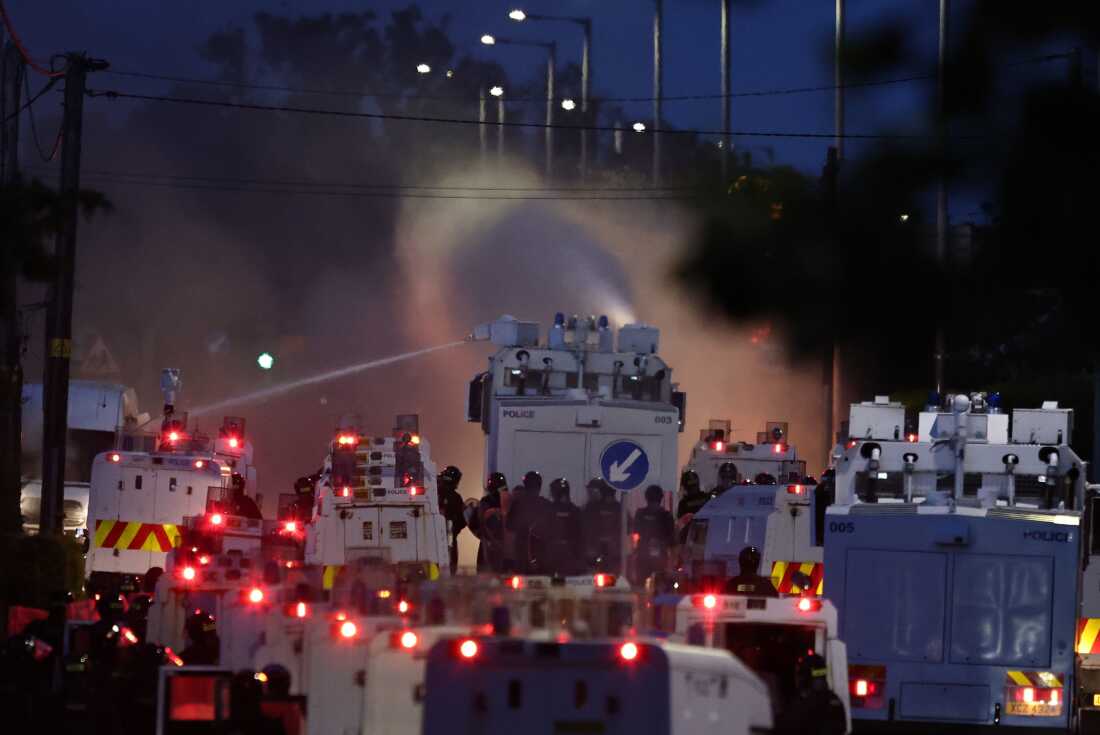
Police deployed water cannons against protesters in Northern Ireland on Wednesday, amidst escalating violence linked to a stabbing incident in Belfast. Demonstrators engaged in disruptive actions, including setting small fires and throwing bricks, rocks, and bottles at law enforcement.
The unrest followed a court appearance by Hadi Alodid, a Sudanese man accused of an attempted murder that left Stephen Ogilvie severely injured. Alodid is facing charges of attempted murder, possessing a knife, and threatening to kill a radiographer. He was ordered to remain in custody and did not enter a plea.
Protests and Anti-Immigrant Sentiment
Tensions remained high, as demonstrators set several homes ablaze, targeting residences they believed housed immigrants. Violence intensified as masked individuals destroyed property, including a Belfast bus, and assaulted police with various objects.
Chief Constable Jon Boutcher of the Police Service of Northern Ireland condemned the violence, noting it affected families from both ethnic minority and broader communities. He announced the deployment of additional officers to manage the disorder, with public transportation services halting early in anticipation of further protests.
Public Reaction and Appeals
Stephen Ogilvie’s family called for an end to the violence, emphasizing the positive contributions of migrants. Political leaders also denounced the events, with First Minister Michelle O’Neill labeling the actions as “thuggery” and Deputy First Minister Emma Little-Pengelly condemning the misdirected aggression.
Prime Minister Keir Starmer and Justice Minister Naomi Long criticized the role of online agitators in inflaming tensions, describing the attacks as racially motivated and unacceptable.
Broader Concerns and Political Implications
Some politicians have expressed concerns about the open border between Northern Ireland and the Republic of Ireland, suggesting a review of current policies in the wake of the stabbing incident. The border, a key element of the peace process ending decades of conflict known as “The Troubles,” remains a sensitive subject.
The situation has drawn parallels to a recent incident in England, where a protest over a university student’s stabbing death also turned violent. The complexities of immigration and local tensions continue to pose significant challenges for law enforcement and political leaders.