
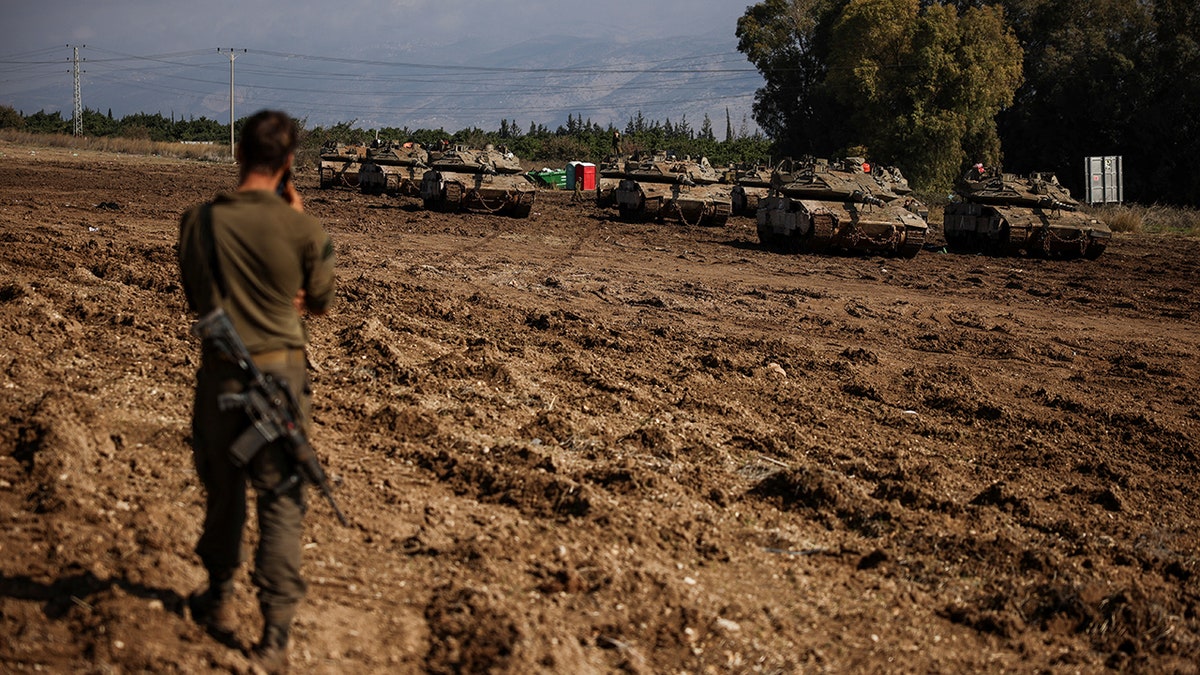
Yulia Bar-Dan, living in Kibbutz Manara in northern Israel, experiences constant disruptions despite recent ceasefire announcements between Israel and Hezbollah. As the familiar sound of an interceptor rang overhead, she predicted another siren, illustrating the ongoing tension.
These alerts are a part of daily life for Bar-Dan and many others residing near the border two years after Hezbollah joined the war against Israel in October 2023. Following Hezbollah’s involvement, diplomatic efforts from Washington have aimed to expand the ceasefire into a larger agreement concerning Lebanon.
ISRAEL OPENS FIRE IN LEBANON AT ‘SUSPECTS’ ALLEGEDLY VIOLATING TRUCE
Repeated negotiations between Israeli and Lebanese officials have occurred in Washington. Efforts led by President Donald Trump have sought to stabilize the region through ceasefire agreements. Nevertheless, residents like those in Manara report ongoing threats from rockets and drones.
Bar-Dan recalls when she and her family fled to a hotel due to the conflict, unsure if they would return. Now, approximately 200 of the 280 original residents are back, but war damage prevents some, including Bar-Dan’s family, from living in their original homes.
Despite ceasefire assurances, normalcy remains elusive. “There hasn’t really been a routine or a quiet day since February,” Bar-Dan explains. Schools reopened in June, yet safety concerns, particularly for her children, persist. The bus route to school is fraught with the risk of sirens.
ISRAEL DESTROYS HEZBOLLAH’S ‘LARGEST PRECISION-GUIDED MISSILES MANUFACTURING SITE’
Bar-Dan voices frustration not only towards Hezbollah but also at the gap between political decisions and lived reality. Community leader Yochai Wolfin describes the situation as “the ceasefire war,” reflecting ongoing hostilities despite official agreements.
Residents contend with the lasting impacts of evacuation, damaged infrastructure, and abandoned construction projects near the border due to contractors’ reluctance. Decisions affecting their lives often seem disconnected from their immediate realities.
ISRAEL WARNS IT WILL GO AFTER LEBANON DIRECTLY IF CEASE-FIRE WITH HEZBOLLAH COLLAPSES
Hezbollah’s Secretary-General Naim Qassem’s statements add to the unease, deeming diplomatic efforts as unacceptable and warning that northern Israel will stay unsafe. This rhetoric underscores the fragility of the purported ceasefire for those experiencing its fallout.
Naor Shamia, leading Manara’s emergency team, expresses concern over temporary measures becoming permanent solutions. “The fear isn’t today,” he notes, “The fear is that this becomes years. We are in a deadlock.” This sentiment is echoed across the border region, where constant threats have turned so-called temporary measures into a way of life.
In nearby Adamit, resident Yael Cohen-Arazi discusses the contrast between her picturesque surroundings and the ever-present danger. Her children, accustomed to insecurity, lack knowledge of a peaceful life.
Back in Manara, another alert breaks the afternoon. Bar-Dan reflects on her state of mind. “I feel bad for the soldiers,” she shares, acknowledging the lack of resolution alongside daily sacrifices.
Despite the tension, she intends to remain. “This is our home,” she firmly states, highlighting the essential presence of those living on the nation’s borders.