
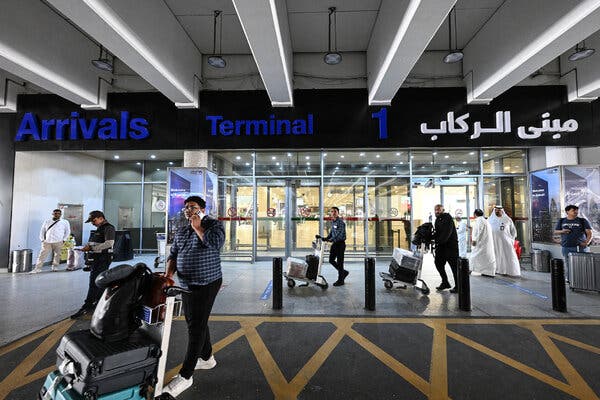
Airports across Kuwait, Iraq, Bahrain, the UAE, and Iran have faced attacks, disrupting both civilian and military operations. One such incident involved Iranian forces targeting Kuwait’s main airport, causing significant casualties and damage.
Kuwait International Airport’s Terminal 1 was struck by Iranian drones, resulting in one death and over 60 injuries. The attack forced the closure of a terminal recently reopened after a prolonged closure, highlighting the turmoil facing the region’s aviation industry.
Kuwaiti military officials confirmed the drones caused material damage at the airport, which serves both civilian and military functions. Health authorities reported that the attack turned the airport into a critical emergency site, mobilizing over 25 ambulances and necessitating seven emergency surgeries. Verified video footage showed intense flames and smoke engulfing the terminal interior.
This incident coincided with the end of the Eid al-Adha travel rush. Shortly after, authorities announced a different terminal would accommodate passengers. This event marks the second drone attack on the airport during the conflict.
The strike at Kuwait’s airport is not isolated. Iran has previously targeted military bases at Iraq’s Erbil International Airport, which houses U.S. forces. Similarly, civilian airports in Baghdad, Bahrain, and the UAE’s major airports in Dubai and Abu Dhabi have been hit by missiles and drones. Tehran’s Mehrabad Airport also faced attacks, reportedly from Israeli sources.
The ongoing conflict severely impacts travel across the Gulf region. Airlines have reduced schedules, suspended routes, and increased ticket prices as operating costs surge due to the closure of the Strait of Hormuz. British Airways recently prolonged its flight suspensions to Dubai, Tel Aviv, Bahrain, and Amman, extending until October 25.
This situation continues to challenge airline operations, underscoring the broader instability affecting both regional and international travel.