
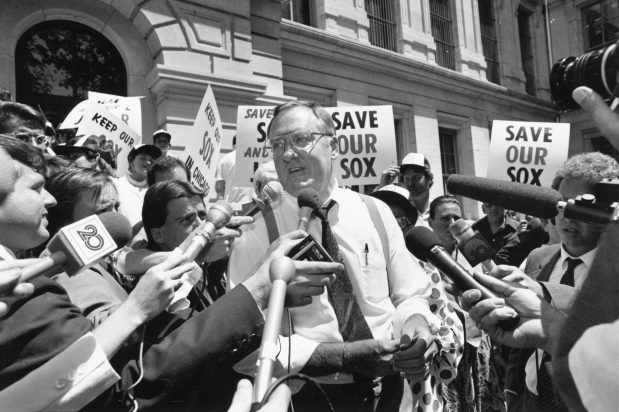
As the clock ticked toward midnight on the final night of Illinois’ 1988 spring legislative session, tension filled the statehouse. Governor James R. Thompson and House Speaker Michael Madigan roamed around, seeking votes for a taxpayer-funded stadium to keep the Chicago White Sox from moving to St. Petersburg, Florida. At midnight, an out-of-state TV reporter proclaimed, “That’s it. The White Sox are going to Florida.” However, the roll call continued until the 60th vote arrived at 12:03 a.m., past the deadline. Despite needing 71 votes after midnight, the bill passed with the official time recorded as 11:59 p.m.
Fast forward to today, and Illinois lawmakers faced a similar dilemma. This time, it involved retaining the Chicago Bears, who were considering a move to Hammond, Indiana. Despite pressing issues, their legislative session ended without a resolution for the Bears’ stadium plan.
Illinois legislature adjourns for the summer without resolution to Chicago Bears stadium issue
Historically, the White Sox pondered relocating to Addison, Illinois, or Florida. In contrast, the Bears bought the former Arlington International Racecourse site in Arlington Heights for their new stadium complex but sought certainty on property tax concerns.
Ultimately, the White Sox secured a taxpayer-financed stadium. The Bears, however, face uncertainty as the state lawmakers adjourned without agreeing on a property-tax relief plan. The political climate has shifted significantly since the time of the Sox decision. Public funding for stadiums is less popular, especially amid high property taxes.
When the Sox stadium deal occurred, political figures were united in urgency to save the team. However, the Bears situation presented a different scene. House and Senate leaders couldn’t agree on a stadium plan. Governor JB Pritzker expressed doubt over the Hammond offer due to environmental concerns and hadn’t even reviewed the Senate’s proposal.
The White Sox secured $150 million for a new stadium. The Bears were aiming for $855 million in publicly paid improvements alongside their own $2.5 billion stadium investment. Political and public sentiments have shifted. Voters dislike using taxpayer money for stadiums that often remain financially inaccessible to them.
Emanuel “Chris” Welch, House Speaker, noted that times have changed. Voters today are unwilling to fund stadiums. Since becoming Speaker, Welch said that Sox owner Jerry Reinsdorf regularly advocated for a new stadium, but he wouldn’t succeed under today’s conditions.
Senate President Don Harmon pointed out a lack of enthusiasm to support a major sports franchise with public dollars. There was a prevailing sentiment against providing financial support to a franchise worth billions.
During a joint news conference, Democratic leaders in the state shifted focus from the unresolved Bears situation to addressing budgetary issues, such as tackling impacts from federal budget cuts and other voter concerns.
The discussions also highlighted external influences, including a disjointed Bears leadership structure, which was inexperienced navigating the political scene. Additionally, Chicago Mayor Brandon Johnson’s last-minute efforts created distractions by reintroducing an older stadium plan.
In 2024, when a $2.5 billion proposal was announced for a new stadium with Mayor Johnson, it lacked financial backing, drawing criticism from Pritzker. The absence of influential supporters diminished the proposal’s feasibility.
During negotiations, Mayor Johnson revealed that the Bears had renewed interest in a city-based stadium, alongside their consideration for Arlington Heights and Hammond. These discussions stirred city lawmakers to resist a relocation to suburbs without considering a city stadium.
The Senate Democrats eventually rejected the House’s “megaprojects” bill, which included tax incentives that the Bears had sought for Arlington Heights. The resistance arose from the idea of freezing property tax assessments for decades in exchange for payments in lieu of taxes (PILOT). Progressive Senate members opposed such concessions for a wealthy sports team.
Sensitivity to public funding also fueled the Senate to propose an alternative, enabling cities to establish sports stadium authorities. These authorities could potentially own privately-financed arenas, exempt from property taxes. Cities like Arlington Heights and Chicago qualified under this model, aiming to keep the city in the running for the stadium.
However, as the alternative proposal reached the House, unresolved questions about its financial implications led to its deferral. The session ended without a decision, encapsulating a drawn-out, politically charged process over the Bears’ future.
Governor Pritzker emphasized his commitment to retaining the Bears within Illinois but maintained a firm stance against burdening taxpayers with stadium costs. Legislative leaders expressed readiness to pursue special sessions if a feasible solution surfaces.
The Bears announced they remain committed to evaluating their options, particularly between Arlington Heights and Hammond, and plan to update the public as decisions unfold.