
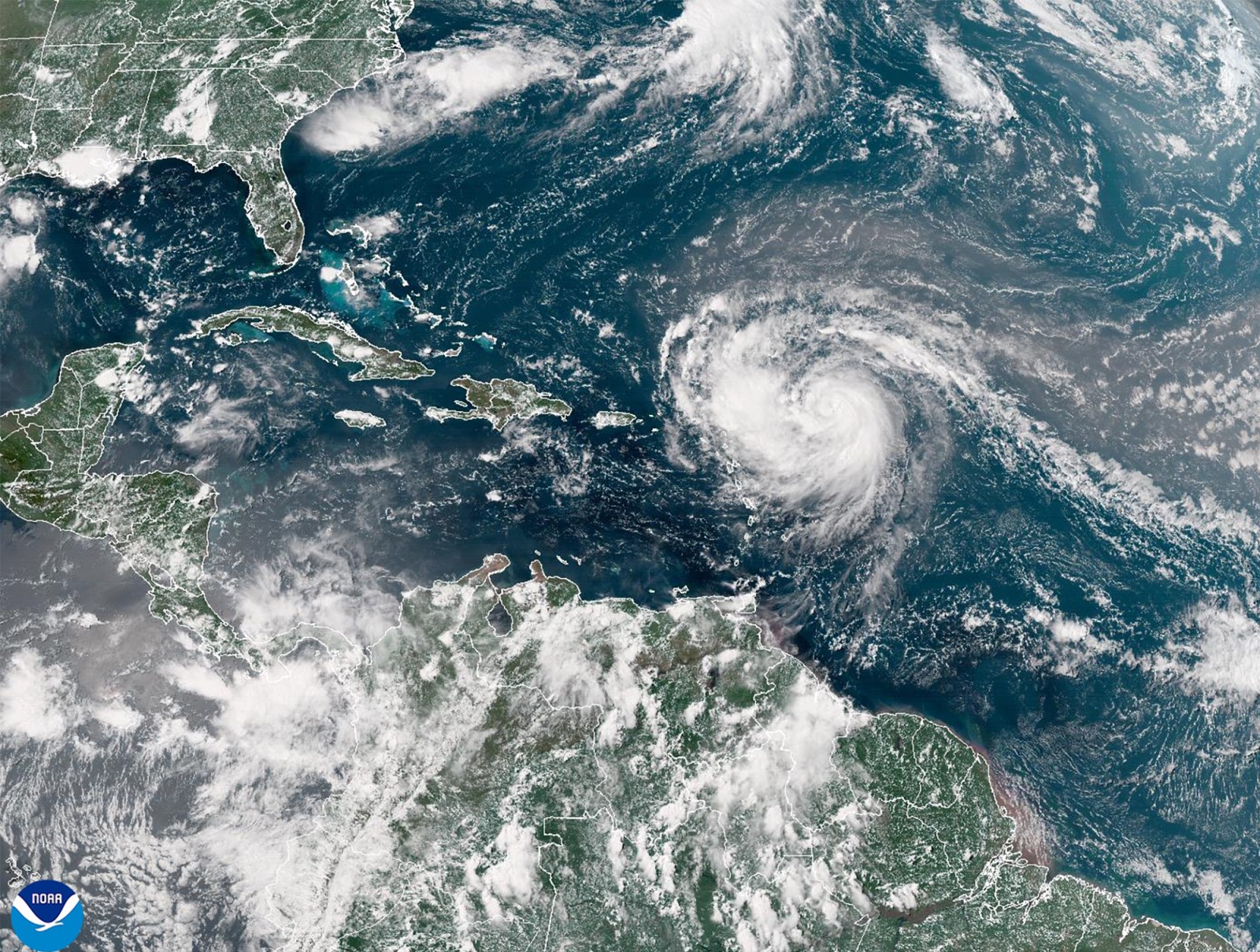
AccuWeather has revised its forecast for the 2026 Atlantic hurricane season, with alterations prompted by the early arrival of El Niño. The private forecasting company now predicts between eight and 14 named storms this season, a reduction from its initial March forecast of 11 to 16 storms. This adjustment follows the onset of El Niño conditions in June, alongside assessments signaling a potential development into a strong or ‘Super’ El Niño later this year.
Impact of El Niño on Hurricane Activity
According to AccuWeather’s lead hurricane expert, Alex DaSilva, El Niño is a critical factor causing anticipation of a quieter-than-average hurricane season. ‘The stronger the El Niño gets, the fewer named storms we’re likely to get,’ DaSilva stated, mentioning the correlation observed during the 2015 Atlantic season, which saw an occurrence of only 11 named storms amid a strong El Niño event.
While the number of named storms has been lowered, AccuWeather has maintained other key elements of its seasonal outlook. The forecast continues to include expectations for four to seven hurricanes, with two to four categorized as major hurricanes, and predictions of three to five storms making direct impacts in the U.S.
Areas at Risk
Forecasters at AccuWeather identify the northern and eastern Gulf Coast, the southeastern U.S., and parts of the Caribbean as areas facing the greatest risk. DaSilva notes that storms developing close to the coast present different challenges, shortening warning times compared to hurricanes forming further away, such as off Africa.
The revised forecast reflects observations of El Niño’s arrival in June and strengthens expectations for a Super El Niño later in the year. AccuWeather estimates a 70 percent probability for the emergence and persistence of a Super El Niño into early 2027.
Effects of El Niño on Weather Patterns
El Niño typically hampers Atlantic hurricane activity by enhancing wind shear across the basin. Strong wind shear disrupts the formation and intensification of tropical systems into named storms and hurricanes. AccuWeather also predicts broader weather patterns during the summer and fall, likely minimizing major tropical impacts along the central and lower Texas coastline.
Understanding El Niño
El Niño represents the warm phase of the El Niño-Southern Oscillation (ENSO), a natural climate pattern in the Pacific. The National Oceanic and Atmospheric Administration (NOAA) describes ENSO as a cycle between warm and cool ocean waters that influences atmospheric conditions, affecting temperatures, precipitation, and other weather events.
El Niño occurs roughly every two to seven years and typically lasts nine to 12 months. It is characterized by sea surface temperatures in the central and eastern tropical Pacific warming at least 0.5 degrees Celsius above normal, accompanied by shifts in trade winds and tropical rainfall patterns.
2026 Atlantic Hurricane Season Storm Names
The Atlantic hurricane season extends through November, beginning with the first named storm, Tropical Storm Arthur in June. Below are the names designated for this year’s storms:
- Arthur
- Bertha
- Cristobal
- Dolly
- Edouard
- Fay
- Gonzalo
- Hanna
- Isaias
- Josephine
- Kyle
- Leah
- Marco
- Nana
- Omar
- Paulette
- Rene
- Sally
- Teddy
- Vicky
- Wilfred