
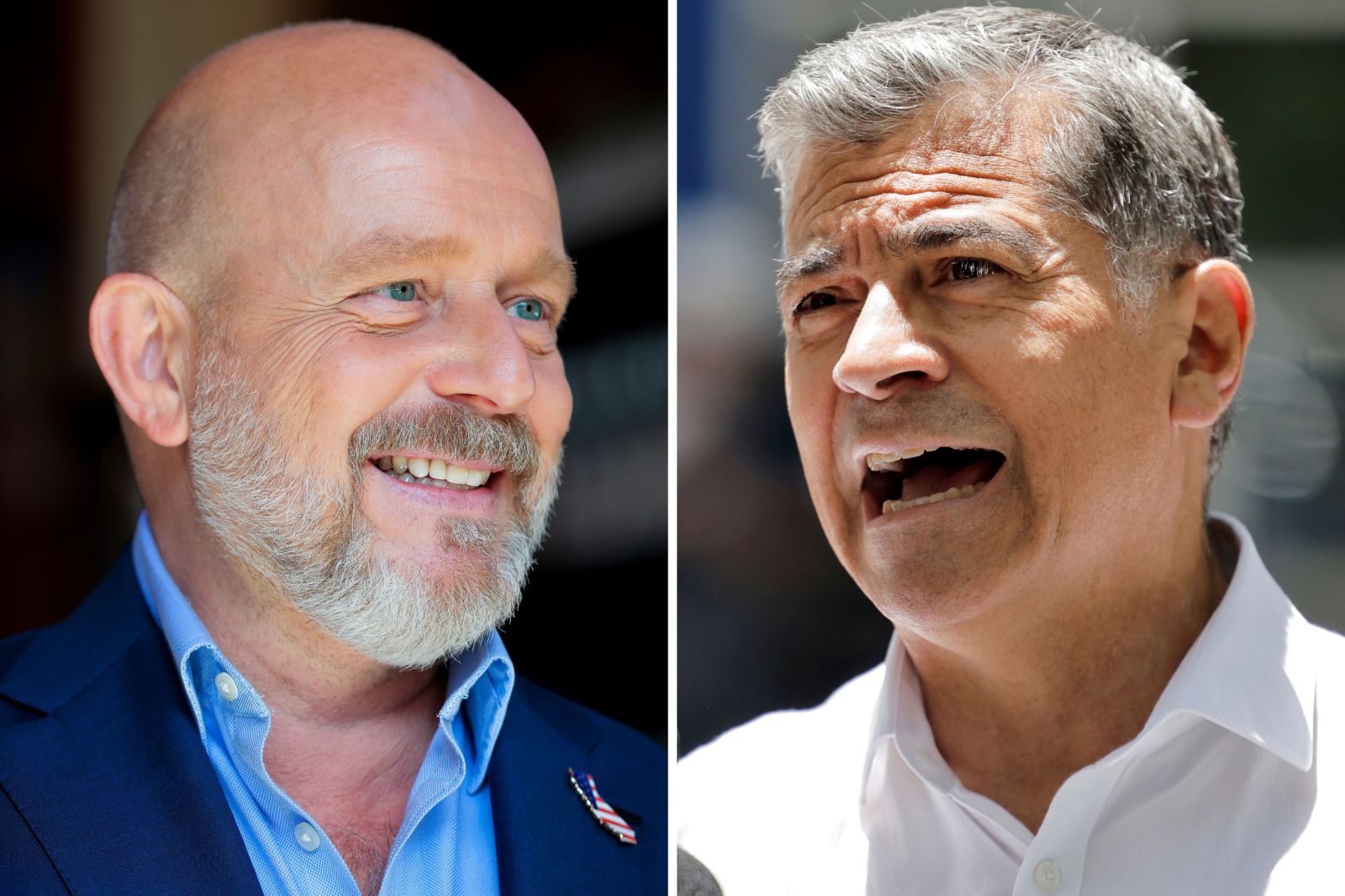
Democrat Xavier Becerra and Republican Steve Hilton will engage in a CNN debate on Wednesday night as they compete to replace California Governor Gavin Newsom. Becerra, with extensive experience in California and federal positions, holds a commanding lead in the polls. Conversely, Hilton, a former Fox News host and Silicon Valley entrepreneur, aims to address voter concerns about California’s high living costs and state direction.
The debate takes place as California voters receive their mail-in ballots, providing both candidates a national platform to present their views on issues like affordability, taxes, housing, artificial intelligence, and Hollywood’s future. The debate airs at 9 p.m. ET (6 p.m. PT) from CNN’s Los Angeles-area studios, moderated by CNN anchors Jake Tapper and Dana Bash.
What the Polls Show
Statewide polls indicate Becerra’s lead going into the debate. A survey by the Public Policy Institute of California, conducted September 4-10, shows Becerra leading Hilton 60% to 38% among likely voters. 65% of likely voters prioritize affordability and cost of living in their decision-making.
The Berkeley Institute of Governmental Studies conducted a poll from September 15-20, revealing a 58% to 33% lead for Becerra, marking a 25-point margin. This was an increase from Becerra’s previous 18-point lead in their August poll. Though Becerra consistently holds a double-digit lead, this varies across surveys. The debate offers Hilton a chance to address voters directly as the campaign approaches its final weeks.
Affordability Takes Center Stage
The cost of living is anticipated to be a central topic in the debate. Hilton, 57, has focused his campaign on reducing costs and countering policies he attributes to California’s high prices. He aims to lower gasoline prices below $3 per gallon, reduce utility bills, and expedite starter home construction.
Additionally, Hilton proposes eliminating state income taxes on the first $150,000 earned by Californians, funding this through cuts to high-speed rail, homelessness nonprofits, and state departments. Becerra, 68, proposes initiatives like “Power Hour,” offering low-income households up to two hours of free electricity using excess solar power.
Becerra also advocates for declaring a state of emergency to freeze utility and insurance rates, alongside a commitment to universal healthcare. Affordability is crucial as it appeals to voters across party lines. In the latest PPIC survey, it was of utmost importance to 69% of Democrats, 65% of Republicans, and 59% of independents.
Hilton Takes Aim at California’s Democratic Leadership
Hilton seeks to frame the race as a critique of California’s Democratic leadership, separate from national Republican politics. He argues that voters can oppose President Donald Trump but still support his stance, attributing state issues to Democratic government.
Becerra emphasizes his record over promises, highlighting his extensive career in Democratic politics. As California’s former attorney general and current U.S. Health and Human Services secretary, Becerra faces Hilton, who portrays himself as an outsider challenging the political establishment. This difference is likely to be a central debate theme, as Hilton works to attract voters in a state with challenging conditions for Republicans.
AI and the Future of Hollywood
Artificial intelligence is another potential debate flashpoint. Becerra proposes AI applications within state government to enhance efficiency and calls for national AI safety regulations. Hilton warns against under-regulating risks and over-regulating benefits, especially concerning children and creative sectors.
The candidates may also touch on California’s entertainment industry future. The state increased its film and TV production tax-credit program to $750 million annually. Hilton considers this insufficient and proposes further tax incentives, faster approvals, and a governor’s office aimed at reducing bureaucracy. Both candidates suggest expanding the state’s production tax credit and streamlining permitting processes.
What to Watch For
For Becerra, the debate is a chance to promote the merits of his proposals and leadership amidst ongoing voter concerns about affordability. For Hilton, it’s an opportunity to leverage national visibility to transform dissatisfaction with living costs into electoral support.
The debate occurs at a pivotal campaign moment, with Election Day on November 3 and mail ballots being distributed. Despite current polling reflecting a strong lead for Becerra, Hilton has the chance to connect with voters and create impactful moments that might shape the race’s final weeks.