
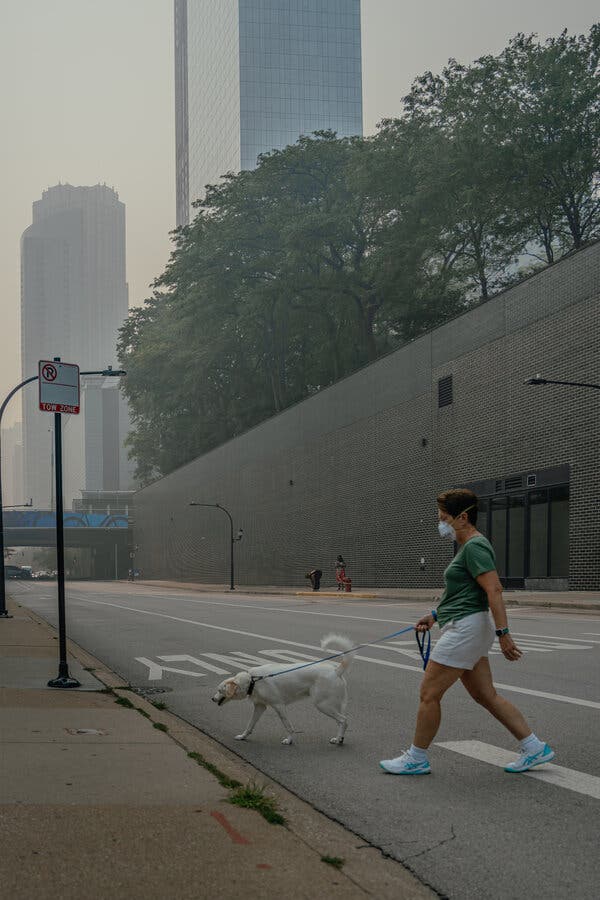
Acrid air from ongoing wildfires in Ontario, Canada, and Minnesota continues to impact parts of the Midwest and Northeast. The smoke has darkened skies and lowered air quality significantly.
The Great Lakes region is experiencing the worst conditions as forecasters anticipated, with air quality alerts issued for areas including Minnesota, Wisconsin, Illinois, Indiana, Michigan, and Ohio. These alerts aim to inform residents of potential health risks associated with the smoke.
Thunderstorms improved air conditions in the Northeast on Saturday, pushing some smoke offshore. However, cleaner air is expected to be tapped into from eastern Canada, offering some relief in the coming days.
“We’re starting to tap into cleaner air from eastern Canada,” said Richard Bann, a meteorologist with the Weather Prediction Center.
On Sunday, new smoke plumes began moving across Wisconsin and Northern Illinois, shifting toward the Ohio Valley. This could potentially reach the East Coast, though the concentration will likely be less severe than earlier levels.
Air quality alerts remain for the Northeast and Mid-Atlantic, covering areas such as western and central New York and western Maryland. Despite little change expected on Monday, rain might offer temporary relief by clearing the air.
Frank Pereira, a meteorologist at the Weather Prediction Center, predicts widespread rain across the Great Lakes by late Monday, improving air conditions.
“A pretty strong system is going to be coming through into the area by late Monday,” said Mr. Pereira, noting the potential improvement.
However, clean air may not last long as northwesterly winds could bring more smoke into the Great Lakes and Northeastern United States midweek.
To understand the broader context, more than 900 wildfires are currently active across Canada, particularly in Ontario. Northern Minnesota also contributes to the smoke. Wildfire smoke, influenced by human-caused climate change, is linked to tens of thousands of deaths annually.
For more detailed updates, maps, and forecasts, visit the latest air quality tracking resources.