
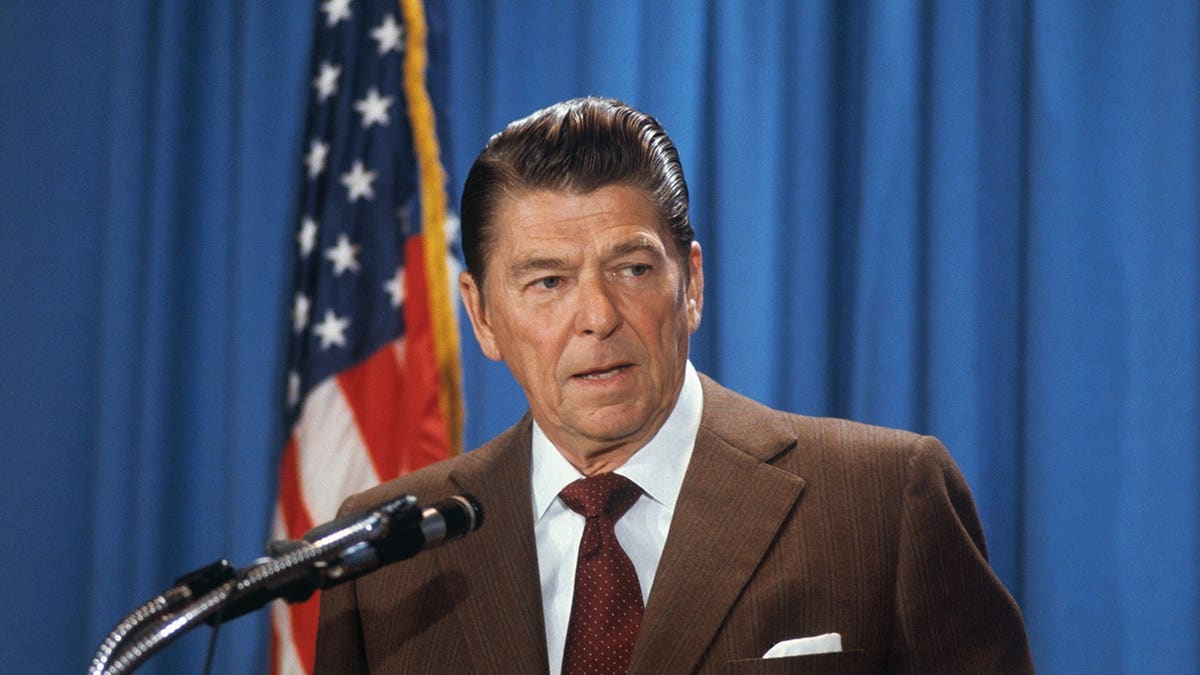
The United States encountered significant challenges from the Soviet Union’s pursuit of nuclear superiority starting with the Cuban missile crisis. During the Vietnam War, the Soviet Union began amassing nuclear power. By the time Ronald Reagan assumed the presidency after defeating Jimmy Carter, the USSR was nearing a nuclear advantage over the U.S. Reagan responded with an unprecedented defense buildup in peacetime, forming the core of his military and national security strategy.
Roger Zakheim delves into this strategic period in his book, “Peace Through Strength: How Reagan’s Military Buildup Won the Cold War.” Zakheim, who leads the Ronald Reagan Institute and has experience in law and politics, offers an insider’s view on Reagan’s mission to restore America’s defense capabilities. This effort began soon after Gerald Ford’s election loss to Carter in 1976 and continued throughout Reagan’s political rise to his presidency which lasted from 1981 to 1989.
The book elucidates the intricate network and strategic foundations of Reagan’s concept of “peace through strength.” Numerous actors played pivotal roles in this rebuilding phase, including lesser-known figures like Fred Iklé and famed personalities such as John Lehman. Their collective efforts aimed to secure victory in the Cold War and ensure peace by constructing a formidable military arsenal.
Significant figures such as Defense Secretary Caspar Weinberger and his deputy Frank Carlucci, along with senators like John Tower and Sam Nunn, supported Reagan’s initiative despite various setbacks. These included challenges like the MX missile controversy and triumphs such as deploying Pershing II missiles and initiating the Strategic Defense Initiative.
While Reagan’s administration witnessed these achievements, the weapons’ longevity required continuous upkeep. Though Congress has set mandates for maintaining certain military assets, these cannot sidestep inevitable aging. Comparing fiscal realities, the national debt stood below $1 trillion in 1981, whereas today it exceeds $40 trillion. Consequently, constant attention to America’s military needs remains essential.
While President Trump has initiated resource allocation for modernizing the national defense infrastructure, future progress confronts legislative obstacles. With changing political priorities, especially with new Democratic majorities, defense spending may face reductions. The contrast between the Cold War allies of Reagan and current Republican defenders like Senators Roger Wicker and Tom Cotton reflects this shift.
The book “Peace Through Strength,” acts as an urging tool, reminding the Republicans to finalize their congressional term by reinforcing the foundations of America’s rearmament. The historical context from 1981, when Reagan secured additional defense funding, stands as a benchmark accomplishment that sustained peace.
Zakheim’s work also serves as a reference for future presidential contenders. As the 1980 campaign heavily weighted on national defense concerns, contemporary threats seemingly more complex, require measured contemplation and actions from political leaders. Prospective politicians should glean insights from Reagan’s path and employ similar strategies in their pursuits of safeguarding national security.
The commentary by Hugh Hewitt, a notable Fox News contributor, ties these discussions into ongoing political discourse, underscoring the relevance of historical precedents to current national and global tensions. For those interested in American politics, defense policies, or the Reagan era, Zakheim’s book serves as both a critical reminder and a guide for future initiatives.