
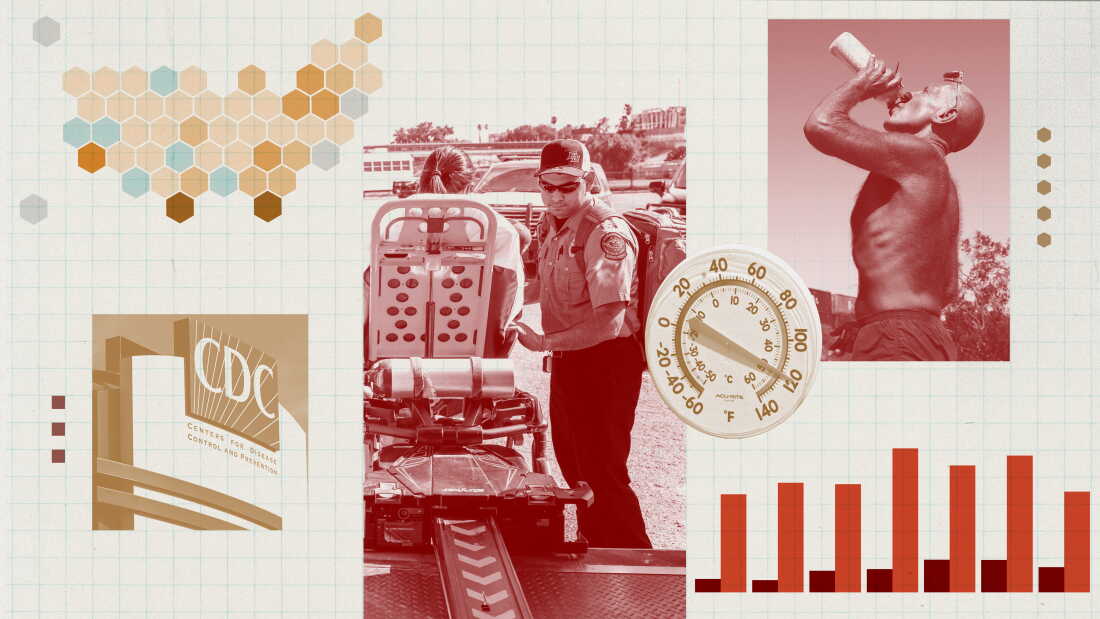
Every year, thousands of Americans die from heat-related causes, yet these deaths are chronically underreported. As human-driven climate change intensifies summer heat, the current United States’ statistics fail to encompass the full toll on human lives. Inconsistent and incomplete data collection has resulted in undercounting heat-related fatalities. Experts warn that ignoring the true scope of these deaths may lead to increased mortality.
A Comprehensive Study
NPR, in collaboration with Boston University, undertook a two-year investigation to determine the actual number of heat-related deaths in the U.S. This involved building a statistical model that assessed nearly every county across the country. The full analysis is scheduled for publication in a scientific journal. Quinn Adams, a research scientist at Boston University’s Center for Climate and Health, emphasizes the importance of an accurate assessment to develop lifesaving solutions.
Key Findings
“The frequency and the duration of these heat events has been expanding very rapidly.” —Quinn Adams
The undercount of heat-related deaths is substantial. The Centers for Disease Control and Prevention (CDC) compiles annual data based on state reports, noting heat only if mentioned on death records. From 2004 to 2018, the CDC averaged about 700 heat-related deaths annually. This figure climbed to roughly 1,700, occasionally exceeding 2,000, as heat intensified and counting methods evolved. Yet, NPR and BU’s analysis suggests an average of 9,000 deaths annually could be connected to heat over the 2018-2025 period, five times the official numbers. Some years, the count may exceed 10,000.
The investigation highlights the difficulty of accurately identifying heat’s role in deaths. Often, heat acts as an unnoticed trigger for other health issues, such as heart attacks. Doctor and researcher Sameed Khatana explains that heat rapidly accelerates the heart’s workload, which can be fatal for those with pre-existing conditions, though heat may not be listed as the cause of death.
National Risks
Heat-related deaths impact nearly all regions in the U.S. Our study finds Florida and Texas have the highest death tolls. Surprisingly, the problem extends to areas not traditionally considered hot. For example, Michigan reports over 100 heat-related deaths annually, far exceeding official numbers. Massachusetts sees more than 60 deaths, compared to the reported 5, and Florida experiences about 1,900 deaths, substantially higher than reported.
Heat is especially hazardous in areas with less infrastructure for cooling. While Alabama homes predominantly have air conditioning, in Washington state, only 53% do, and 70% in Maine. As heat risks grow, the situation demands urgent attention.
Improving Death Counts
The CDC’s heat-related death records have seen improvement, rising from an average of 700 annually between 2004 and 2018 to about 1,700 in recent years. Advances in counting and recognition of heat-related mortality in areas like Maricopa County, Arizona, contribute to more accurate figures. Maricopa County employs trained investigators to detect heat’s subtle influences on deaths, considering factors like air conditioning use and medication impacts.
Despite progress in some regions, places like Los Angeles and Houston report few heat-related deaths, though our model estimates hundreds annually. Los Angeles County acknowledges the need for improved counting, according to Nichole Quick.
Addressing the challenge of accurate measurement has proven complex. Maricopa County’s refinement took years, and many doctors lack protocols for identifying heat’s impact reliably. Until these issues are resolved, understanding the true toll of heat remains elusive.
As NPR continues this coverage, the focus will be on understanding why deaths are overlooked and exploring how lives could be spared.