
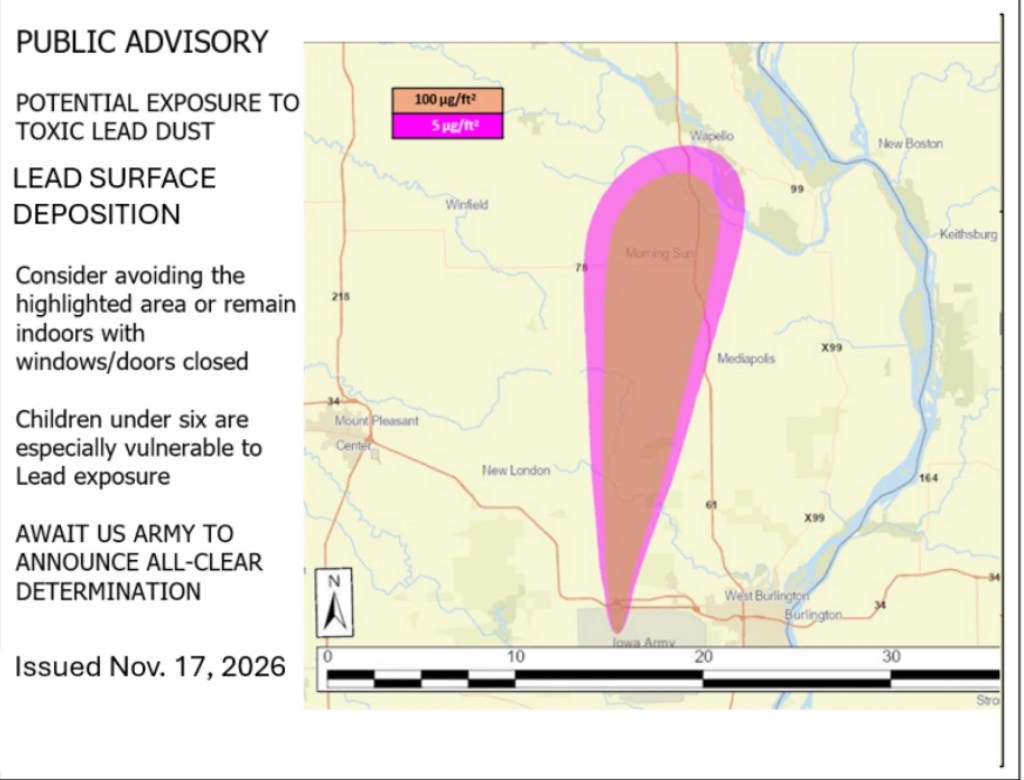
The U.S. Army has postponed the planned detonation of several tons of bomb-making chemicals in southeast Iowa, initially set for Friday. This decision came after significant public concerns about potential environmental and health hazards from a possible cloud of lead dust. The detonation is now scheduled for Monday.
Gov. Kim Reynolds was among those urging the delay, interacting directly with Acting Secretary of the Army Adam Telle. Earlier in the day, environmental groups filed a lawsuit seeking to halt the detonation, highlighting fears of toxic lead dust dispersion.
The Unstable Lead Azide
This postponement follows the discovery of several dozen barrels of degraded lead azide at the Iowa Army Ammunition Plant. The chemical’s instability had created a dangerous situation. The U.S. Environmental Protection Agency had approved an emergency permit for the detonation, citing unacceptable risks of accidental detonation if the barrels were moved, especially as cold weather could increase instability.
The delay allows for the detonation to occur before a forecasted temperature drop, reducing the risk of further destabilization.
Location and Communication Concerns
Some residents in nearby Middletown were advised to vacate the area due to potential risks. Details were shared during a public meeting in Middletown, yet many communities further away were informed only on the following Sunday. The EPA required modeling of potential dust dispersion to ensure public safety.
With nearly 400 residents in Middletown and many more in surrounding areas, the Army’s Thursday evening decision to delay was pivotal. Schools and businesses, including those in Danville, were already planning to close on Friday, with officials noting uncertainties about the conditions.
In Mediapolis, less than 20 miles away, schools, the public library, and local emergency services prepared for preventive actions, and potential vibrations from the blasts were a concern for area windows.
Health and Safety Implications
Despite the risks, the Army’s extensive modeling indicated that lead particle levels in the air might rise but would remain below levels requiring EPA protective action.
Residents expressed concerns online about cleaning recommendations, questioning their adequacy. The plant is now prepared for a Monday detonation. Meanwhile, residents worried about soil contamination, with many seeking soil test kits.
Potential Environmental Impact
Lead, a known neurotoxin, poses risks to human health, particularly brain and nervous system function. Long-term exposure is especially harmful to children, potentially affecting neurological development.
Environmental and health experts advise residents to take precautions. The Des Moines County Extension field office reported high concern from locals regarding pets and gardens, overwhelmed by inquiries for soil testing resources.
Legal and Environmental Response
Environmental groups argue that the EPA could have required the Army to explore safer alternatives. While alternatives like chemical neutralization were examined, they were deemed too risky due to handling dangers. The lawsuit against the detonation continues, as plaintiffs seek an intervention to explore other methods.