
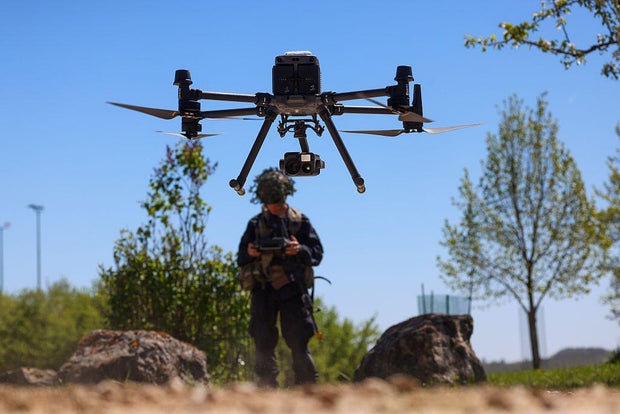
The U.S. Army intends to phase out the Unmanned Assault Battalion, a unit established last year to gain insights from drone warfare. An official confirmed this decision on Thursday, citing internal tensions.
According to multiple current and former officials, the phasing out occurred amid disagreements between senior officers advocating for the unit and Gen. Christopher LaNeve, the Army’s acting chief of staff. The unit was initially supported by former Army Chief of Staff Gen. Randy George and ex-commander of U.S. Army Europe and Africa, Gen. Christopher Donahue. Both were removed or retired early, allowing LaNeve to rise to his current position.
The battalion focused on drone warfare tactics, with plans to deploy where drones were essential. The conflict in Ukraine underscored the increasing importance of drones in military strategies.
The Unmanned Assault Battalion is involved in exercises running through September to share its learned tactics and strategies. Post-exercise, the unit will revert to core airborne infantry tasks, part of the 173rd Airborne Brigade.
The Wall Street Journal first reported the unit’s phase-out. Last year, the Army launched the Army Transformation Initiative, emphasizing unmanned systems. Army Secretary Dan Driscoll highlighted the importance of learning from Ukraine’s battlefield experiences.
Strategic Moves or Personal Conflicts?
Current and former officials cited long-standing tensions between LaNeve and previous advocates of the battalion. They referenced conflict following LaNeve’s early departure from the 82nd Airborne Division and subsequent housing issues at Fort Bragg.
LaNeve’s document, “The Army Azimuth,” outlines the Army’s direction, stressing the importance of fundamental soldiering and new capabilities, including unmanned systems.
Retired Gen. David Petraeus reiterated the need for greater drone usage in future warfare, arguing in favor of transforming current battalions into drone units.
U.S. Army Capt. Ronan Sefton, after observing Russia’s 2022 invasion, emphasized drones’ crucial role in training and warfare. He joined the Ukraine Lessons Learned Task Force, focusing on translating Ukraine’s wartime experiences for the U.S. military.
While traditional firepower remains vital, adapting to counter drones is an urgent necessity according to Sefton and other experts.