
Typhoon Dolphin moved further inland to Hubei, bringing heavy rain and forcing the closure of tourist areas and suspension of construction. Meteorologists warned of severe rainfall in Hubei’s mountainous areas.
Dolphin, this year’s strongest typhoon in China, traveled over 3,700 miles before hitting the coast. It brought extensive rain to eastern China and a large cloud field. Hubei, a key manufacturing hub with over 58 million residents, previously faced rare tornadoes after Typhoon Maysak, causing 11 deaths.
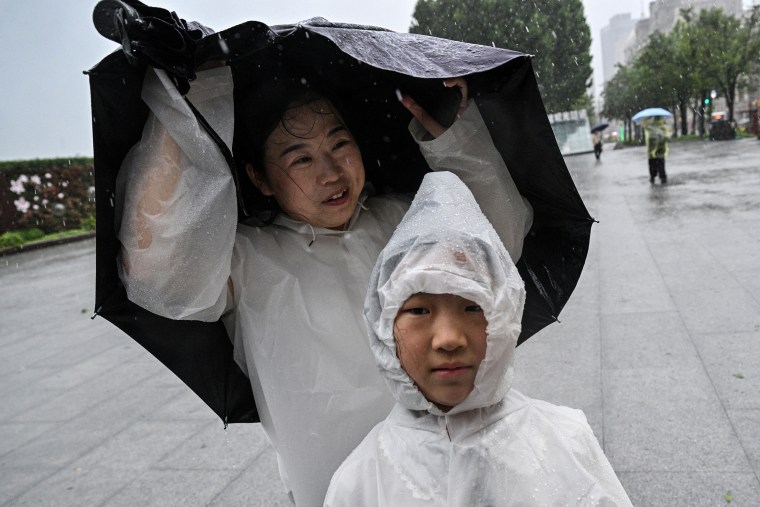
Monday in Shanghai, heavy rainfall followed Dolphin’s landfall. The National Meteorological Center issued an orange alert for heavy rain on Tuesday, predicting up to 9.8 inches in northwestern Hubei within 24 hours. Authorities in cities like Xiangyang and Suizhou have yellow alerts for flooding and landslides.
Popular scenic spots, like the Three Gorges Dam in Yichang, are temporarily closed. Of 107 significant construction projects in Hubei, 26 high-risk operations are halted. Wang Xiaoling from Hubei’s meteorological observatory explained that the storm’s airflow intensifies rainfall when it hits the region’s mountains.
Neighboring Henan issued a red flash-flood alert as the storm’s moisture moves north. In Beijing, over 600 miles from Hubei, four districts activated high-level flood responses, anticipating a third of their annual rain within a day.
Meanwhile, Japan braces for Typhoon Chan-hom, with the risk of landslides, flooding, and strong winds as it possibly crosses the mainland on Tuesday.