
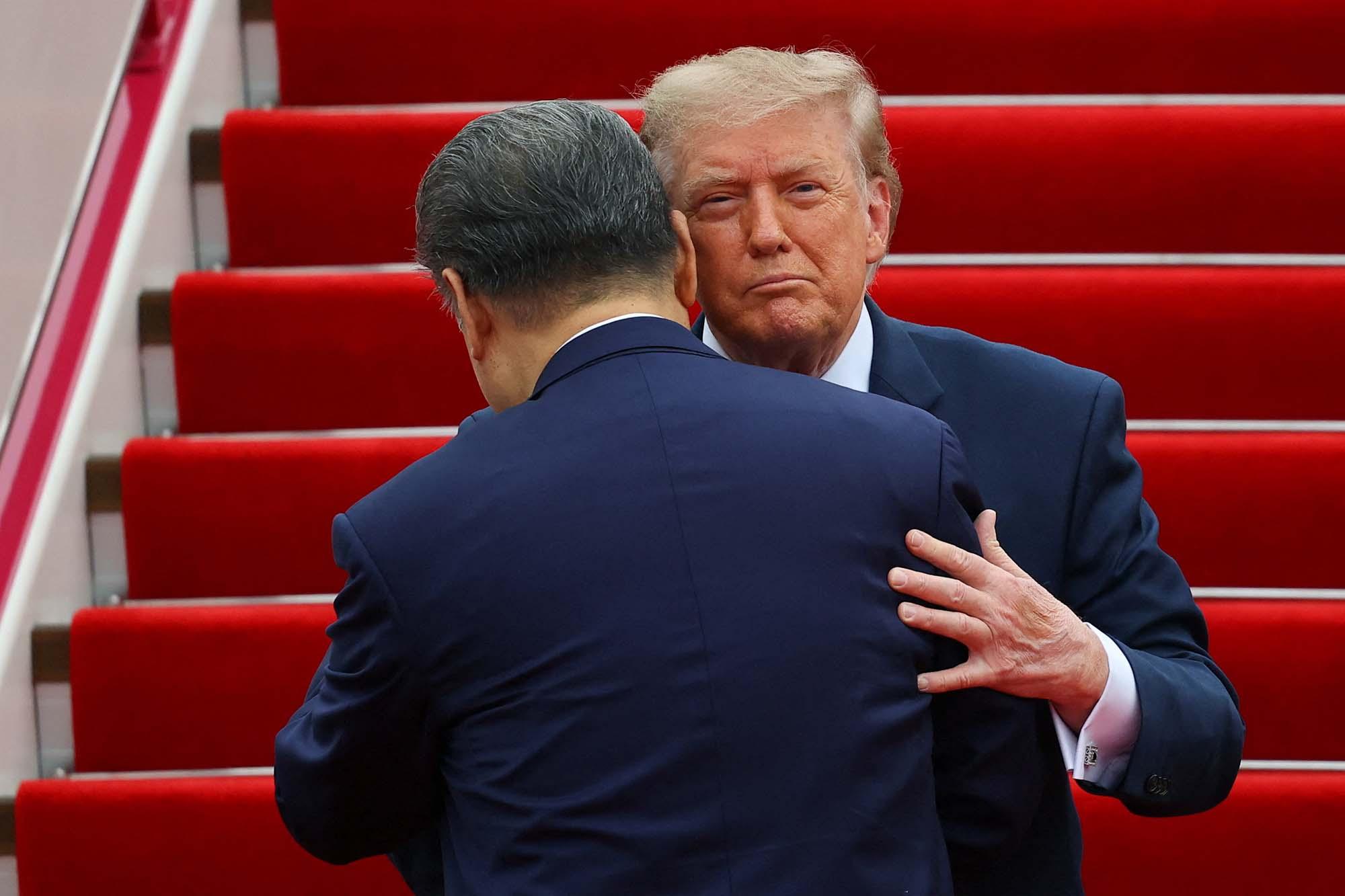
Chinese President Xi Jinping greeted U.S. President Donald Trump with an unusually warm gesture upon his arrival at the Shenzhen Airport for the Asia-Pacific Economic Cooperation (APEC) Leaders Summit on November 18, 2026. This embrace was noteworthy as foreign leaders rarely receive such receptions.
Criticism arose as some accused Trump of aligning closely with authoritarian figures. However, Trump’s actions prior to this summit shed light on a more complex dynamic.
Strategic Moves Before the Summit
Before heading to China, Trump signed a significant trade agreement with Thailand. This deal facilitates duty-free entry for American products into Thailand and counters Chinese trade practices that previously used Thai ports to dodge tariffs.
Additionally, Trump reaffirmed the U.S. commitment to The Philippines through the 1951 Mutual Defense Treaty and initiated cooperative military exercises in the South China Sea. This included joint anti-submarine patrols with Australia, Japan, and India, aimed at monitoring Chinese naval activity.
Trump’s administration also curbed the sale of advanced technology to China and Southeast Asia, in response to security concerns. These sales now require strict conditions to prevent their illegal shipment to China.
Trust and Diplomacy
“Xi cannot be trusted to keep his word.”
Trump’s public diplomacy with Xi Jingping does not obscure the underlying tensions. A past trade agreement with China remains unmet, with expected rare earth shipments and agricultural purchases unfulfilled. Meanwhile, China continues to be a source of fentanyl precursors, worsening public health issues in America.
Cybersecurity threats also persist, with ongoing attacks and theft from U.S. infrastructure and financial sectors linked to Chinese entities. Support for North Korea’s illicit activities and covert arms shipments to Russia and Iran mark China’s footprint on global conflicts.
Balancing Act
Within the Trump administration, opinions differ on engaging with China. While some, like Commerce Secretary Howard Lutnik, see areas for collaboration, Trump’s approach signals a recognition of China as a strategic rival. His interactions with President Xi appear to reflect the adage of keeping friends close but adversaries closer.
Steven W. Mosher, presiding over the Population Research Institute and author of analytical works on China’s political landscape, provides further insights into these evolving dynamics.