
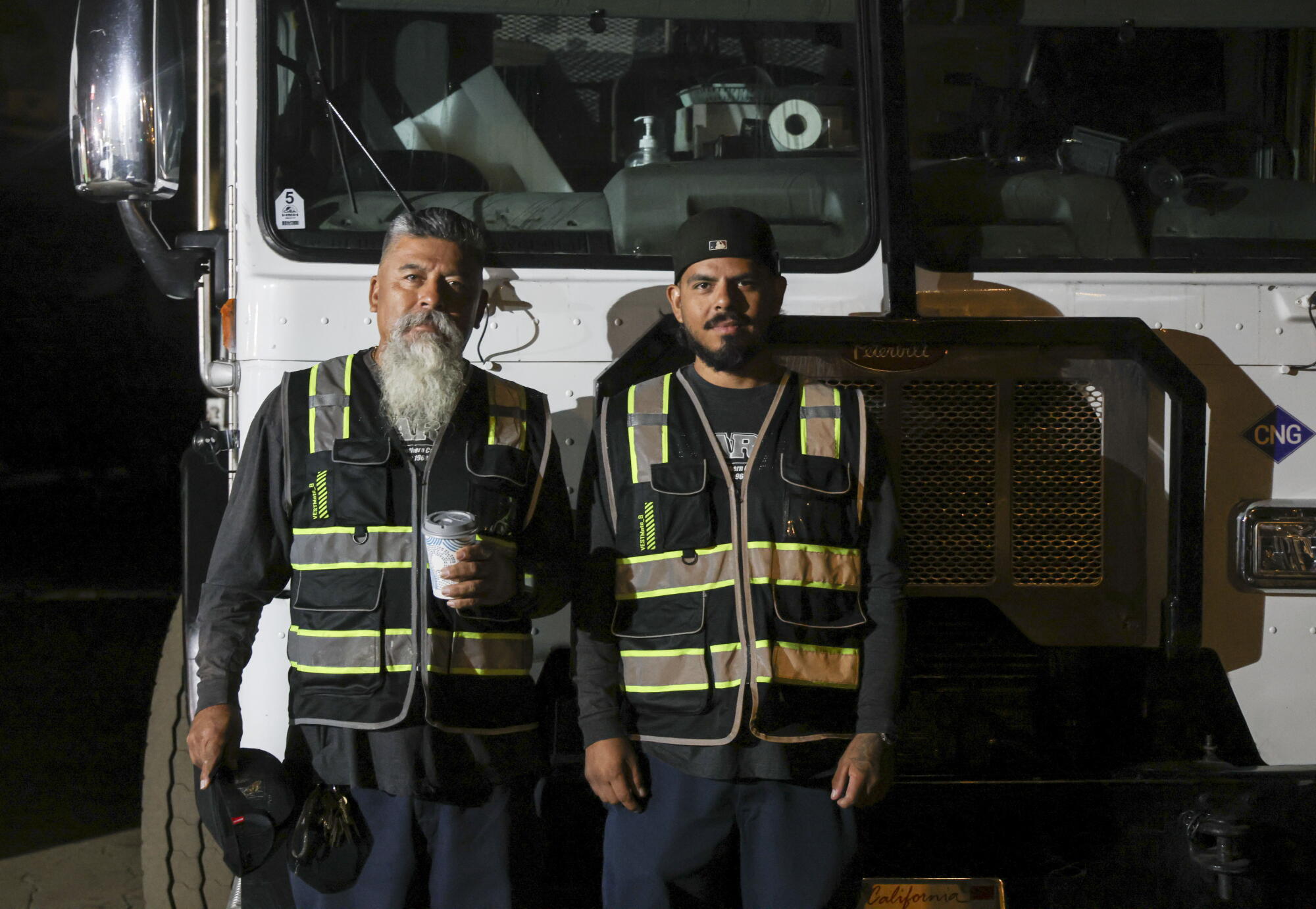
At 4 a.m. on a Thursday, Salomon Olea took a lunch of a ham-and-cheese torta and a white peach, kissed his wife goodbye, and left his longtime Escondido home. He drove a short distance to pick up his son, Angel, from an apartment complex. Together they drove in silence for half an hour, their car’s headlights cutting through the deserted streets.
Salomon and Angel both work as drivers for a private waste company, spending 12-hour days collecting trash and recycling. They cover routes in the northern suburbs of San Diego, servicing schools, restaurants, convenience stores, and a church. For Salomon, age 55, this demanding job has provided a stable life, allowing him to buy a home and raise a family. However, times have changed. Fewer manual laborers own homes now compared to the past decades when wages covered homeownership costs.
Angel, at 33 years old, is still renting. Despite his efforts to save for a down payment like his father did, homeownership remains elusive. Angel’s experience is common among his peers, who feel they cannot match their parents’ accomplishments despite working hard and taking overtime.
“We all came here almost expecting what our fathers accomplished,” Angel said. “We’re doing the same amount of hours, taking overtime that’s available. … What are we doing wrong?”
Upon arriving at the truck depot before dawn, Angel and Salomon joined other drivers, some who commuted from as far as Tijuana. They received their routes after a short safety briefing. Angel settled into his truck, equipped with AirPods, and set off with his father following behind. As a child, Angel aspired to be like his father, drawing inspiration from Salomon’s steady career in sanitation.
Salomon’s career began in 1994 in sanitation, progressing quickly from cleaning trucks to driving them. Hard work enabled him to buy a house four years later, motivated by a desire to give his children a yard to play in. He juggled family time with long work hours, meeting his kids during lunch breaks when Maria, his wife, drove them to see him.
Today, houses in Escondido are much more expensive. While Salomon bought his home for $127,000, median prices now exceed $1 million. Despite saving diligently, Angel and his wife Estephania struggle with the rising costs of living, particularly in housing. They pay $2,800 for a cramped apartment, with little left for a down payment on a home.
Financial emergencies have also depleted their savings. Car repairs and orthodontic bills for their son, Angel Jr., took significant chunks of their savings, pushing them further from their homeownership goal.
As the Olea men conclude their workday, they face the challenge of balancing hope with reality. Angel and Estephania ponder relocating to areas further from their jobs to find more affordable housing options.
Salomon, reflecting on his son’s situation, comforts him by explaining the broader economic context affecting many families today. He urges Angel to consider that many others, including their own relatives, face similar struggles with homeownership.