
During a recent game, New Jersey Devils goaltender Connor Hellebuyck faced significant booing from Winnipeg fans. This hostility followed his earlier trade from the Jets to the Devils. Unfortunately for Hellebuyck, he was not fielded against his former team, denying him a chance to respond to the fans through his performance.
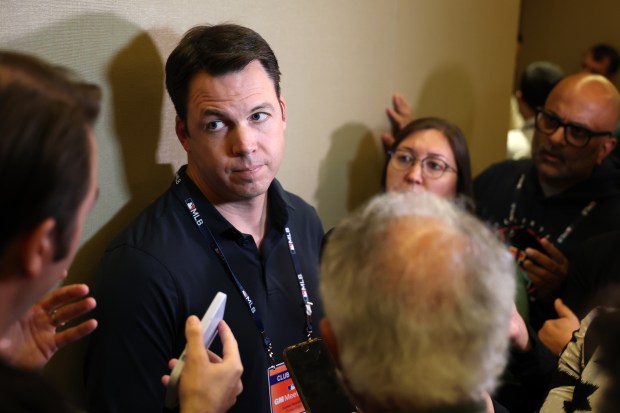
Devils general manager Sunny Mehta stated, “Connor Hellebuyck was adamant that he felt a duty to play on Tuesday in Winnipeg. However, in our estimation, playing in this game would potentially give us a reduction in our expected win probability.” Hellebuyck’s absence didn’t prevent the team’s 4-2 loss, highlighting a possible gap between managerial decisions and on-ground performance.
The sports world increasingly encounters cryptic language from executives like Mehta, which can be perplexing for fans. Rather than simply explaining the strategic decision to shield Hellebuyck from a hostile crowd, Mehta used jargon concerning “win probability.”
This situation mirrors a broader trend where sports organizations, once run by people passionate about the games themselves, now feature leaders with backgrounds in sophisticated analytics. This has brought corporate terminology to the heart of sports management, often leaving fans out of the loop.
An example is Cubs GM Carter Hawkins, who at recent GM meetings remarked, “all scenarios are on the table,” leaving Cubs fans with nothing definitive. Such statements often seem designed to communicate while disclosing minimal information, reflecting a balance between transparency and discretion.
Similarly, Blackhawks GM Kyle Davidson commented on the risks of making moves for a struggling team. “This is a little bit of a precarious time,” he noted, advising caution against decisions made simply for change’s sake.
This style of communication is common at baseball’s GM meetings. Craig Breslow of the Boston Red Sox, with a background in molecular biophysics, typifies the analytical manager. Upon his promotion to president of baseball operations, Breslow remarked on his unchanged responsibilities, illustrating that title changes aren’t always reflective of new duties.
Agent Scott Boras is known for his colorful language, providing a contrast to corporate speak. His metaphoric descriptions of market interest in his client Tarik Skubal add a layer of creativity that fans and writers appreciate.
Milwaukee Brewers manager Pat Murphy represents the opposite end of the spectrum. After the World Series win, he candidly spoke to Jake Bauers in vibrant language, reminiscent of an era where plain-speaking in sports was commonplace. Though his comments became viral and led to an apology, they offered a refreshing break from the norm.
As many sports move further into realms dominated by analytics and business considerations, figures like Murphy remind us of the value of clear, direct communication. Even when mixed with colorful language, it can resonate more deeply with fans who long for straightforwardness.