
Lee passed away in February. We gathered to honor his memory the Saturday before Father’s Day. While I should have been mourning, my tasks kept me occupied. I received flowers and cooked brisket for the gathering after the service. I embraced family members, friends, and neighbors, while also organizing Zoom calls for distant acquaintances. Grief had been part of my life long before his passing, spanning the years from middle age to now. It’s a journey I’ve come to expect.
My background as a historian shapes my world through dates and events. Lee and I met in 1977, married in 1978. I was 26, he was 36. Our four sons arrived between 1980 and 1983, including twins. Over the years, we faced many challenges but stayed married until 2010, when divorce came. Untangling 32 years of life was painful. Anger and resentment widened the gap between us. His relationships post-divorce confirmed our separation.
Contact ceased until the twins’ weddings in 2016. This reunion made communication easier. Conversations moved from awkwardness to comfort. Shared memories built a new friendship framework. Our interactions grew mature, civil, and unexpectedly simple. Without the need for animosity, we both eased into a more peaceful coexistence.
In 2019, before turning 78, Lee was diagnosed with Parkinson’s and Lewy body dementia. The signs had been present, so the news wasn’t a shock. His girlfriend reached out to inform his sons and me, unable to manage his care. This act of kindness brought focus to our attention and care for Lee. Surprisingly, despite the divorce, I remained part of his family.
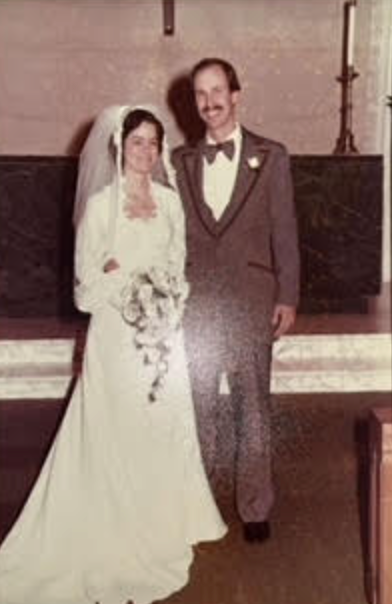
The author and Lee on their wedding day, Jan. 7, 1978.
Courtesy of Lucinda Myles McCray
Helping Lee was challenging. Holding an Ivy League Ph.D., Lee had a strong ego, a quick temper, and a tendency to drink excessively. He dominated conversations. Diagnoses increased his fears, viewing threats in every corner. He believed doctors erred, and the state unjustly restricted his driving. His sons were accused of interfering in his relationships. Yet he listened to me. I convinced him to stay put rather than move to Arizona. Lee felt managed and loved.
Even before my move, I began assisting. I spent weeks clearing his home for sale, downsizing his vast library, and donating household items he wouldn’t need again. I meticulously combed through his paperwork, a necessary and emotional task. Going through decades worth of financial documents mixed with personal artifacts painted a picture of his declining state. His once orderly world turned chaotic; his home mirrored his illness—a disorder I painstakingly dismantled. When I closed the door, returning to Wyoming, I knew he was adjusting elsewhere.
The author with Lee and their sons in 1985. “That was the day my Ph.D. was conferred by Lancaster University (in the U.K.),” she writes.
Courtesy of Lucinda Myles McCray
Then COVID struck. In March 2020, I relocated to Minneapolis, my dog in tow, to assist with granddaughters and remain near family. For years, Lee relied on our local son for support. Holidays included Lee, our son managed Lee’s personal care. My move changed these dynamics—more help became necessary as Lee’s health deteriorated.
Initially, I organized new local healthcare for him. When his condition progressed, I helped find a memory care facility. As the pandemic receded, my role grew. I became Lee’s advocate, managing his appointments and translating medical reports to the family. I often accompanied him to social events, purchased necessities, and organized his belongings. I comforted him through anxieties regarding his scattered personal items.
Parkinson’s and dementia are relentless. While medications temporarily mask symptoms, deterioration persisted. Between diagnosis and death, Lee lost aspects of his vibrant self. Memory loss halted his ability to read, write, enjoy sports, or movies. Physical decline limited his mobility and comfort. He experienced emotional turmoil, facing his limitations with anxiety.
Lee in 1980 when he was 38 years old.
Courtesy of Lucinda Myles McCray
Yet his exceptional long-term memory lingered. I became the sole keeper of shared memories; discussing our past sustained his sense of self. Through quiet conversations, healing occurred. Our fractured family united, supported by shared history and care for Lee. Our sons reconciled, visiting more, sharing holidays, and attending gatherings, creating renewed familial bonds.
Before Thanksgiving 2022, I received a call. Lee’s health declined. He hadn’t moved all day. It marked the start of his final days. Hospice care ensued, creating a surreal holiday season. I accustomed to sitting by him, administering small comforts, and consulting with caregivers to ensure his ease. Waiting became life—culminating in a sunny February afternoon with family present as Lee passed.
Lee and his sons in 2021.
Courtesy of Lucinda Myles McCray
I speak of ‘loved ones.’ Love has many forms. When Lee asked about our relationship, I called us “dear old friends.” That was a true reflection. He sometimes referred to me as his wife, a role I had filled for significant life events. Divorce doesn’t erase experiences shared.
In preparing Lee’s memorial, I recognized a shared experience with others. Many, often women, care for former spouses out of enduring love. This act honors the love once shared. Lee is at peace now. Flights of angels sing him to rest.
Lucinda Myles McCray hails from Chicago’s suburbs. Her career spans research and faculty roles in medicine history. She resides in Minneapolis, actively engaged in writing and family life.