
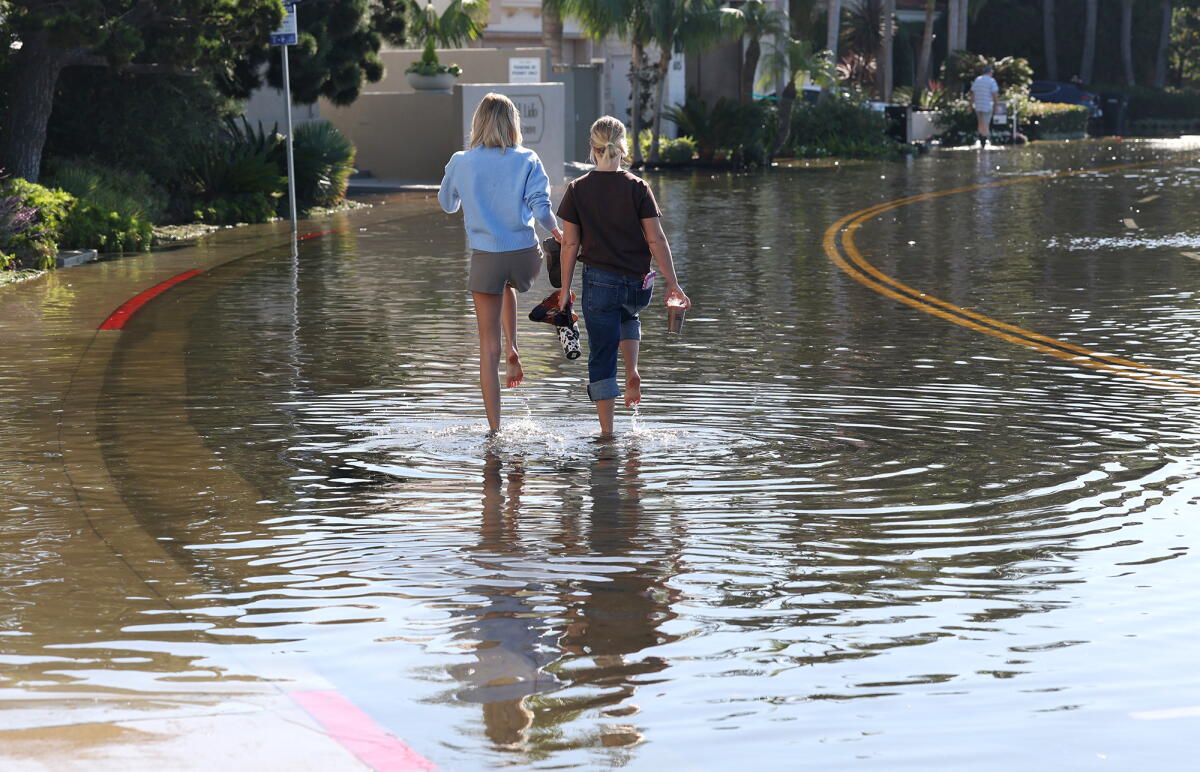
Southern California is experiencing significant coastal flooding, offering a glimpse into potential worst-case scenarios for an El Niño-driven winter. As sea levels rise, concerns grow about future impacts.
Factors Contributing to Recent Flooding
Last week’s severe flooding resulted from a combination of factors:
- Record ocean temperatures elevating sea levels
- Higher-than-normal tides
- Potentially powerful storms generating large waves
These factors combined to push sea levels to unprecedented heights in recent times.
Record Sea Level Increases
Data highlighted the rise in sea levels:
- San Diego: 1.4 feet higher than expected
- Los Angeles: 1.3 feet higher
- San Francisco: 1.1 feet higher
Los Angeles and San Diego Bay witnessed record-breaking sea levels, unseen for over a century.
“The king tides are going to provide a larger trigger for flooding,” said Dillon Amaya, an assistant professor at North Carolina State University.
Ocean Temperatures and Future Threats
Warmer ocean waters are anticipated to persist throughout the winter, influencing sea levels to rise further. Scripps Pier in La Jolla recorded a sea surface temperature of 75.4 degrees, significantly above the historical average for Halloween. This implies ongoing challenges as these warmer waters contribute to higher sea levels and potential flooding.
Consequences Along the Coast
Flooding has already affected numerous structures along the coast.
- Huntington Beach: 114 homes and structures damaged
- Regions from Redondo Beach to Long Beach hit by floods
- Marin County experienced up to two feet of flooding
The situation underscores the risks tied to El Niño’s influence.
Role of Kelvin Waves
Kelvin waves play a crucial role as warm waters slowly travel from the western to eastern Pacific. These waves increase ocean temperatures and sea levels upon reaching the Californian coast.
Robbie Munroe from the National Weather Service noted, “Oceanic Kelvin waves are contributing to new/broken water level records along the California coast.”
The waves contribute significantly to sea level anomalies, adding complexity to flooding concerns.
Anticipating Higher Tides
The coming king tides are expected to be substantial due to cyclical factors.
- 18.6-year lunar node tidal cycle
- 4.4-year lunar perigee tidal cycle
These cycles, alongside other factors, lead to higher tides, potentially exacerbating flooding scenarios.
Looking to the Future
Scientists caution that current conditions may signal California’s future coastal reality. Predictions of additional sea level rises by 2070 highlight ongoing challenges for coastal management and preparation.
El Niño is impacting inland areas as well, with regions like Arizona and the Four Corners experiencing extreme rainfall, linked to excessive atmospheric moisture tied to marine heat and climate change.