
In recent times, cybersecurity issues like PHP2Shell have surfaced, impacting many web servers. These vulnerabilities in PHP, a popular programming language, have been present since 2012 but were only identified by a researcher using an OpenAI model. PHP powers approximately 70% of websites with known languages, making this a critical discovery.
Though the PHP team released a patch on Oct. 21, many servers remain vulnerable. AI has made it easier to exploit these vulnerabilities, previously a task for only the most skilled hacking groups. Defenders are struggling to keep up. Qualys identified 167 million PHP installations on customer systems. Twelve hours post-disclosure, only a small fraction had updated, and this gap can span weeks.
The risk extends beyond PHP. On Oct. 27, Anthropic revealed its Claude model created an exploit affecting some Linux servers. Although Linux developers fixed this issue on Oct. 5, Ubuntu had not yet distributed that fix as of Nov. 2. Unpatched vulnerabilities often lead to major breaches. The infamous Equifax breach, which exposed data on 147 million Americans, resulted from a patch that was not applied quickly enough.
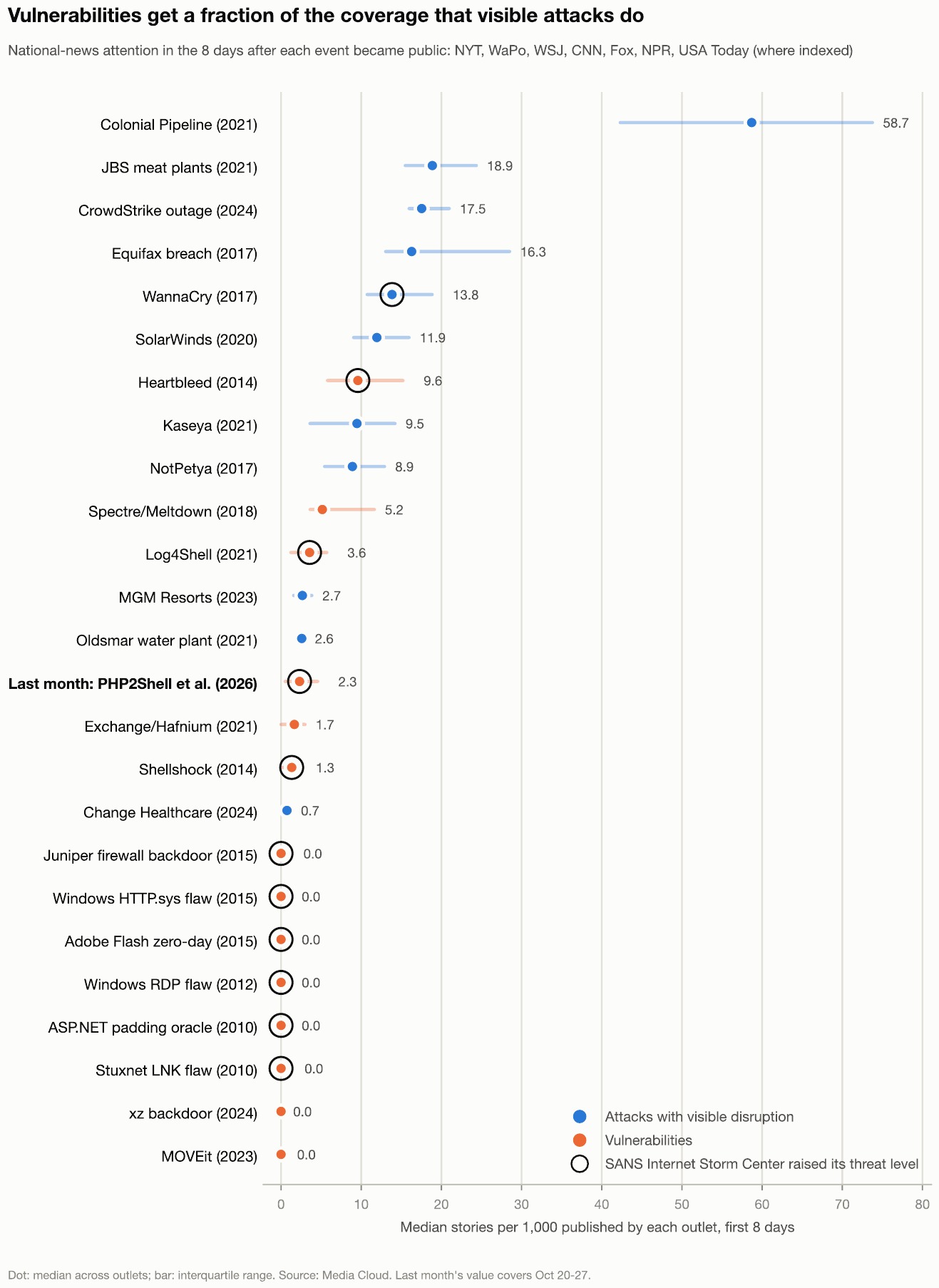
Media coverage of these critical vulnerabilities is often lacking. Using Media Cloud, a news archive, trends show national outlets frequently cover breaches without mentioning patch details. For example, they published thousands of stories after the PHP2Shell disclosure, but only a few highlighted the vulnerabilities.
Not every vulnerability demands extensive coverage. However, with a record 5,461 vulnerabilities published in the week of Oct. 12, some deserve wider attention. The Storm Center flagged ten crucial cyber events from 2010 to 2021, but many went unnoticed by the public.
AI advancements contribute to an increase in identified vulnerabilities. While this can improve long-term security, it presents immediate challenges as attackers exploit unpatched systems. The public would benefit from alerts similar to hurricane watches. CISA should issue public warnings about critical software vulnerabilities, similar to how weather or product recalls are handled.
Lawmaking bodies must decide on AI regulation and cyber defense funding. Even industry leaders like Anthropic’s deputy chief information security officer, Jason Clinton, warn of worsening conditions ahead. Policymakers, corporate boards, and the public need information to evaluate risks effectively. Equifax had two months to patch its systems, but PHP2Shell attacks began before patches were released. We cannot wait until breaches occur to raise alerts.
Opinions in Fortune.com commentary represent the authors’ views and do not reflect the beliefs of Fortune.