
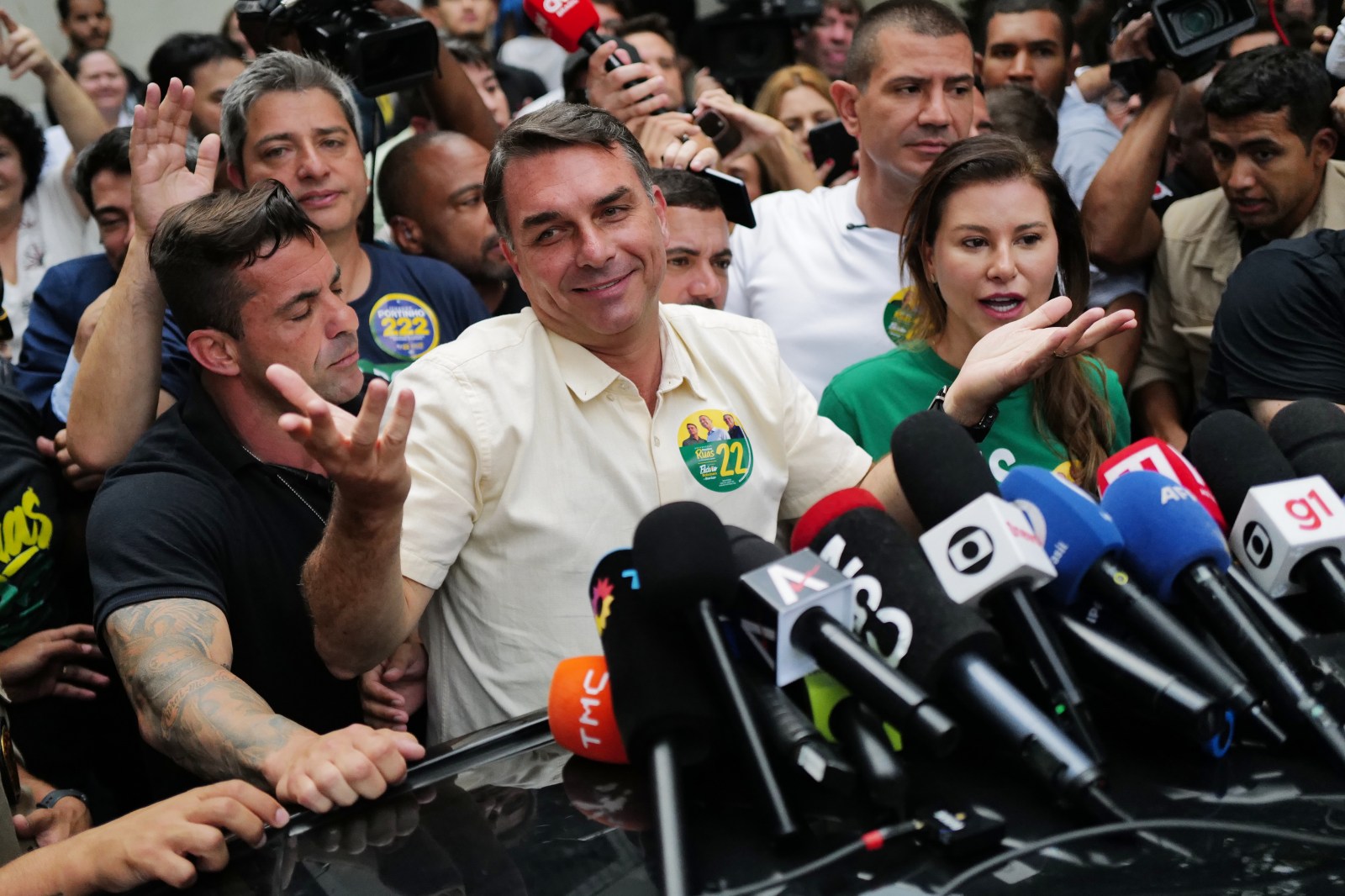
On Sunday, millions of Brazilians are participating in a pivotal presidential runoff. This election doubles as a family restoration initiative for one contender. The left-wing incumbent, Luiz Inácio Lula da Silva, seeks another term to culminate his career, facing off against right-wing Senator Flávio Bolsonaro. Flávio aims to reinstate his family’s presence in the presidential palace, hoping to release his father, Jair Bolsonaro, from a 27-year house arrest sentence for attempted coup conspiracy following his electoral defeat.
The younger Bolsonaro’s campaign relies on familiar populist tactics. He emphasizes law and order, advocates for smaller government, and commits to a campaign against Lula’s Workers’ Party and a judiciary he claims is influenced by political elites. Notably, he proceeds without an explicit endorsement from former President Donald Trump, who was a significant supporter of his father.
The Trump and Bolsonaro families have often opposed political elites, creating their own establishments while decrying existing power structures.
Trump and Jair Bolsonaro have shared a common political ethos. In 2019, during Bolsonaro’s visit to the White House, they admired each other’s nationalistic rhetoric, culture-related politics, and criticism of established politicians. Both positioned themselves as figures capable of reforming tainted systems.
After facing electoral defeats, both leaders exhibited similar responses. Following the Capitol Hill insurrection in 2021, Bolsonaro spent 2022 critiquing Brazil’s electronic voting system and accused fraud when narrowly losing to Lula. These parallels illustrate their shared political strategies.
Unlike Trump, the Bolsonaro family has long been entrenched in Brazilian politics. Jair served for nearly three decades in Congress, bolstering his family’s political influence. According to Henrique Tavares Furtado, an expert in Latin American politics, the Bolsonaros were part of the establishment’s periphery. Their rise was aided by evangelical church support and strong opposition to Lula’s party.
Mirroring Trump’s movement, Bolsonarismo has held a strong personal aspect, stated Gustavo Flores-Macías, dean at the University of Maryland’s School of Public Policy. This has enabled Bolsonaro family members to continue promoting its political brand and network.
Trump’s relatives have significant political and business roles, despite not having a political background. Ivanka Trump and Jared Kushner held senior advisory roles during Trump’s presidency. Kushner currently engages in diplomatic negotiations while managing a private equity firm with billions in investments.
Flávio Bolsonaro embodies what Furtado calls the “quintessential politician nepo baby.” Starting his political career at 19, he has now approached Brazil’s presidential palace. After winning preliminary rounds, his stepmother Michelle, brother Carlos, along with Jair Renan and uncle Renato, secured legislative positions, promising continued family influence.
Flores-Macías noted, “The Bolsonaro family influences through elected offices, contrasting the Trump family’s pathway through appointments and business relations.” Their approaches vary, but the destination remains the same; their entities disrupt the establishment while simultaneously integrating themselves into it.
Trump’s administration could favor Bolsonaro’s return over Lula’s leadership. An integral component of Trump’s national security strategy, the “Donroe Doctrine,” seeks to establish loyal governments across the Western Hemisphere. This supports combating cartels, securing strategic resources, and reducing Chinese influence.
Although receptive to US dialogue, Lula is unwilling to adopt Trump’s agenda or sever economic bonds with China.
Brazil’s significant trade with China demonstrates this, with exports to the nation surpassing those to the US by more than threefold in early 2026.
Installing an ideological ally in Brazil’s leadership, and one potentially more inclined to adjust this trade discrepancy, represents a major opportunity for the US. At a White House event, Flávio swiftly engaged with Trump, proposing rare earth access to the US.
Trump values allegiance and political alignment equally with practical negotiations. Flávio appears as a befitting successor. “In some ways, he is more akin to Trump than his father,” Furtado observed, noting Flávio’s embrace of contemporary alt-right strategies.
Both Trump and Jair Bolsonaro are longstanding acquaintances; however, Flávio signifies a promising heir. For the administration, a Flávio presidency means a recognizable presence, family engagement, and ongoing business interests. Both families vowed to disrupt the system, yet neither acknowledges their aspirations to embody the very system they challenge.