
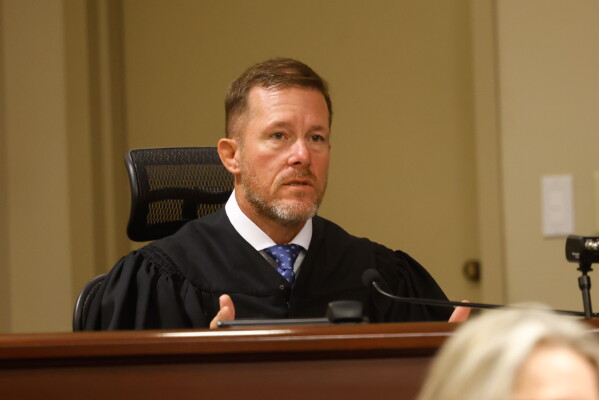
A judge has sentenced a teenager guilty of killing two students and two teachers in a school shooting at Apalachee High School in Georgia to life without parole. Colt Gray, aged 16, confessed to 55 charges, including murder, for the incident on September 4, 2024, in a school about 45 miles northeast of Atlanta. Barrow County Superior Court Judge Nicholas Primm described his actions as ‘deliberate, contemplated evil.’
Family members of the victims addressed the court, urging the judge not to allow parole. Gray’s grandmother and a forensic psychologist also spoke at the hearing. Murder in Georgia necessitates a life sentence, leaving Judge Primm to determine if parole should be considered. He concluded that Gray should never be released, noting Gray’s lack of remorse and admiration for other murderers. ‘You do not seem tormented by what you did,’ Primm said. Gray showed pride in his actions, relishing in his notoriety.
District Attorney Brad Smith argued for incarceration, stating Gray could not safely re-enter society. Gray’s defense attorney, W. Charlton Allen, requested parole eligibility as an incentive for rehabilitation, insisting Gray was ‘not irretrievably broken.’ Nevertheless, the judge ruled against it, aligning with the wishes of many victims’ family members.
The shooting claimed the lives of teachers Richard “Ricky” Aspinwall, 39, and Cristina Irimie, 53, alongside students Mason Schermerhorn and Christian Angulo, both 14. An additional teacher and eight students were injured. Identifying with mass shooters, Gray was a participant in the online ‘true crime community,’ aspiring for notoriety through violence.
Evidence shown in court included phone recordings between Gray and his mother, where he reveled in the attention post-incident. Prosecutors revealed Gray meticulously planned to mimic other mass shooters, aiming for fame within his online community.
Defense emphasized Gray’s troubled upbringing and lack of support. His grandmother, Debbie Polhamus, claimed he needed help and improved under treatment at a juvenile facility. She hoped for a future chance for him to prove his change. Despite his troubled background, Judge Primm noted that it did not excuse his choices or actions.