
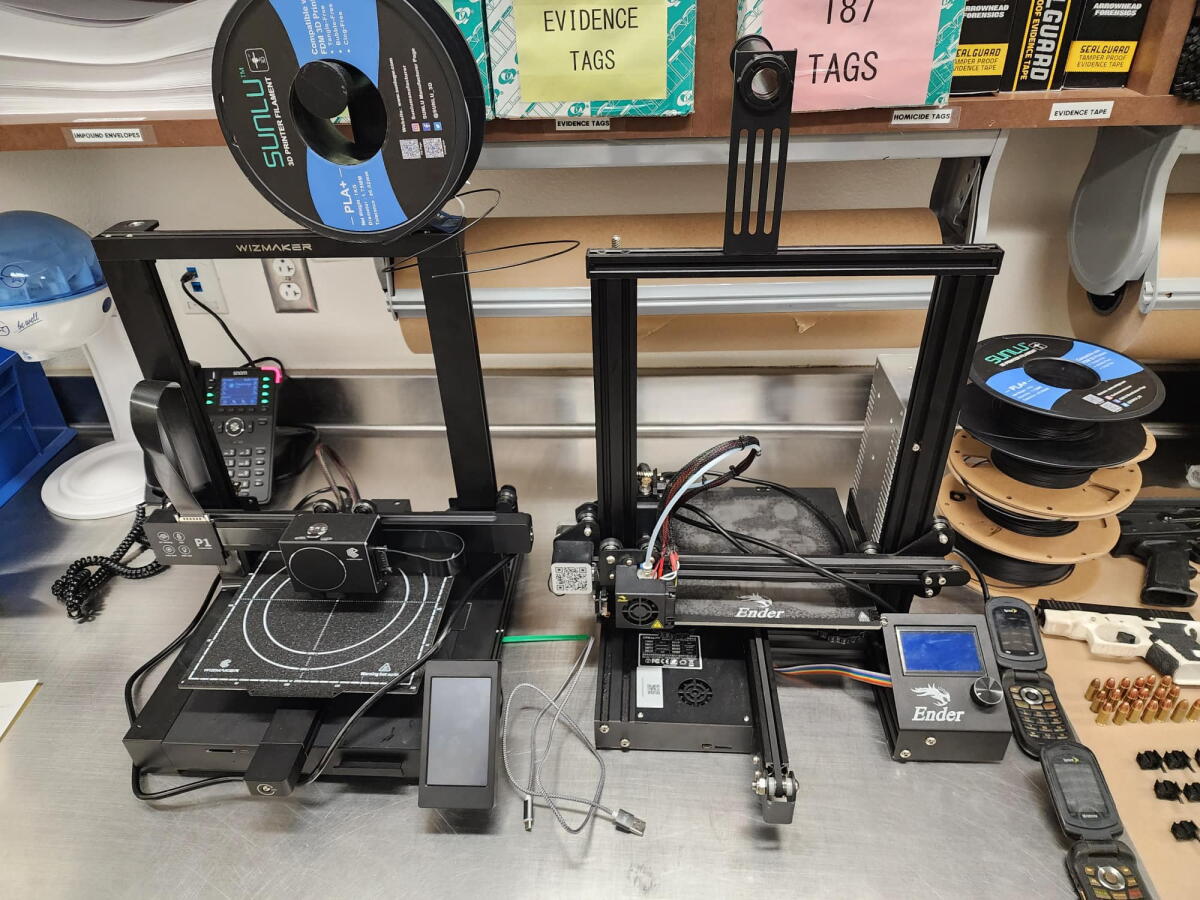
San Diego County recently took significant legal action in California’s ongoing struggle against ghost guns. The county, in collaboration with the Giffords Law Center, has filed a lawsuit against Polymaker, a manufacturer of 3-D printing filaments. The suit alleges that the company intentionally markets and sells its products to Californians for the production of illegal firearms.
These filaments, made from polymer, are designed for use with 3-D printers. They enable individuals to create firearms without tracing, using consumer-grade equipment. Unlike other ghost guns assembled from unfinished parts available commercially, 3-D printed guns originate from these filaments. San Diego’s lawsuit highlights that with a 3-D printer, one can produce and assemble a fully functional firearm within approximately nine hours.
In a recent incident, San Diego Police recovered spools of filament from the home workshop of a 16-year-old, who appears to have intended to sell the printed guns and parts. This evidence underlines the potential harm caused by manufacturers like Polymaker.
Efforts to curb the bootleg gun industry have intensified in California. Earlier this year, the San Francisco city attorney teamed up with the California attorney general to sue the digital firearm library Gatalog, which offers manufacturing codes for over 150 different 3-D printed guns and accessories.
The legal complaints reveal how consumer-grade 3-D printers and affordable filaments can produce firearm components inexpensively. A spool of PLA+ polymer filament costs between $20-$30 and is sufficient to print multiple gun components. In comparison, this allows for the creation of a 3-D printed handgun at about half the cost of a standard Glock.
Law enforcement officials have recovered polymer filaments and materials related to 3-D gun printing operations in places like Escondido, California. The scale of ghost gun recovery is significant, with state law enforcement seizing approximately 11,000 untraceable firearms annually, a drastic increase from a decade ago.
More than half of all ghost guns confiscated in the United States are recovered in California.
California’s legal actions aim to regulate both precursor components of these weapons and the networks promoting their distribution. Gatalog and Polymaker reportedly leverage influencers specializing in ghost gun content to market their products and digital firearm codes illegally.
These companies also target California residents specifically, offering items like a “California Compliant Glock 19-based Carbine kit.” This practice runs counter to state laws, leading to the legal challenges they face.
In response, Gatalog attempted to claim that California’s suit infringed on their constitutional rights by imposing penalties for content published on the internet from Florida. However, the court dismissed this argument, recognizing state’s rights to block items deemed harmful to their citizens.
Judge Paul G. Byron reiterated the state’s power to exclude items from its territory that it views as prejudicial to citizen interests.
These legal battles are part of a broader, coordinated effort across California to pursue affirmative litigation under the Unfair Competition Law. San Diego’s action is part of three such lawsuits initiated by its newly established affirmative litigation department, designed to investigate and litigate on behalf of residents.
Nevertheless, the enforceability of California’s latest gun control measures remains uncertain. The 9th Circuit Court of Appeals has shown resistance to gun control measures in recent years, influenced by President Trump’s judiciary appointments.
Recent rulings have challenged California’s efforts, including a decision against the state’s challenge to certain carve-outs in federal ghost gun regulations. The debate about what constitutes a ‘frame or receiver’ in manufacturing continues, with differing interpretations from the Supreme Court on the matter.