
In 2007, the United States Holocaust Memorial Museum in Washington, D.C. received a photo album belonging to Karl Höcker, an SS guard at Auschwitz during the grim period of 1944 to 1945. This album contained images of SS members and their families, living seemingly normal lives near the camp’s gas chambers and crematoria. No prisoners are seen in these photos, creating an eerie absence as if they never existed.
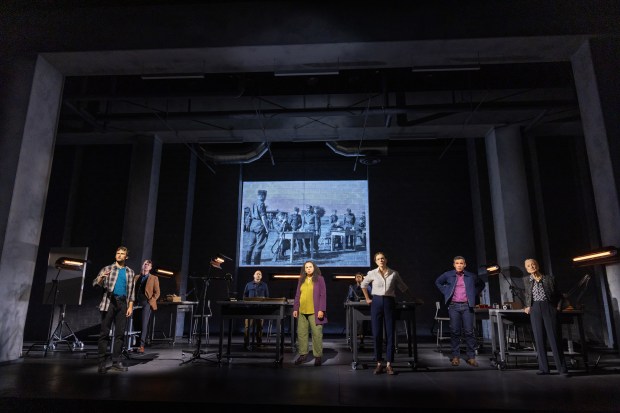
These images are not the typical depictions of Nazi excess or militaristic displays found in films. Instead, they feature family Christmas parties, casual conversations, weekends at cabins, and even images of staff enjoying blueberries. This unique perspective inspired Moisés Kaufman and Amanda Gronich’s docudrama Here There Are Blueberries, now showing on Broadway. The 90-minute performance explores how the museum processed the album and uncovered its significance through consultation with those related to the individuals in the photos.
This theater piece stems from the Tectonic Theater Project’s intense research approach, known as ‘moment work’. Although not a typical Broadway entertainment, Blueberries likely leaves a lasting impression. The show leverages advancements in digital projection to amplify the impact of still photos from the 1940s, making each expression vividly clear. Two central questions arise during the show. How could these staff members lead seemingly normal lives while operating in a center of death? As seen in Jonathan Glazer’s 2023 film The Zone of Interest, this question probes the perplexing human ability to compartmentalize.
The docudrama further delves into the realization that these individuals, including the young women of the League of German Girls who served as camp assistants and secretaries, were possibly as committed to Nazi ideology as their male counterparts. The play insightfully depicts that they were aware of the atrocities. Conrad Ricamora plays Tilman Taube, who discovers his grandfather in the photographs, highlighting that many functionaries at Auschwitz evaded justice, disappearing into history. Michael Cerveris addresses Peter Wirths’ story, a child living in Auschwitz, son of the camp’s chief doctor.
After the show, viewers are likely to grasp the scale of Auschwitz and the number of people involved, deepening their understanding of the horror it represented. Initially, the Holocaust Museum hesitated to focus on the album due to their policy of highlighting prisoners rather than perpetrators. Eventually, they recognized its power in commemorating the victims. Here There Are Blueberries is set for another production at Northlight Theatre in Chicago next year.
Chris Jones, Tribune Critic
Barrymore Theatre, 243 W. 47th St., New York; www.herethereareblueberries.com