
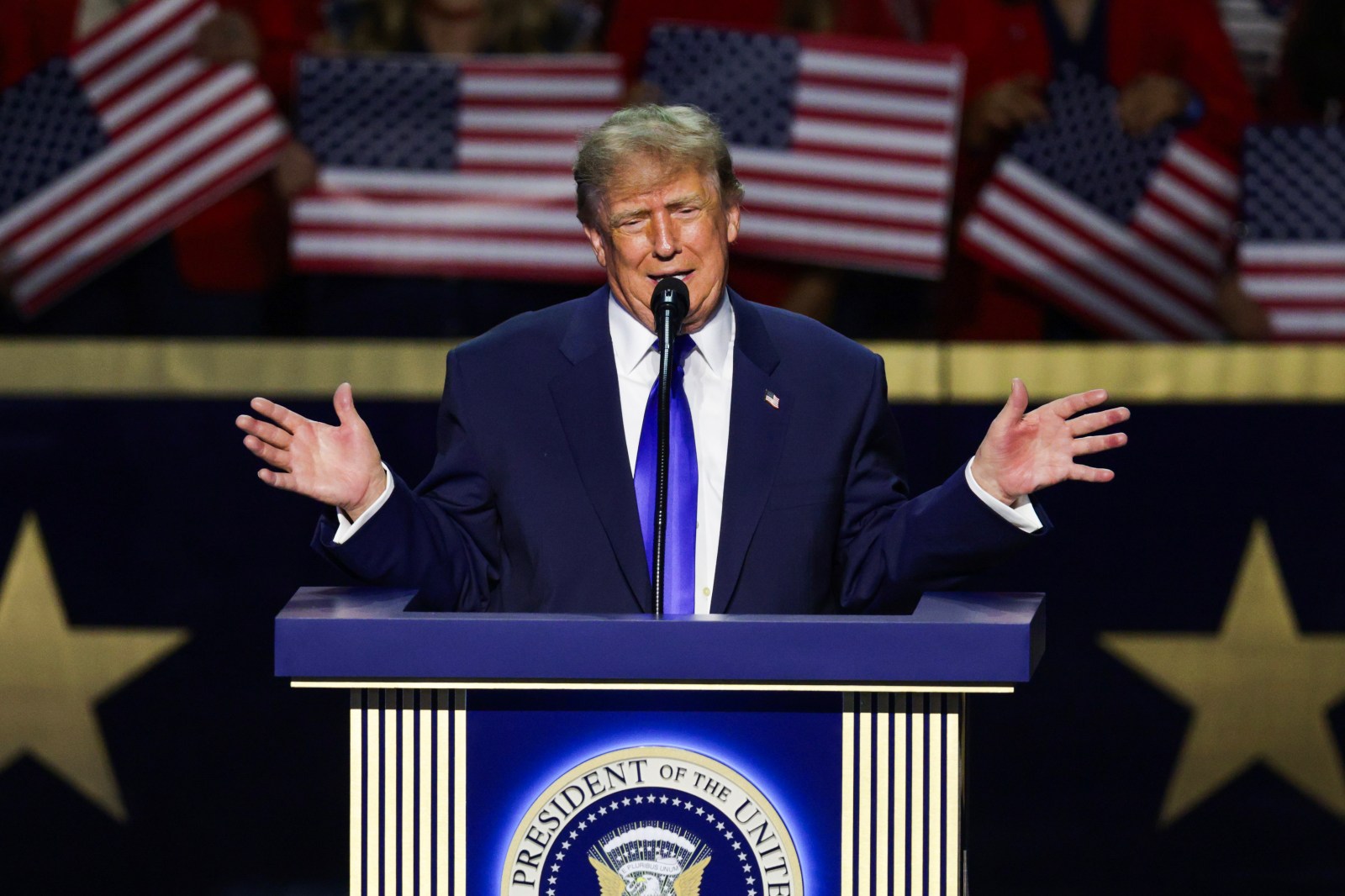
President Donald Trump announced that every American adult would receive a $5,000 check if Republicans maintain control of Congress following November’s midterm elections. Trump made the promise at the first Republican midterm convention in Dallas. He presented it as a reward for economic achievements under Republican leadership. While thousands of attendees expressed support, some Republicans voiced dissent, citing concerns about the proposal’s feasibility.
Republican Backlash
Kentucky Representative Thomas Massie criticized the idea, suggesting that the amount was insufficient and warning about potential inflation. Former Georgia Representative Marjorie Taylor Greene compared the proposal to a plan from Vice President JD Vance aimed at supporting stay-at-home parents. Greene estimated the total cost of both proposals at $1.6 trillion. She noted the irony of Republicans suggesting a large government payment shortly after condemning Democratic policies as socialist.
Former Congressman Justin Amash also spoke against the plan, labeling it as a poorly-conceived redistribution scheme. Treasury Secretary Scott Bessent, however, supported Trump’s announcement. The divide within the Republican Party highlights ongoing tensions over government spending.
Financial Concerns
Representatives like Chip Roy questioned funding sources for the $1 trillion project. Outside analyses estimate costs for a $5,000 payment between $1.2 trillion and $1.35 trillion. An unnamed Republican operative suggested the proposal aimed to shift political discussions. House Republicans raised questions during and after the convention.
Vice President JD Vance clarified that the payments might not extend to wealthy Americans. He suggested tariff revenue might fund the initiative, describing it as a dividend for working Americans. Trump, however, provided limited details on logistics or financing methods, noting only that recipients must spend the money in the United States.
Support and Alternative Views
Some Republicans focused on broader themes of affordability. Florida Senator Rick Scott emphasized cost-related issues like housing and healthcare. Texas Senator Ted Cruz expressed caution, advocating for work requirements linked to the payments. He estimated a $1.3 trillion cost and noted its significance compared to potential Democratic spending.
Ohio Senator Bernie Moreno welcomed the proposal, pledging to draft legislation to facilitate its passing post-election. Moreno expressed optimism for the initiative’s success in Congress.
Impact on Midterm Elections
The proposed payments arise as Republicans defend a narrow House majority. The RealClearPolitics average favors Democrats by about six points, although district-specific complexities complicate the impact on House seats.
With Democrats needing a net gain of three seats, Republicans face competitive district battles. The $5,000 checks might not sway voter decisions significantly, according to some delegates.
Senate Race Dynamics
The Senate presents critical challenges, with Democrats needing to secure four additional seats. Competitive races in Republican-held states like Alaska, Iowa, and Ohio complicate the landscape.
The Cook Political Report identifies several toss-up races, including recent shifts toward Democrats in states like Iowa and Texas. The Senate contest, therefore, appears less influenced by national voting trends and more determined by individual state dynamics.