
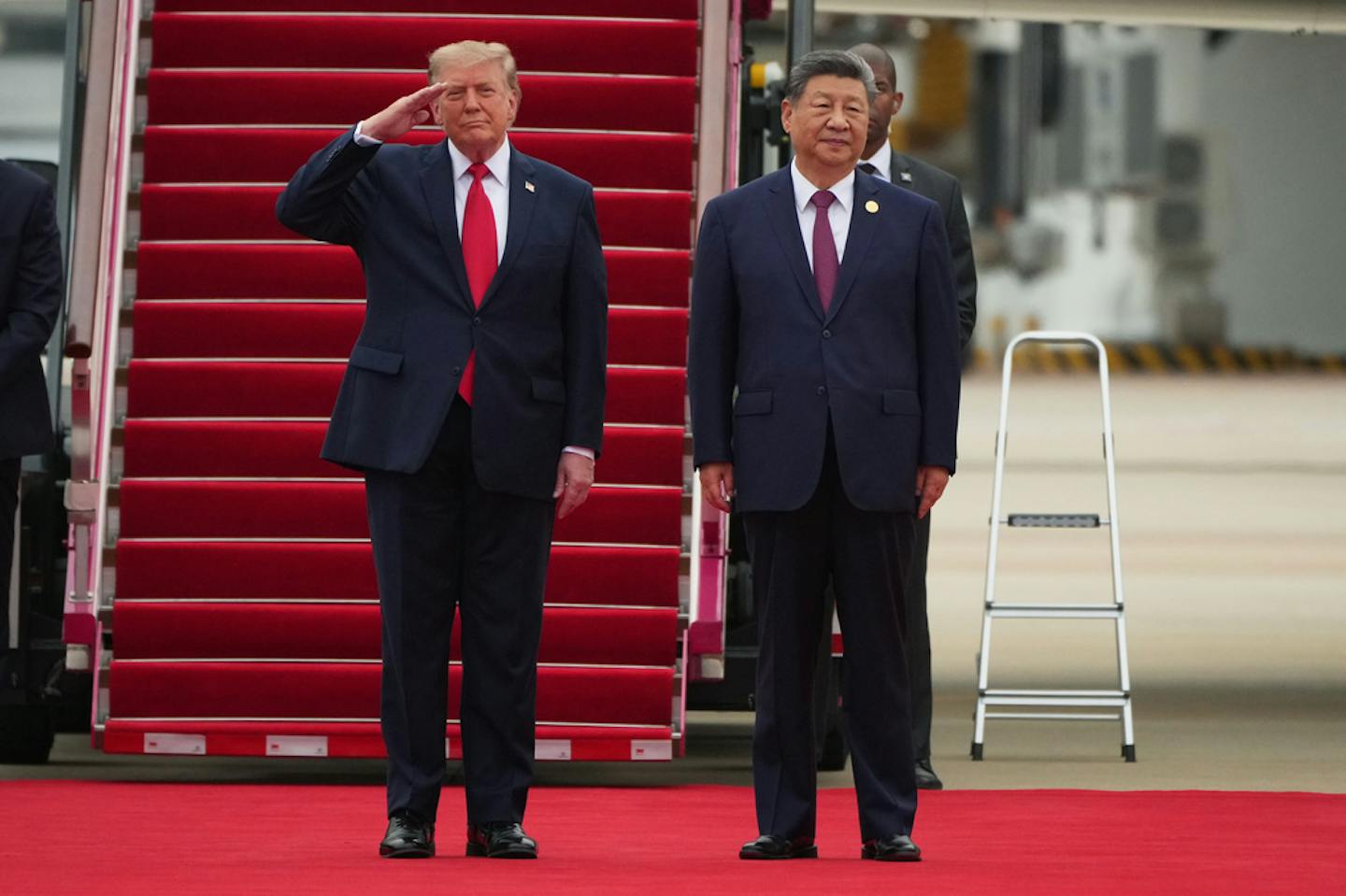
President Donald Trump arrived in Shenzhen, China, on Wednesday with the aim of bolstering the United States’ position as the foremost technology power. However, simultaneous technical outages in the U.S. have pressed his administration to appease the American public.
While in Shenzhen, Trump was set to discuss crucial matters with Chinese President Xi Jinping and Russian President Vladimir Putin. Trump initially seemed unfazed by the domestic outages, which left U.S. citizens concerned about accessing vital services. However, these disruptions cast a shadow over his Asia visit.
Secretary of State Marco Rubio addressed the situation, assuring Americans that there was no evidence linking the outages to foreign adversaries or cybercriminals. He emphasized that fixing identified vulnerabilities could cause temporary disruptions.
President Xi personally greeted Trump on the airport tarmac, a gesture of respect reciprocated from his earlier U.S. visit. In contrast, Xi did not extend the same welcome to Putin. Trumps strategy during his Shenzhen visit included embracing an unplanned diplomatic approach, hoping to leave a significant legacy in shaping global affairs.
Before participating in the official APEC greeting ceremony, Trump held meetings with Mexican President Claudia Sheinbaum and Canadian Prime Minister Mark Carney. At APEC, he was expected to address nuclear weapons limitations and the ongoing conflict in Ukraine with Xi and Putin. Analysts had tempered their expectations for any major breakthroughs.
Trump hinted at potential private discussions with Putin and North Korean leader Kim Jong Un, though these were not officially scheduled.
Prior to his arrival in Shenzhen, Trump met with President Ferdinand Marcos Jr. in the Philippines. They engaged in a dialogue that resulted in a trade agreement. Trump also reunited with Imelda Marcos, a former first lady, praising the longstanding relations between the two countries.
There remains growing interest around Trump’s interactions with key rivals like China and Russia. His tariffs aimed at reducing China’s trade advantage have seen limited success, while artificial intelligence (AI) introduces new security risks. The rapid development of AI provokes concerns. Recent events like the controversy surrounding Nvidia’s former CEO Jensen Huang heighten these worries.