
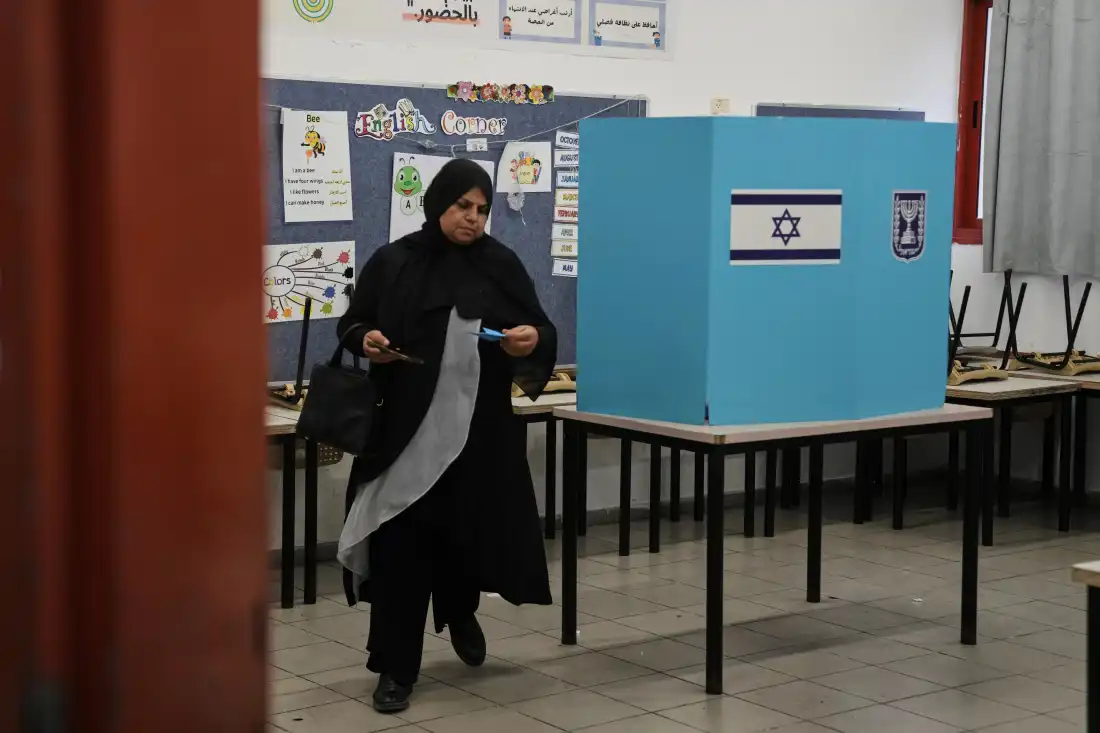
A Palestinian citizen of Israel, a participant in the general election, cast her vote in Umm al-Fahm on October 27, 2026.
Historically, many Palestinian citizens of Israel have avoided participating in elections, believing their involvement would not impact the political structure they perceived as marginalizing their communities. Yet, last month, a significant change occurred. Record numbers of Palestinian Arabs in Israel participated in voting, helping to dissolve Prime Minister Benjamin Netanyahu’s far-right government majority.
The election saw Arab-led parties gain 19 out of 120 parliamentary seats. This gave them a substantial role in coalition negotiations that will decide Israel’s future leadership during a complex period.
“We blocked the government of Netanyahu from continuing,” stated Jamal Zahalka, chairman of the High Follow-Up Committee, celebrating what he called a “historical achievement.” He expressed that their community had realized its strength.
Neither Netanyahu nor his main opponent, Gadi Eisenkot, achieved the 61-seat threshold required to form a new government. This highlights the shifting dynamics in Israeli politics and raises essential questions about Israel’s identity and the role of Palestinian Arabs in society.
The Ongoing Story
In Kufr Qasim, a predominantly Palestinian town, a memorial event was held two days after the election. It commemorated the 1956 deaths of residents killed by Israeli border police during the Suez Crisis. The gathering served to remember past grievances while also mourning recent struggles, such as rising discrimination since the deadly 2023 Hamas-led attacks on Israel and the resulting conflict in Gaza.
Participants expressed frustration over ongoing discrimination and hardships. A Kufr Qasim resident, Intisar Sarsur, noted that the lack of basic freedoms prompted their community to vote. She emphasized that no one she knew stayed away from the polls.
This unprecedented voter engagement resulted in a 64% increase in support for Arab-led parties. However, it has also sparked unease and even fear among Israel’s political right, which sees the turnout as a threat to the country’s Jewish character.
Reactions and Accusations
The political right, spearheaded by Netanyahu, capitalized on the high Arab voter turnout, portraying it as a threat to Israel’s Jewish and Zionist nature. Likud, Netanyahu’s party, accused Arab parties of winning through voter fraud, but no evidence was shown to support these claims. Law enforcement and election officials confirmed no wrongdoing occurred.
The rhetoric served as a tactic to discourage Gadi Eisenkot from allying with Arab parties, which would help him form a majority government. However, rising anti-Arab sentiments since 2023 have complicated such alliances, potentially causing rifts within his coalition.
Eisenkot, known for a hawkish military background, is not a natural fit for cooperation with Arab parties. His military strategies, including the “Dahiyeh doctrine,” underscore this disconnect.
Arab Parties’ Strategic Decisions
Arab parties face challenging decisions about leveraging their newfound influence. The Ra’am party has shown interest in coalition collaborations. However, The Joint List, which won a majority of Arab seats, will not formally partner with Eisenkot, citing ongoing conflicts and the West Bank’s situation.
President Isaac Herzog is consulting with parties and will designate a candidate to attempt coalition formation. This candidate will have a deadline of 28 days, plus a potential two-week extension, to succeed. Failure to establish a government will lead to fresh elections.
At the Kufr Qasim memorial, Mansour Shaaban reflected the significance of voting as a mechanism to voice opposition to the policies of Israel’s right-wing leaders. Despite challenges, he affirmed the empowerment realized by Palestinian citizens.
This election marks a pivotal moment for Palestinian citizens in Israel, showcasing their ability to influence the nation’s political landscape.