
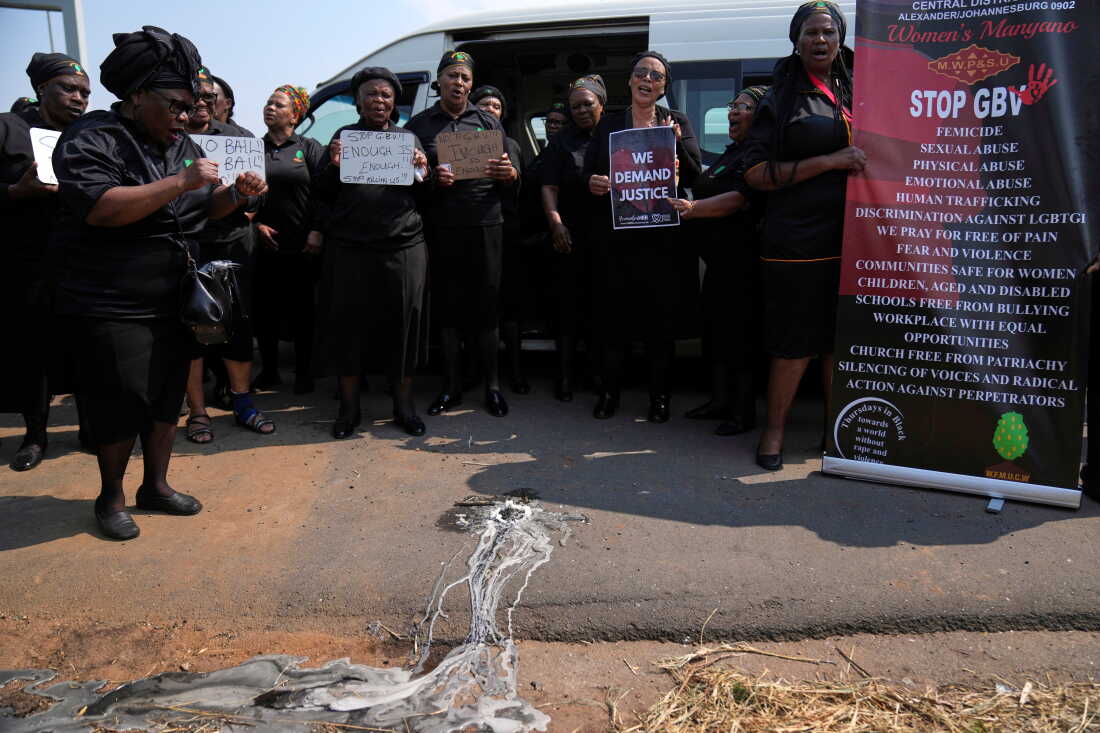
Members of a women’s church group gathered near a melted candle, singing as they paid their respects at the site where a woman’s body was found the previous week in Kempton Park, South Africa, located east of Johannesburg. This touching scene unfolded on Thursday, September 17, 2026, as a community mourned the loss of another victim to gender-based violence.
Elizabeth Moselakgomo, a 38-year-old manager, mother, and dedicated runner, went missing after going for her typical afternoon jog near Johannesburg airport. When she failed to return home, her 8-year-old daughter contacted relatives, who alerted the police. Five days later, her half-naked body was discovered, her face so severely beaten it was unrecognizable. Moselakgomo was among nine women recently found murdered in the same area, with the majority having been sexually assaulted.
In South Africa, a nation notorious for its high rates of gender-based violence, the frequency of such attacks remains shocking. Police statistics indicate over 100 rape cases reported daily and approximately 15 women killed each day. The recent surge in murders has left the community in fear and anger. Despite police warnings for women to exercise caution and avoid being alone, the advice has sparked criticism online. Many women argue that it is the responsibility of the police to offer protection.
President Cyril Ramaphosa has vowed to thoroughly investigate the crimes, ensuring the search for those responsible continues. However, criticism persists against the government, which declared gender-based violence and femicide a national disaster in 2025, but has still not fully addressed the safety concerns of women. Amnesty International’s South Africa Director, Shenilla Mohamed, stressed that mere promises are insufficient, insisting on clear actions to make women and children feel safe.
Protests have erupted in Kempton Park and Cape Town, with demonstrators demanding change. In Moselakgomo’s memory, numerous running clubs have organized tribute runs to honor her and other victims. At one event in Johannesburg, participants of all backgrounds wore black and observed a minute of silence.
One of the runners, 26-year-old Shari Maluluke, articulated the pervasive threat of gender-based violence in the country. She shared how women feel restricted in their movements due to fear of violence, describing South Africa as feeling like a prison. Many women at the event echoed this sentiment, expressing their lack of safety.
Didi Tsitsi, 31, highlighted the precautions women take, such as sharing their locations and ride details. She attributed the prevalence of femicide to governmental failures and ingrained societal issues regarding male identity and expectations. She believes unresolved legacies of apartheid influence current issues, a view supported by some academic research suggesting that the history of racial oppression has contributed to entrenched patriarchal attitudes.